Trump’s decision to cut back joint Korea drills and seek talks with Kim Jong Un is prompting Indo-Pacific allies to bolster self-reliant defense, diversify partnerships, and speed up regional military spending to lessen dependence on the United States.
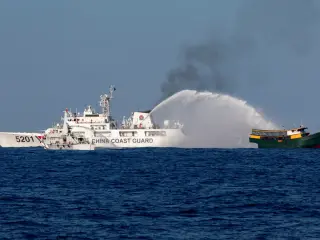
The United States condemned China’s claim that Scarborough Reef sits within a national nature reserve, calling it a pretext to deny Filipino fishermen access to traditional grounds and to press its broader South China Sea dominance. Washington backed the Philippines in a free and open Indo-Pacific, amid tensions over water cannon incidents and a long-running sovereignty dispute that has seen international arbitration and ongoing regional power competition.
Canada plans two naval missions to the Indo-Pacific this year to deepen defense ties with regional partners such as Japan, Korea and the Philippines, including August and November exercises and port calls, as Ottawa signs defense-sector agreements and seeks partners beyond the United States amid shifting geopolitical dynamics.
The Philippines’ defence secretary warns China may move to permanently seize Scarborough Shoal as Chinese activity around the disputed atoll intensifies; Beijing has controlled the shoal since 2012, but Manila is boosting deterrence with stronger weapons ties to the US and allies (including Japan), expanded joint exercises, and plans to integrate AI for better detection, ahead of the South China Sea arbitration anniversary.
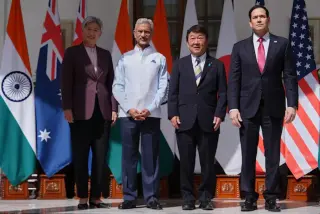
At a New Delhi meeting, Quad members announced infrastructure and connectivity initiatives—such as a Fiji port project, maritime surveillance, and critical mineral partnerships—while linking these efforts to India’s Great Nicobar development. The move signals a shift from pure deterrence to economic security and resilience of sea lanes, reflecting how infrastructure and digital connectivity are increasingly central to strategic competition in the Indo-Pacific.
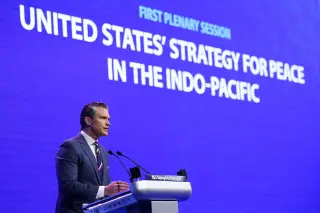
Defense Secretary Pete Hegseth used the Shangri-La Dialogues to tout improved U.S.-China relations while urging a quiet, more deliberate defense posture in Asia, a stance critics say risks neglecting Asian allies’ security concerns.
At the Shangri-La Dialogue in Singapore, Indo-Pacific states are shifting from an overreliance on the US security umbrella to diversified hedging and regional autonomy, driven by Middle East turmoil, great-power rivalry, and doubts about Washington’s consistency. The forum highlights a surge in independent defense procurements (e.g., Indo-Russian BrahMos missiles to the Philippines, Vietnam/Indonesia pursuing deals with South Korea) and rising concern that Japan could become the new anchor in a post-American security architecture, with European partners hedging as well.
Lynn Kuok argues that Iran’s coercive actions in the Strait of Hormuz demonstrate how modern, affordable tech enables weaker states to disrupt critical chokepoints, elevating risk for Asia’s sea lanes such as Malacca, the Taiwan Strait, and Luzon. A disruption could trigger global trade and semiconductor supply shocks, prompting a broader strategic contest across the Indo-Pacific. The piece urges the United States and allies to boost maritime awareness, deter disruption through coordinated transit protection, develop secondary ports and routes, diversify semiconductor production, and push to join UNCLOS to reinforce lawful transit. Ultimately, Hormuz acts as a blueprint for envisioning and mitigating similar pressures on Asia’s waterways.
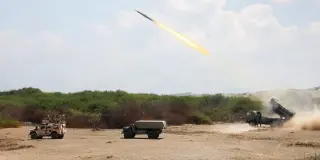
Balikatan 2026 in the Philippines brought 17,000+ US and allied troops for a large-scale Pacific defense drill, testing long-range missiles (including Tomahawk launches from the Typhon system), drones, counter-invasion tactics, and electronic warfare to defend beaches and deny sea access, while showcasing interoperability and drone-resilience concepts like 3D-printed parts.
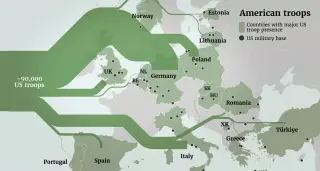
Nearly 90,000 U.S. troops are stationed across Europe, with Germany hosting about 36,000—the largest concentration—followed by Italy and the United Kingdom; the Pentagon is evaluating whether to redeploy or reduce forces in Germany as Washington pivots toward the Indo-Pacific, while NATO seeks to bolster deterrence on its eastern flank amid Russia's war in Ukraine.
India advances a $9 billion plan to develop Great Nicobar Island into a dual-use hub with a container terminal, airport, power plant and township, expanding its military and maritime presence to protect key routes near the Malacca Strait, a move analysts say could deter China and bolster India’s role as a security provider in the Indo-Pacific, despite environmental concerns.
Japan lodged a protest with Beijing over structures in the East China Sea, marking ongoing friction even as acute escalation has been avoided this year; tensions were inflamed by Taiwan remarks by Prime Minister Sanae Takaichi last November, when a Chinese fighter locked radar on a Japanese F-15 near Okinawa, highlighting a persistent contest as China seeks to push the status quo and Japan aims to lead a free and open Indo-Pacific.
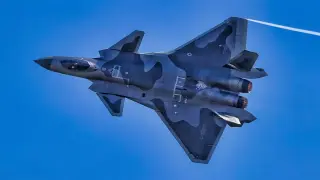
Andrew Latham argues that China’s military modernization is built for regional denial—through an A2/AD architecture, sea denial, and land-based missiles—to make the Western Pacific too costly to contest and to shield Taiwan, with Asia’s economic heft enabling global influence. The piece urges Washington to shift from chasing global power projection to a posture that blocks Beijing’s regional aims in the Indo-Pacific.
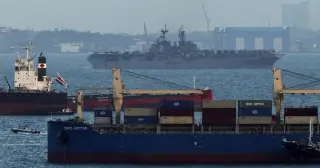
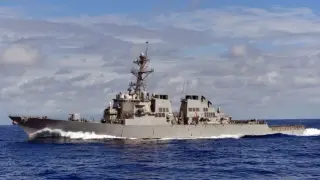
A significant fire aboard the guided-missile destroyer USS Higgins reportedly damaged propulsion and electrical power, with location and circumstances not disclosed. The ship is forward-deployed to Yokosuka under the 7th Fleet in the Indo-Pacific, and no injuries have been reported. This marks the third U.S. warship fire this year as investigations continue into the incidents.
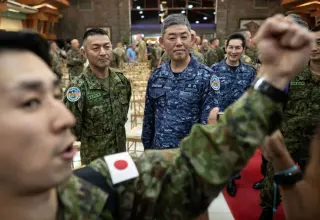
Japan is quietly shifting from a pure hub role to a ‘secondary connector’ in Indo-Pacific security, reinforcing the U.S.-led order while broadening its partnerships; two major shifts behind this evolution point to Tokyo’s strategic diversification of security ties with middle powers, signaling a stepped-up effort to influence regional security beyond the traditional hub-and-spoke model.