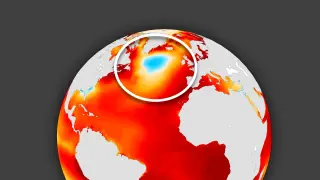
Scientists warn that the Atlantic Meridional Overturning Circulation (AMOC) may weaken or collapse sooner than expected, potentially disrupting European climate and economies. A 'cold blob' in the North Atlantic signals this shift, prompting European governments to treat the risk as a national security threat and invest in monitoring and adaptation.
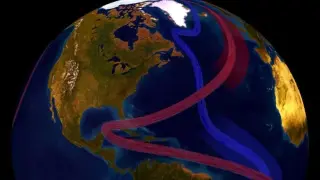
The Atlantic Meridional Overturning Circulation (AMOC) is weakening as the climate warms, reducing a major heat-transport system that keeps Europe warm and helps regulate global weather. Projections suggest about a 50% weakening by 2100, with salinity changes in the South Atlantic identified as a key driver, though model predictions vary widely. A complete AMOC shutdown could trigger drastic shifts—stronger European temperature extremes, Sahel drought, and potentially a snowball-Earth-type cooling—with some studies hinting the tipping point could arrive as early as the 2040s. Geoengineering ideas like damming the Bering Strait exist but are controversial and uncertain. The article emphasizes urgency to cut greenhouse-gas emissions under the Paris Agreement to avert severe outcomes.
A Nature Geoscience study reframes the Atlantic Meridional Overturning Circulation (AMOC) as an 'ocean heat valve' that can either release heat to the atmosphere or trap heat in the ocean, depending on circulation strength. This dynamic could mean that future AMOC weakening might amplify global warming, while past abrupt climate shifts (D–O events) are explained by rapid changes in North Atlantic heat loss. The researchers used climate models to show heat flow acts more like a valve than a simple conveyor, and they caution that warmer, ice-free conditions may alter these mechanisms. More work is needed to determine if multiple stable AMOC states exist or if an irreversible collapse is possible.
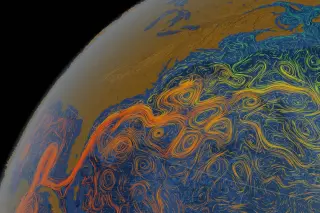
A weakening or shutdown of the Atlantic Meridional Overturning Circulation (the Gulf Stream system) would reallocate heat rather than abruptly end warming: northwestern Europe could see much colder winters and drier summers; tropical rainfall belts could shift south, weakening Sahel and South Asian monsoons; northeastern North America could face higher sea levels along the coast; North Atlantic storms and plankton productivity would change; ocean carbon uptake could fall, potentially leaving more CO2 in the atmosphere. The exact outcomes depend on how much warming has already occurred, and these model-based projections illustrate broad, interconnected impacts rather than a simple, uniform change.
A Greenland expedition highlights fear that the Atlantic Meridional Overturning Circulation (AMOC) is weakening as warming and freshwater inputs hinder deep-water formation, raising the risk of a rapid slowdown or collapse with far-reaching effects on Europe, the Americas, and global climate; researchers are racing to measure signals amid natural variability, while some propose drastic geoengineering options, though most emphasize reducing CO2 as the reliable solution.
A new Nature Geoscience study finds the Atlantic Meridional Overturning Circulation is weakening; if it collapses, Northern Europe could cool by about 5–15°C (9–27°F), but the global climate may warm overall as heat builds up in the ocean when the circulation slows. Greenland ice melt adds freshwater that further slows the current, and past weak periods tend to redistribute heat rather than reduce total planetary heat, suggesting a potential net increase in global warming as temperatures rise.
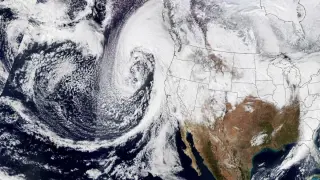
A Nature Communications study finds that human-caused warming is slowing the Atlantic Meridional Overturning Circulation (AMOC), with a possible near-future collapse. Using NASA data and climate models, researchers project that a weaker AMOC would alter atmospheric moisture and storms globally, intensifying North American—especially California—storms by the end of the century while reducing them in Greenland and the Arctic. Atmospheric rivers, the moisture-dense air streams that drive much of California’s rainfall, could become more frequent and wetter, increasing flood risk in some regions and changing water resources; ARs may also transport more moisture to the Southern Hemisphere and accelerate Antarctic ice melt. The greatest increases in AR activity are expected along North America’s West Coast, from Baja California to Alaska, while Arctic regions could see fewer ARs as the jet stream shifts. However, the outcome depends on future greenhouse gas emissions, making the scenario not guaranteed. The research highlights how a single major ocean current can ripple across global climate patterns and emphasizes potential adaptation, such as restoring landscapes to capture more water in drought-prone areas.
The Atlantic Meridional Overturning Circulation (AMOC)—a vast system that helps keep north-west Europe milder—may be weakening as the planet warms and could potentially shift to a different state or cause more volatile UK weather. Argo floats and other measurements suggest signs of instability and a possible tipping point, though scientists debate timing and the likelihood of a sudden collapse. A weaker or reorganized AMOC could alter storm tracks and rainfall, bringing colder, more variable winters to Britain even as global temperatures rise. While uncertainty remains, many scientists argue for emissions cuts to relieve pressure on this crucial ocean circulation, rather than waiting for certainty.
A climate-model study, using Greenland ice melt scenarios, suggests the Atlantic Meridional Overturning Circulation (AMOC) may already be locked in toward collapse, with a 10% chance under peak 2025 emissions, rising to 23% in harsher melt scenarios—and potentially 100% by 2100 in the worst case. A collapse would trigger dramatic regional impacts, including sea-level rise along the U.S. East Coast, cooler temperatures for parts of Europe, and more extreme weather. The work is a preprint and debated, but it underscores the urgency of rapid emissions reductions to avert severe climate outcomes.
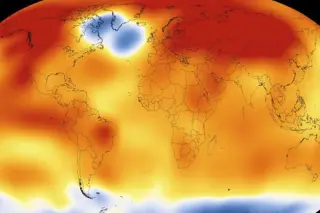
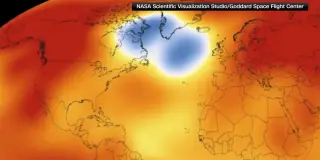
Ongoing heatwaves are shadowed by a large cool patch in the North Atlantic known as the “cold blob,” which scientists think may signal changes in the Atlantic Meridional Overturning Circulation (AMOC). Fresh Greenland meltwater and altered heat exchange could slow the sinking of warm water, weakening AMOC and nudging the jet stream, potentially bringing more European heatwaves in the near term while raising the possibility of colder European conditions if the current weakens further. The science is still debated on exact causes and timing, but climate models generally project some AMOC weakening this century, underscoring the need to cut greenhouse gas emissions to mitigate risk.
A new climate reanalysis-backed study links a persistent cold patch southeast of Greenland to a weakening Atlantic Meridional Overturning Circulation (AMOC). While surface heat loss has declined since 1955, deep-water temperatures drop as much as 1,000 meters below the surface, suggesting less warm water entering the region. If AMOC continues to weaken or collapses, Europe could cool, tropical rainfall patterns could be disrupted, and sea levels near the US East Coast could rise; however, scientists caution that the debate over the cold blob and AMOC's status is not yet settled.
A patch of unusually cold water in the subpolar North Atlantic, nicknamed the cold blob, has been linked to Europe’s heatwaves by influencing atmospheric circulation and the jet stream. While global temperatures rise, this region remains cooler due to ocean currents delivering less heat and Greenland meltwater adding freshwater, which may weaken the Atlantic Meridional Overturning Circulation (AMOC). Scientists warn that a further slowdown or collapse of the AMOC could bring harsher European winters, droughts elsewhere, and higher sea levels, though a cold Atlantic patch does not erase warming and extreme heat can persist under certain jet-stream patterns.
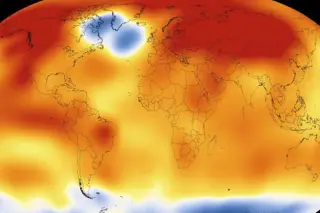
A large cold patch nicknamed the 'cold blob' south of Greenland is cooling the North Atlantic by about 2°F since 1900, suggesting the Atlantic Meridional Overturning Circulation (AMOC) is weakening due to warming and fresh water from melting ice; a significant slowdown or collapse could raise U.S. East Coast sea levels, bring colder European winters, and trigger droughts in Africa.
Scientists link a persistent cooling anomaly south of Greenland—the North Atlantic 'cold blob'—to a slowdown in the Atlantic Meridional Overturning Circulation (AMOC). A weaker AMOC could reduce the ocean's heat transport, shifting weather, storm tracks, and potentially accelerating sea-level rise along the U.S. East Coast, with the strongest impacts near Greenland, Iceland, and northern Europe.
A sediment core off Nova Scotia shows the Gulf Stream migrated north during the Younger Dryas, warming Atlantic Canada by up to 4–5°C and triggering changes in deep water circulation. This offers direct geological evidence that major Atlantic circulation reorganizations can occur during abrupt climate shifts, supporting models that a weakened AMOC under modern warming could reshape global ocean temperatures and weather patterns in coming decades.