SpaceX has petitioned the FCC to scrutinize Rocket Lab’s planned acquisition of Iridium amid a spectrum-interference dispute over Starlink gateways; SpaceX argues Iridium uses regulatory tactics to block rivals, while Iridium maintains its interference concerns and says coordination with SpaceX is ongoing.
Rocket Lab seeks to transform from a launch provider into a full-stack space infrastructure company by integrating Electron/Neutron launches with a spacecraft portfolio, Iridium’s global satellite network and Aireon’s aviation surveillance, and hosted-payload capabilities. The plan would enable recurring revenue across networks, spectrum, IoT, and government services, supported by Neutron’s medium-lift capability and an expanded supplier/production base. The upside hinges on successful integration, sustained government contracts, and achieving favorable margins as internal production scales; the base and bull cases hinge on Neutron’s cadence and reuse, with potential, sizable upside if the Iridium/Aireon combination yields durable cash flow and cross-selling opportunities, but significant execution and capital risks remain.
Rocket Lab (RKLB) plans to acquire Iridium Communications (IRDM) for about $8 billion in a half-cash, half-stock deal, aiming to combine rocket-launch services with satellite-based mobile communications to compete with SpaceX’s Starlink and expand margins. The move could unlock significant long-term upside, but it comes with high risk: Rocket Lab is still unprofitable, the stock is volatile, and the acquisition’s closing and integration (expected in H1 2027) will drive the near-term trajectory. In Q1, Rocket Lab posted revenue growth of about 63.5% to $200.3 million, while reporting a per-share loss of $0.02; Iridium posted a net profit of roughly $114.4 million last year, and Rocket Lab’s own net loss was about $198.2 million, underscoring the substantial execution risk alongside potential synergy-driven gains.
Rocket Lab will acquire Iridium for $8 billion (54 per share in cash and stock), a move CEO Peter Beck calls the logical next step into space services, using Iridium’s L-band network to enable new applications and a vertically integrated model of rockets, satellites and services. The deal is expected to close in mid-2027 after regulatory approvals, and Iridium NEXT remains healthy, giving Rocket Lab time to scale opportunities and pursue recurring revenue beyond its launch manufacturing. The companies will maintain Iridium’s current service, with Rocket Lab aiming to expand the offering, although specifics were not disclosed; the transaction does not affect Rocket Lab’s ongoing work with Globalstar.
Rocket Lab will acquire Iridium Communications for $8 billion, combining Rocket Lab’s launch and spacecraft manufacturing with Iridium’s 66-satellite global network to compete with SpaceX, serving about 2.5 million subscribers and enabling next‑generation satellites with direct-to-device services that could bolster U.S. national security and emergency-response capabilities.
Rocket Lab announced it is acquiring Iridium for about $8 billion in cash and stock, combining Rocket Lab’s launch capabilities with Iridium’s profitable 80-satellite L-band network to accelerate space-based services (IoT, navigation/PNT, aviation, maritime, and security). CEO Peter Beck says the deal creates a self-launching space powerhouse and aims to outpace rivals like SpaceX and Blue Origin, while Rocket Lab continues developing the Neutron rocket; Iridium’s network and spectrum underpin the expansion, though Neutron’s debut remains uncertain.
Rocket Lab will acquire Iridium for about $8 billion enterprise value, paying $54 per Iridium share in cash and stock, uniting Rocket Lab's launch and manufacturing with Iridium's global L-band network to form an end-to-end space company offering satellite services, IoT, D2D, PNT, and national-security capabilities, with closing expected in mid-2027 subject to approvals and financing; the deal expands recurring revenue and vertical integration in the space economy.
The article guides readers through a vivid timeline of the 66-million-year-old asteroid impact that ended the dinosaurs. It describes the instantaneous fireball, shock waves, and vaporized rocks, followed by megatsunamis, global fires, thick dust, and a prolonged ‘nuclear-winter’ like atmosphere that plunged Earth into darkness and freezing temperatures. Over the next year to decade, ecosystems collapse and mass extinctions unfold, with evidence from iridium-rich layers and the Chicxulub crater confirming the catastrophe. Eventually life recovers in new configurations, enabling mammals to rise in the long aftermath.
Researchers used a liquid‑handling robot to perform click chemistry, creating 672 metal complexes by combining 192 ligands with five metals. Screening revealed notable antibacterial activity for iridium and rhenium complexes against Staphylococcus aureus, with six compounds selected for further study. One iridium complex showed 50–100× higher activity against bacteria than toxicity to human cells, a promising sign for metal‑based antibiotics but requiring further drug‑like optimization and in‑vivo testing; AI and expanded libraries are planned to guide next steps.
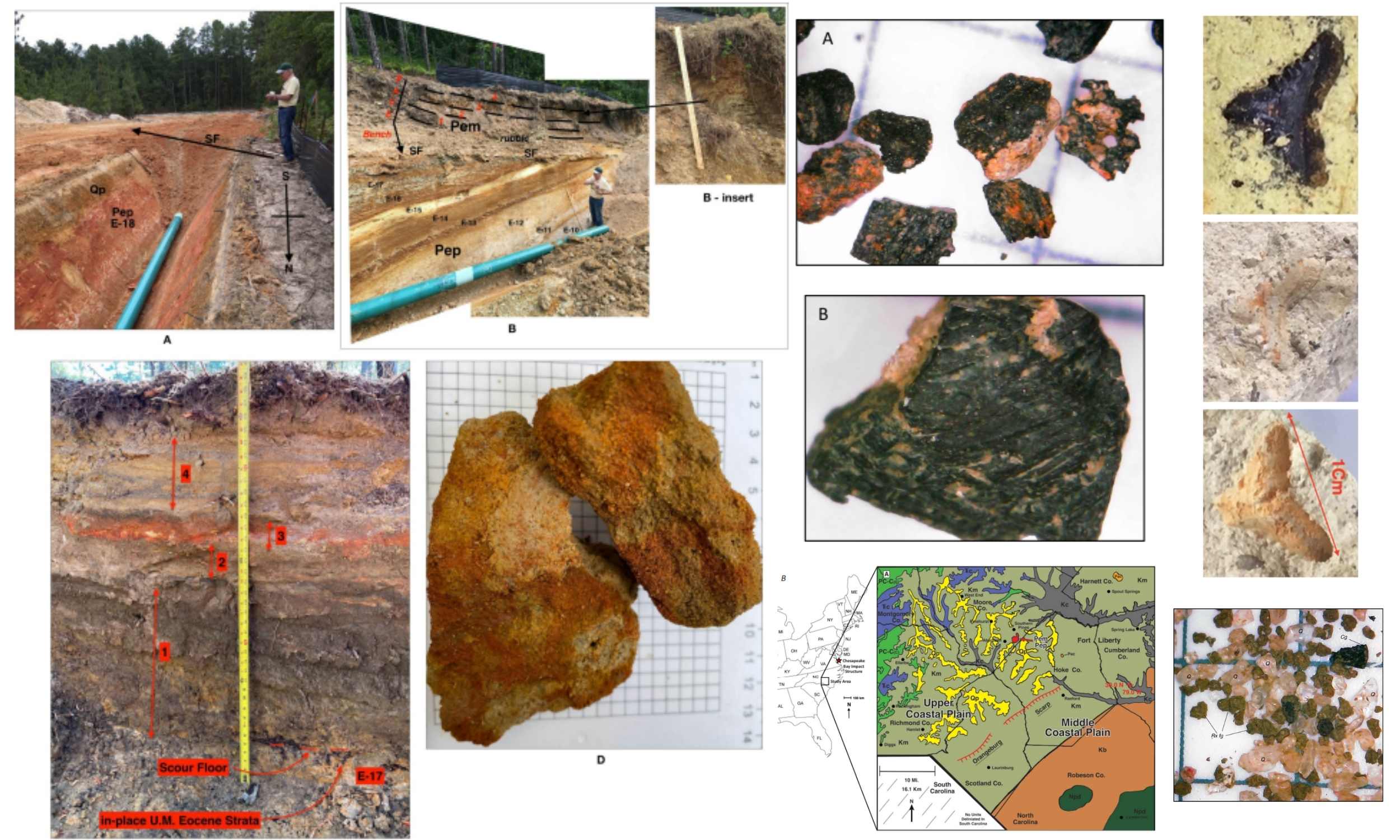
Geologists in North Carolina have discovered evidence of a late Eocene extraterrestrial impact and subsequent tsunami, including impact debris, iridium spikes, and tsunami deposits, linked to the nearby Chesapeake Bay impact structure, providing new insights into regional impact history and sea level changes.
Qualcomm and Iridium have announced the end of their partnership for Snapdragon Satellite, a technology aimed at providing emergency satellite connectivity for Android phones. Despite successful development and demonstration, no Android manufacturers signed on to include the technology in their devices. This decision was influenced by a preference for standards-based solutions. However, Samsung recently hinted that its 2024 Galaxy phones may offer satellite connectivity, while Huawei already offers satellite calls on its Mate 60 line. Iridium remains optimistic about the future of satellite connectivity in consumer devices, emphasizing its global coverage and reliability.
Qualcomm is ending its partnership with Iridium to provide technology for connecting Android smartphones directly to Iridium's satellites. Despite successfully developing a chip for satellite connectivity, no smartphone makers have included Qualcomm's technology in their devices. The termination of the agreement is likely due to concerns over pricing and a preference for a standards-based approach. Iridium remains open to working with Qualcomm on a standards-based solution and plans to re-engage with smartphone makers directly. The cancellation does not affect Iridium's financial guidance, and the company expects to generate $1 billion in annual service revenue by 2030.
Qualcomm has scrapped its plans to offer a satellite SOS feature for Android phones, called Snapdragon Satellite, which would have rivalled Apple's Emergency SOS feature. The partnership with satellite communications company Iridium was terminated due to a lack of interest from smartphone makers. Qualcomm will continue working with Iridium on standards-based solutions for satellite connectivity. The lack of interest may be attributed to potential payment issues and smartphone makers' preference for controlling the relationship with satellite companies. Apple's satellite connectivity service is currently being offered for free, and it remains to be seen if users will be willing to pay for it. Iridium is hopeful that phone makers will eventually show interest in the feature.
Qualcomm and Iridium's partnership to bring satellite connectivity to Android phones has been canceled, with Qualcomm terminating the agreements. The Snapdragon Satellite platform, which aimed to enable satellite-based SMS and emergency messaging on high-end smartphones, apparently faced technical issues and failed to attract interest from smartphone manufacturers. This setback comes as Apple has successfully implemented satellite-based emergency messaging on its latest iPhones. However, Iridium remains optimistic about the potential for satellite connectivity in the phone market and plans to re-engage with smartphone OEMs and chipmakers. Other companies, such as SpaceX and AT&T, are also exploring satellite connectivity options, while Samsung plans to introduce it in its Galaxy S24 phones next year.
SpaceX has scrubbed the launch attempt of a Falcon 9 rocket from Vandenberg Space Force Base in California, which was carrying 16 satellites for OneWeb's internet network and five satellites for Iridium's voice and data relay constellation. No new launch date has been announced yet.