Researchers at Tohoku University found that stimulating the vagus nerve immediately after training improves long-term motor learning in mice. The study suggests this effect is driven by rhythmic changes in blood flow near the cerebellum, rather than immediate performance boosts, indicating a new mechanism for memory consolidation.
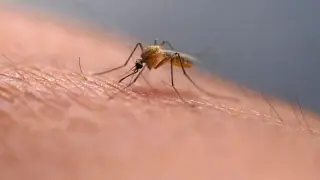
A new study published in iScience confirms that different mosquito species are attracted to different people based on unique skin chemistry. Researchers at Florida International University tested 119 volunteers in Miami against three mosquito species, finding that no single individual was highly attractive to all three. The yellow-fever mosquito prefers males and specific bacterial patterns, the Asian tiger mosquito is drawn to ketones and plant-like compounds, and the southern house mosquito responds to the broader microbial ecosystem on skin. These findings suggest that targeted repellents could be developed by isolating specific odor components, though field studies are needed to confirm real-world biting behavior. The Asian tiger mosquito is currently expanding across Europe, making this research relevant for vector-borne disease prevention.
A large-scale experiment at a Dutch music festival identified specific lifestyle factors that make humans more attractive to mosquitoes, while debunking common myths about blood type and diet.
Ancient DNA analysis of Grand Duke Francesco de Medici's remains confirms malaria, not poisoning, as the cause of his 1587 death; the study also finds Plasmodium DNA in his brother Giovanni, identifies two parasite species and a potentially new P. falciparum strain, and uses the findings to map malaria's historical spread and evolution in Renaissance Italy.