Tag

Frame Dragging

All articles tagged with #frame dragging

S301: A Lightning-quick Pass Near Sagittarius A* Tests Black Hole Physics
space1 day ago

S301: A Lightning-quick Pass Near Sagittarius A* Tests Black Hole Physics

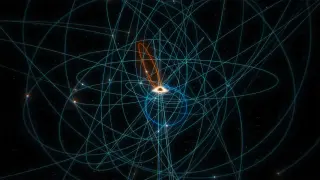
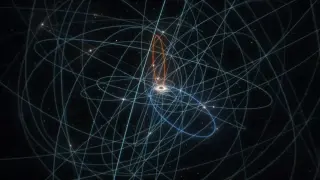
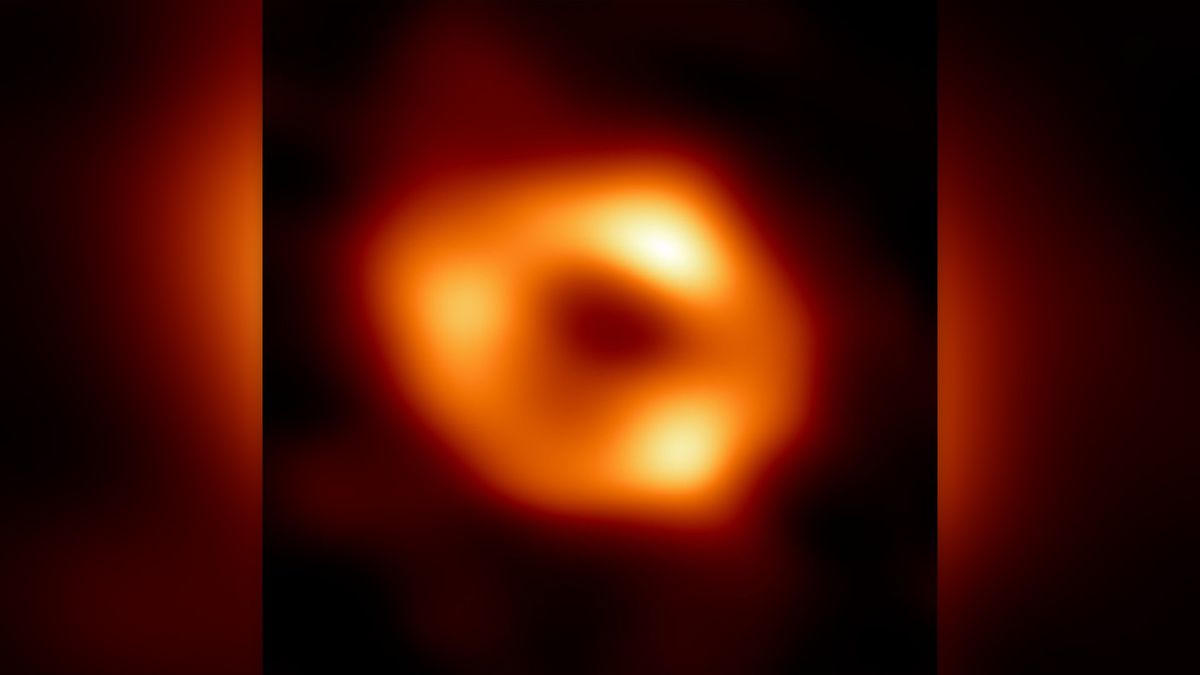
Astronomers have identified S301, a star orbiting extremely close to the Milky Way's central black hole, Sagittarius A*, reaching about 15,500 miles per second (roughly 55.8 million mph)—the fastest speed ever observed and the closest approach to the black hole to date. Its extreme proximity allows direct tests of relativistic effects, such as frame-dragging (Lense-Thirring), with upcoming measurements from facilities like the Gravity instrument on the VLT and MICADO on the ELT over the next decade.

Milky Way's fastest star rockets around Sagittarius A* at 8% light speed
space5 days ago

Milky Way's fastest star rockets around Sagittarius A* at 8% light speed

Astronomers have identified S301, the Milky Way’s fastest star, racing around the galaxy’s supermassive black hole Sagittarius A* at about 15,500 miles per second (over 8% of light). Its tight 8.7-year orbit, roughly 12 AU from the black hole, offers a novel way to probe Sagittarius A*’s spin and test general relativity via frame dragging, using the GRAVITY instrument on ESO’s Very Large Telescope Interferometer. The discovery, reported in Nature, could allow direct measurements of the black hole’s spin within a decade as researchers continue to monitor two full orbits; S301 may have been captured from a binary system.

Star S301’s Race Around Sgr A* Could Reveal Black Hole Spin and Test Relativity
science5 days ago

Star S301’s Race Around Sgr A* Could Reveal Black Hole Spin and Test Relativity

Astronomers using the GRAVITY+ instrument have tracked star S301 in an ultra-tight, 8.7-year orbit around the Milky Way’s supermassive black hole Sgr A*, reaching peak speeds over 25,000 km/s (about 15,500 miles/s, ~8% of light speed). The extreme motion near pericenter exposes frame-dragging and spacetime curvature, offering a path to measure Sgr A*’s spin and test the no-hair theorem of black holes, with continued observations through 2031 and future ELT instruments like MICADO.

Disco-ball satellite nails Einstein’s relativity test to 0.2%
science1 month ago

Disco-ball satellite nails Einstein’s relativity test to 0.2%

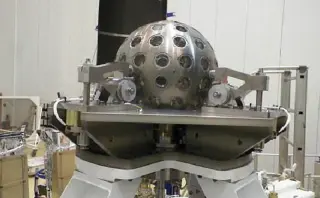
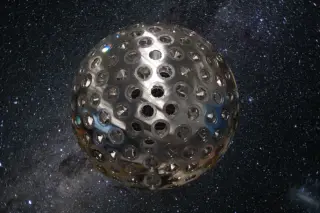
A dense, thruster-free satellite named LARES-2, paired with the older LAGEOS, was laser-tracked from Earth to isolate the frame-dragging effect predicted by general relativity. By canceling Earth’s oblateness and tidal perturbations over a 1,050-day cycle, the team measured the Lense-Thirring precession to about 0.2% accuracy, confirming Einstein and narrowing alternatives like Chern-Simons theory, while also delivering a more precise Earth-tide benchmark.

LARES-2 tightens Earth's frame-dragging test to ~0.1% accuracy
science1 month ago

LARES-2 tightens Earth's frame-dragging test to ~0.1% accuracy

The LARES-2 laser-ranging satellite, combined with LAGEOS and GRACE data, delivers the most precise measurement of Earth's frame-dragging to about one part in a thousand, providing a stringent confirmation of general relativity in the near-Earth environment and placing tight limits on alternative gravity models such as Chern–Simons gravity, while also improving the understanding of Earth tides through high-precision satellite analysis with GEODYN/UTOPIA and ILRS data.

Direct-wave signal exposes horizon physics in GW250114
science2 months ago

Direct-wave signal exposes horizon physics in GW250114

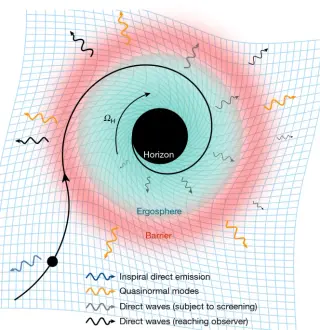
Researchers report observational evidence of a direct-wave component in GW250114 from a binary-black-hole merger. The direct wave oscillates near twice the remnant horizon’s rotation rate and damps according to surface gravity, imprinting frame-dragging from the Kerr black hole and matching theoretical predictions. This new channel enables direct probing of near-horizon physics in strong gravity.

Warped spacetime powers flickering light in newborn magnetars
space5 months ago

Warped spacetime powers flickering light in newborn magnetars

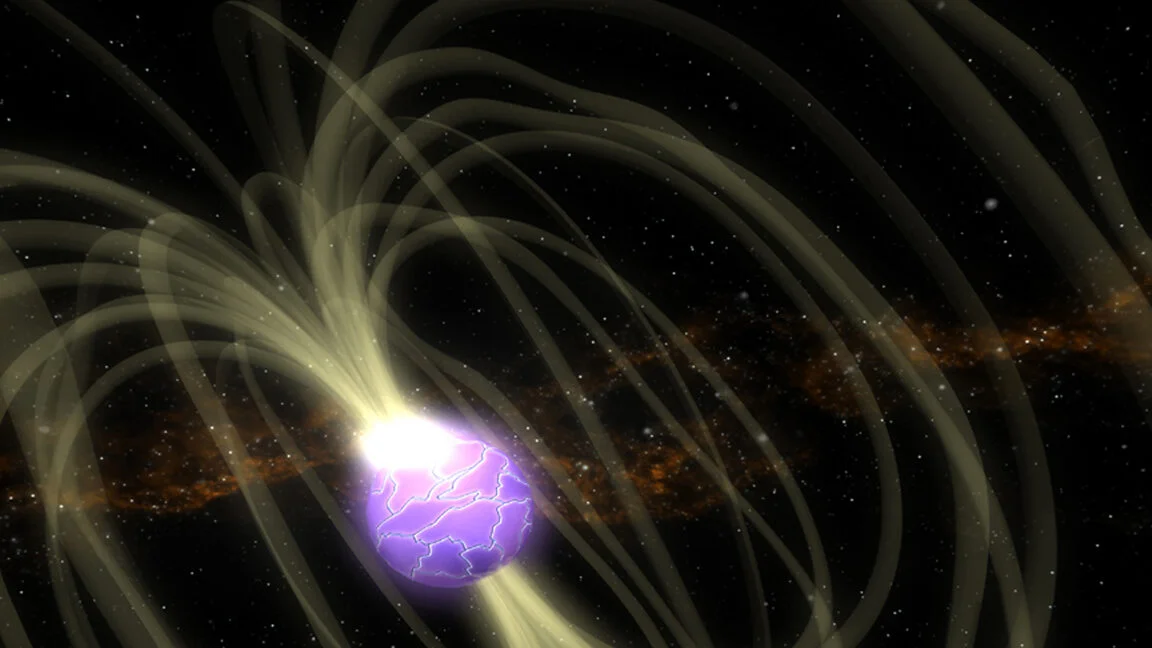
Astrophysicists propose a magnetar+Lense-Thirring model to explain the zigzag, chirped light curves of Type I superluminous supernovae, like SN 2024afav. A newborn magnetar’s rapid spin twists spacetime; a misaligned, shrinking accretion disk precesses and intermittently blocks or redirects radiation, producing regular brightness bumps and a shrinking period. The model fits the observed data, yields a 4.2-millisecond spin and strong magnetic field, and could unify explanations for several such supernovae; future Rubin Observatory discoveries will test it.

Innovative Method Unveils New Energy Source from Black Holes
science1 year ago

Innovative Method Unveils New Energy Source from Black Holes

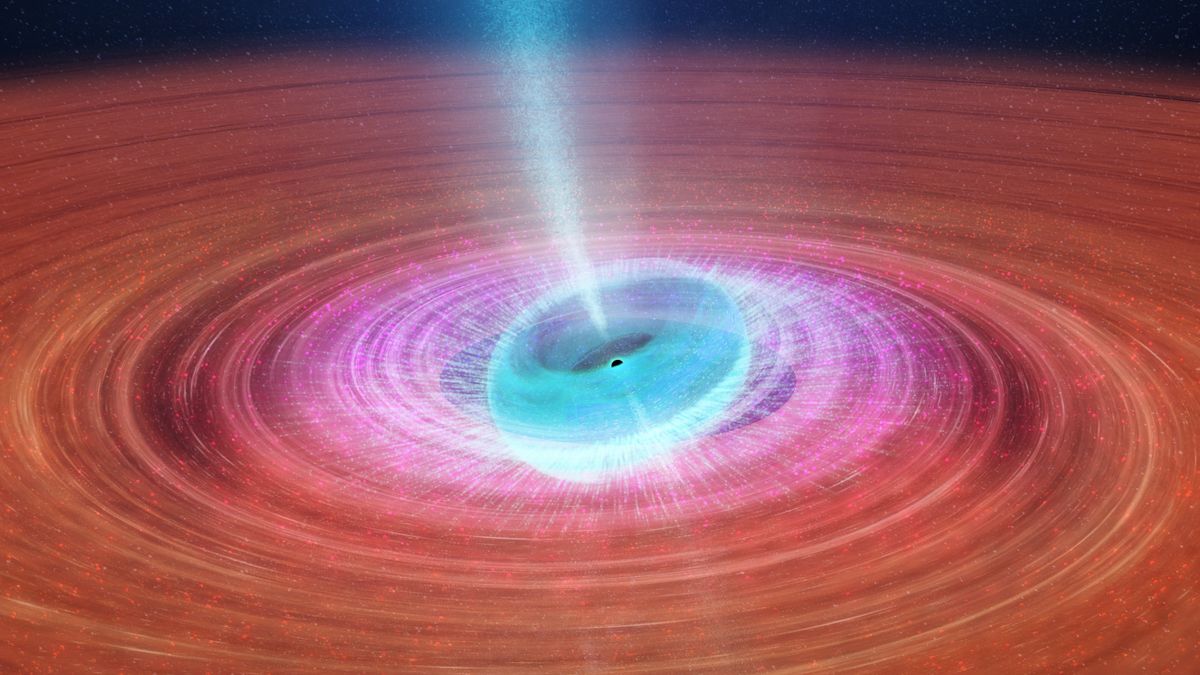
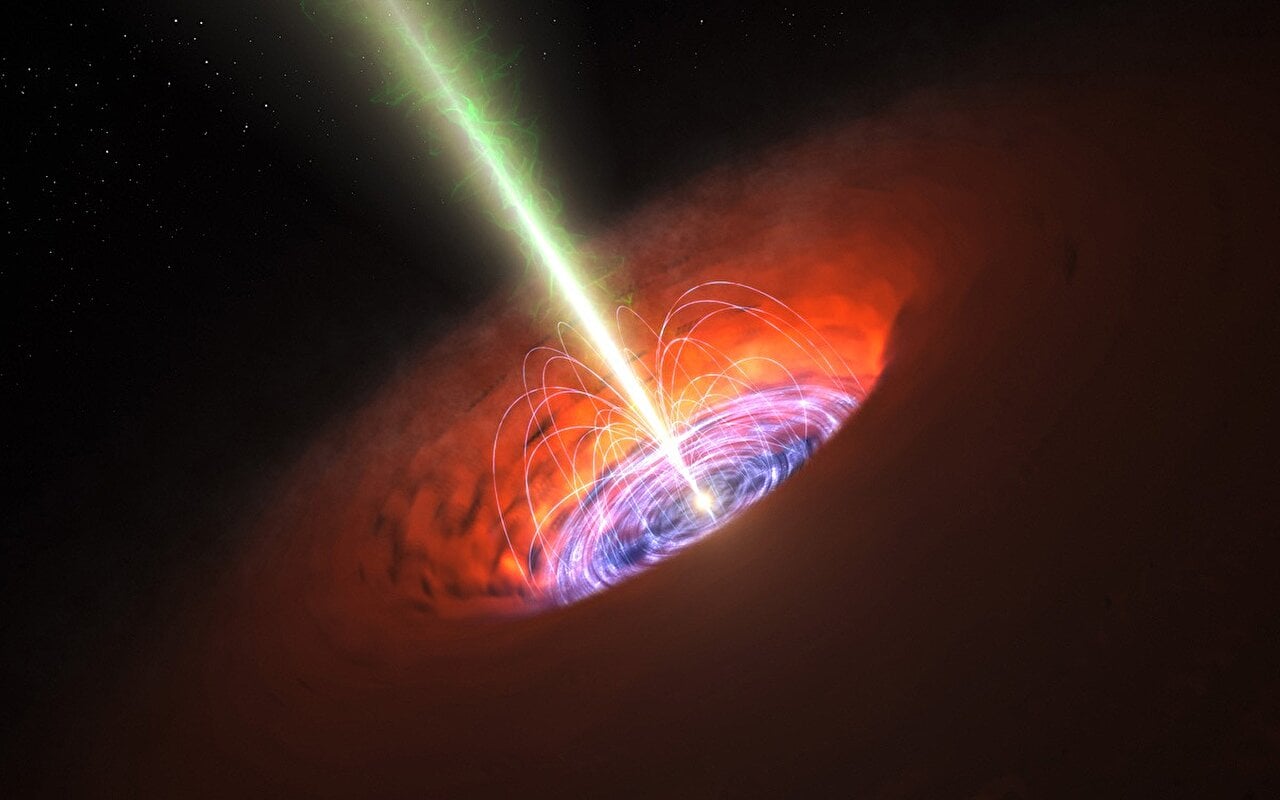
A recent study explores how the phenomenon of frame dragging around rotating black holes can transfer energy from their magnetic fields to nearby matter. This effect, which is more pronounced in supermassive black holes, can enhance the electromagnetic energy generated by the accretion disk's motion, potentially observable in quasars. The research highlights a new way to understand energy extraction from black holes through their magnetospheres.

"Milky Way's Supermassive Black Hole Pushes Cosmic Speed Limits, Warping Space-Time"
science2 years ago

"Milky Way's Supermassive Black Hole Pushes Cosmic Speed Limits, Warping Space-Time"

The supermassive black hole at the center of the Milky Way, known as Sagittarius A* (Sgr A*), is spinning close to its maximum speed, according to physicists. Using NASA's Chandra X-ray Observatory, researchers calculated the rotational speed of Sgr A* to be between 0.84 and 0.96, approaching the top limit defined by a black hole's width. This discovery has significant implications for our understanding of black hole formation and astrophysical processes. Black holes, unlike solid bodies, twist up the fabric of space-time and drag anything within their vicinity along, a phenomenon known as frame dragging.