Tag

Magma Reservoir

All articles tagged with #magma reservoir

In situ observation captures a rapid seafloor-spreading burst at the Southeast Indian Ridge
geoscience6 days ago

In situ observation captures a rapid seafloor-spreading burst at the Southeast Indian Ridge

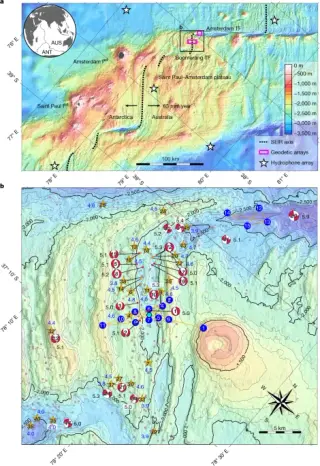
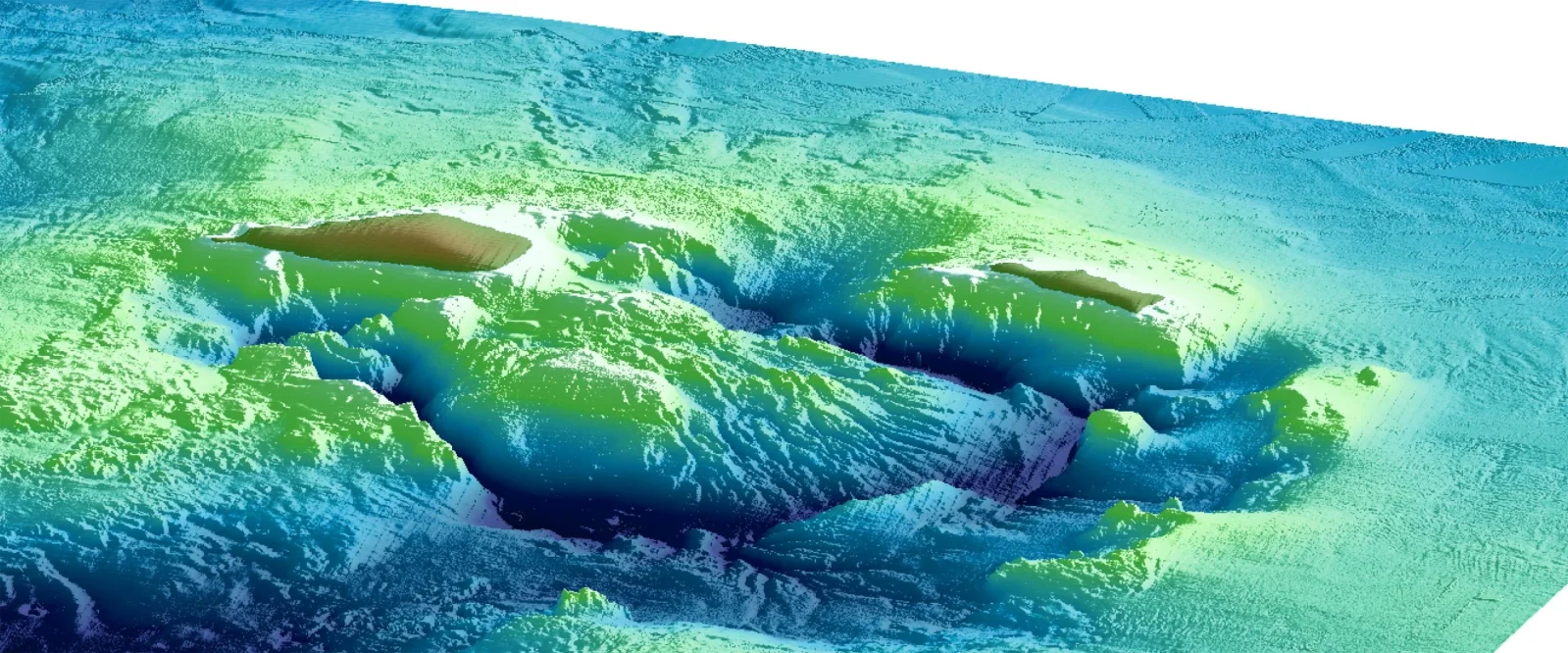
An autonomous seismogeodetic array on SEIR’s segment I1 captured a rapid seafloor spreading event beginning 26 April 2024, driven by a migrating swarm of extensional earthquakes that propelled a southeast- to northwest-propagating dyke from a deflating axial magma reservoir. This produced about 4 meters of subsidence and over 1 meter of horizontal extension in the axial valley, followed by the eruption of roughly 160 million cubic meters of lava on the seafloor over ~16 days, while triggering seismic and aseismic slip on valley-bounding normal faults and the adjacent transform fault. The multi-sensor data (hydrophones, acoustic ranging, bottom-pressure recorder, and swath bathymetry) suggest large-scale aseismic magmatic slip could be the primary mechanism driving MOR fault displacement, addressing long-standing questions about short-timescale MOR dynamics. 2D elastic-dislocation modeling of sill, dyke, and fault geometries supported the observed displacements.

Ridge spreading unfolds in rapid bursts, forming new ocean floor
science6 days ago

Ridge spreading unfolds in rapid bursts, forming new ocean floor

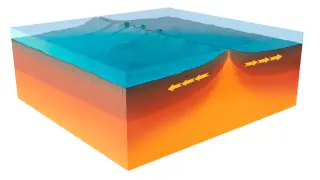
A 2024 French study near the Amsterdam–Saint Paul Plateau shows mid-ocean ridge spreading can occur in intense bursts: dyke intrusions, sudden subsidence of a magma reservoir, and meters of horizontal extension happened within days, with some events lacking seismic signals. About 150 million cubic meters of new material were produced, and the total extension equates to roughly 38 years of normal spreading, suggesting ocean-floor creation may be episodic rather than steady.

New Magma Injections Refill Japan’s Kikai Caldera After 7,300 Years
science3 months ago

New Magma Injections Refill Japan’s Kikai Caldera After 7,300 Years

A Kobe University-led study using underwater seismic surveys mapped a large magma reservoir beneath Japan’s Kikai Caldera and found that fresh magma is being injected to refill the system after its 7,300-year-old eruption, supporting a general refill model for giant calderas like Yellowstone and Toba and potentially improving monitoring of future giant eruptions.

"Accidental Discovery: Mystery Magma Reservoir Uncovered in Volcanoless Alaska"
science2 years ago

"Accidental Discovery: Mystery Magma Reservoir Uncovered in Volcanoless Alaska"

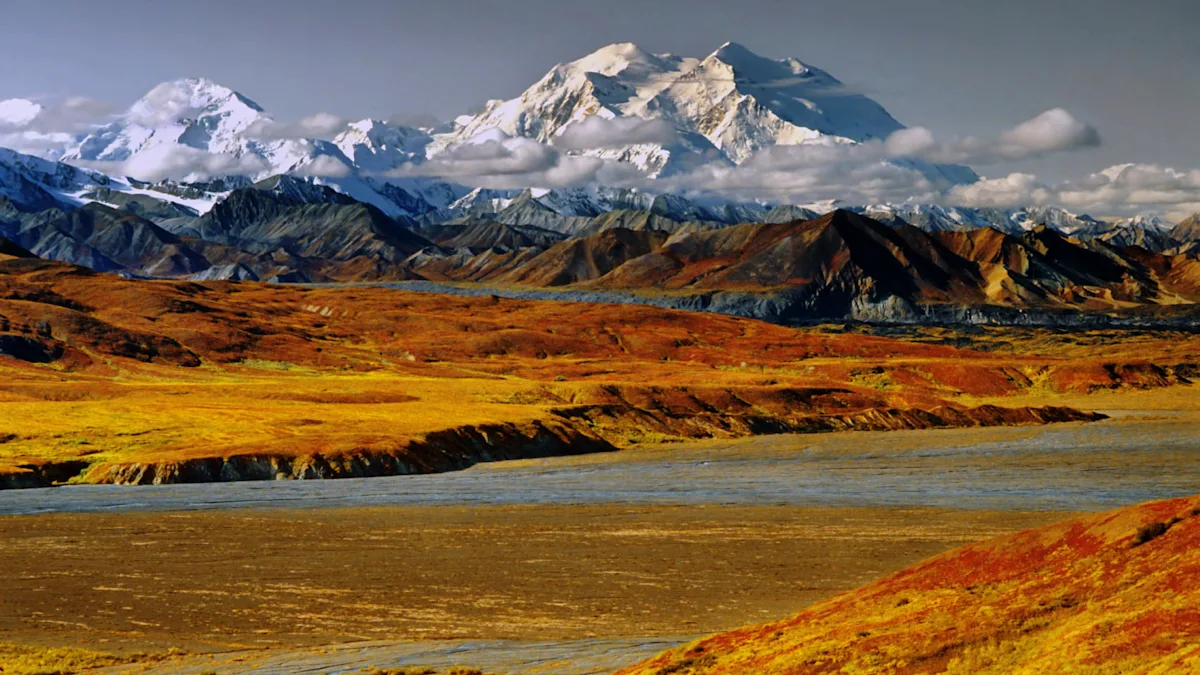
Scientists studying seismic activity in the Denali volcanic gap region of Alaska accidentally discovered evidence of a magma reservoir about 7 miles beneath the surface, challenging the belief that the area was devoid of volcanic activity. The discovery was made by analyzing seismic data collected following a magnitude 7.1 earthquake in 2018, revealing a "seismic-velocity anomaly" indicating the presence of slow-moving, molten magma. Further research is needed to confirm the findings and understand the nature of the anomaly in this volcanoless region.

science-and-technology3 years ago

Unveiling Yellowstone's Magma Storage with Seismic Sensors

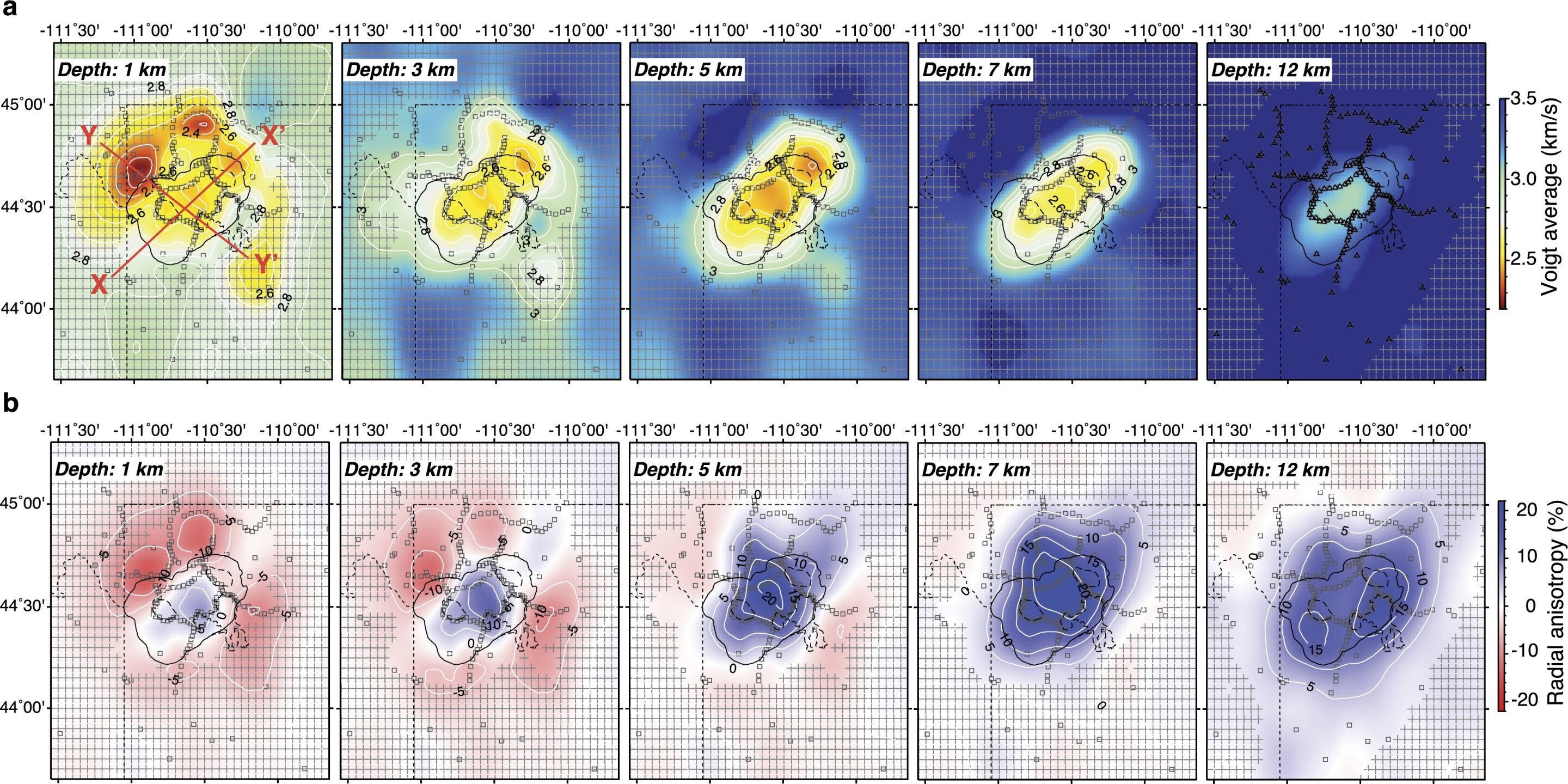
Scientists have gained new insights into the structure and composition of Yellowstone's magma reservoir using seismic data from hundreds of sensors. The data revealed that the magma is stored in two reservoirs, with the upper reservoir containing more melt than the lower one. The recent study also found that the magma is stored in a sheet-like manner, with horizontally elongated areas of localized magma storage called sills. The improved understanding of Yellowstone's system could help in studying other volcanic systems and improving eruption forecasts. However, many questions about the magmatic system still remain.

"Surprising Discovery: Yellowstone's Upper Magma Reservoir Contains 28% Molten Rock"
earth-science3 years ago

"Surprising Discovery: Yellowstone's Upper Magma Reservoir Contains 28% Molten Rock"

A team of geologists and seismologists has used seismic wave data to measure the content of the Yellowstone magma reservoir and found that the upper part is approximately 28% melted rock, higher than previous estimates. The percentage of melt in the reservoir is important for assessing the risk of volcanic eruption, and this new measurement aligns with prior assessments indicating a low risk of eruption in the park.