Actor Josh Duhamel, 53, has publicly endorsed testosterone replacement therapy (TRT) after discovering low levels in his early 40s. He co-founded Gatlan, a men's health company, despite warnings from former representatives that the venture could damage his image. Duhamel reports feeling stronger and more energetic, injecting testosterone three times weekly. Experts caution that TRT is for medical deficiency, not performance enhancement, and carries risks including infertility and blood clots.
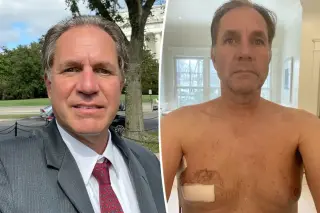
A 62-year-old man from Virginia, Robert Pfleghardt, credits a painful prank during a trip to Las Vegas five years ago with saving his life. While engaging in horseplay with friends, a friend twisted his nipple, causing persistent pain that led to a medical visit. Doctors discovered an eraser-sized lump, which a mammogram confirmed as breast cancer that had spread to lymph nodes. Pfleghardt, who initially believed men could not get the disease, underwent a lumpectomy and radiation therapy in 2022. He now warns that many men ignore chest lumps, delaying treatment for a condition that affects roughly one in 100,000 males but carries a higher mortality rate than in women due to late diagnosis.
Sylvester Stallone's admission of suffering from bulimia while preparing for 'Rambo' and 'Rocky III' has triggered a broader discussion on the rising, yet often hidden, prevalence of eating disorders among men. Experts warn that societal pressures for muscularity and 'perfection' are driving a dangerous trend, particularly among adolescents, leading to severe physical consequences like cardiac arrest and organ damage.
Sylvester Stallone’s recent admission of suffering from bulimia while preparing for 'Rambo' and 'Rocky III' has sparked a broader conversation about the rising prevalence of eating disorders among men. While Stallone described his extreme dieting and steroid use as a 'body-worship' obsession, experts warn that societal pressures for muscularity are driving a hidden epidemic. The disclosure, part of his new memoir 'The Steps,' underscores the severe physical toll of such practices, including heart damage and electrolyte imbalances, and highlights the stigma that prevents many men from seeking help.
A cluster of symptoms known as 'irritable male syndrome' (IMS) is linked to age-related testosterone decline, causing mood swings, fatigue, and cognitive issues. While not a formal clinical diagnosis, experts note these changes often overlap with 'andropause' and can be managed through medical evaluation, lifestyle adjustments, and therapy.
Actor Josh Duhamel, 53, stated on the 'Human Upgrade' podcast that testosterone replacement therapy (TRT) has improved his physical health and energy levels, allowing him to feel better than he did in his 30s. Duhamel began TRT approximately five years ago after discovering low testosterone levels in his early 40s. He co-founded Gatlan, a men's health company offering hormone optimization and longevity treatments, despite warnings from former representatives that the venture could harm his public image. Duhamel injects testosterone three times weekly to maintain consistent levels, citing benefits for joint pain, back strength, and overall vitality. He emphasized that the therapy helps him keep up with his three young children, including a 3-month-old daughter and a 2.5-year-old son. Duhamel advocates for broader public discussion on hormone optimization, noting that medical science supports these treatments for longevity and quality of life. The FDA has approved testosterone products for men with low testosterone associated with specific medical conditions, though it requires warnings regarding potential increased blood pressure.
A large French study finds that shifting meal times between weekdays and weekends, or 'eating jet lag,' is associated with a higher risk of cardiovascular disease in men. Each additional hour of misalignment increases overall heart disease risk by 14% and coronary heart disease risk by 21%. No similar link was found in women.
Irritable Male Syndrome (IMS) is a recognized term in medical and psychological circles describing a cluster of symptoms associated with age-related testosterone decline in men. While not a formal clinical diagnosis, experts describe it as a useful shorthand for the physical and emotional changes that occur as testosterone levels drop, typically beginning around age 40. Symptoms include irritability, fatigue, cognitive difficulties, reduced libido, and changes in body composition. The condition was coined in 2001 by Scottish scientist Dr. Gerald Lincoln after observing similar behavioral changes in male animals with declining testosterone. Although often dismissed as mere aging or stress, IMS is linked to biochemical shifts that can significantly impact mental health and relationships. Experts emphasize that early recognition and medical evaluation, including blood tests for testosterone levels, are crucial for managing symptoms through lifestyle adjustments or therapy. The issue is particularly significant given that midlife men represent the highest suicide cohort, with rates nearly five times higher than women of all ages.
Sen. Ruben Gallego (D-Ariz.) stated that Democrats are improving their outreach to young men ahead of the 2026 midterms, though he noted the party still needs to refine its messaging. While a new poll shows Democrats holding a 57% to 40% generic ballot lead among men aged 18 to 30, legislative progress on men’s issues remains stalled. Gallego’s bipartisan proposal for a men’s health office in the Department of Health and Human Services has not advanced, nor has related legislation from Sen. Bill Cassidy (R-La.). Gallego emphasized the need to invest in this demographic, noting that nearly 40% of young men feel their lives are off track.
Joseph Wayne Singleton, a 33-year-old musician from Louisiana, was diagnosed with prostate cancer after a routine physical revealed dangerously high prostate-specific antigen (PSA) levels, despite having no symptoms. Treated at UT MD Anderson Cancer Center, he underwent a prostatectomy and recovered quickly. His case highlights the debate over early screening, as current guidelines generally do not recommend PSA testing for men under 40 unless they have high-risk factors. Singleton now advocates for earlier screening, while experts note that guidelines vary by age and risk profile.
A study finds that GLP-1 medications used for weight loss may worsen or accelerate hair loss in some men, with cases of shedding lasting beyond a temporary phase. While anecdotes about Ozempic and similar drugs exist, the effect does not affect everyone, and more research is needed to understand who is affected and why.
PSA screening for prostate cancer is a debated topic: while prostate cancer is common and often slow to develop, automatic testing is not advised; men should discuss risks and benefits with their clinician to decide if screening is appropriate.
As stigma fades, more men seek cosmetic and aesthetic treatments not to chase youth but to harmonize their appearance with their self-image; about 15% of cosmetic procedures are performed on men. Treatments range from Botox and lasers to surgical options, but experts caution that non-surgical interventions carry risks if overdone. Foundational steps before pursuing procedures include quitting nicotine, sticking to a simple skincare routine (daily sunscreen and retinoids), maintaining a healthy weight, addressing hair loss early with FDA-approved therapies like finasteride and minoxidil, and staying physically active to support overall health and appearance.
A CDC state-by-state map shows nearly an eight-year gap in male life expectancy, from about 77.4 years in Massachusetts to around 69.5 years in Mississippi and West Virginia. The South dominates the lower end of the rankings, while some Northeast/Western states rank highest. Nationally, male life expectancy was about 76.5 years in 2024 (women ~81.4). Multiple factors—healthcare access, socioeconomic conditions, smoking, chronic disease—contribute, and no single habit guarantees extra years; guidelines still call for about 150 minutes of moderate activity per week plus strength training.
A health expert highlights seven major issues men often overlook—cardiovascular disease and vascular health, erectile dysfunction, prostate enlargement and urinary symptoms, metabolic decline with abdominal weight gain, low testosterone, sleep apnea, and the importance of proactive cancer screening—emphasizing that symptoms and risks should prompt medical evaluation and preventive care to improve outcomes.