New MOSAIC method enables high-throughput DNA synthesis via self-assembly
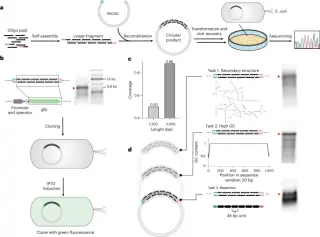
Researchers from Tsinghua University and collaborators have developed a new high-throughput gene synthesis method called Molecular Self-Assembly Induced Cloning (MOSAIC). The technique overcomes traditional bottlenecks in DNA synthesis by using the self-assembly of overlapping oligonucleotides in vitro, followed by cellular repair mechanisms in vivo. This approach allows for the parallel synthesis of over 1,000 distinct gene fragments in a single reaction, achieving near-zero misalignment. The method was validated by constructing massive variant libraries of the plastic-degrading enzyme PETase, yielding variants with higher potency than the current gold standard.