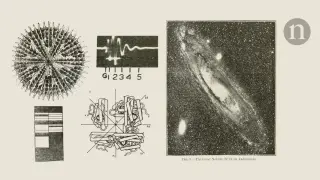
This News & Views piece chronicles René Descartes as a geometric pioneer who fused algebra and geometry through the Cartesian coordinate system, outlining his lasting impact on mathematics and science and situating his achievements within a broader history of scientific thought.
Specialized today unveiled the Crux 5, a gravel-focused redesign that shifts away from cyclocross with a longer, slacker geometry, 55mm tyre clearance, and 52t chainring clearance. Builds start around 6.9–7.1 kg with lighter Terra wheels and a one-piece cockpit, and the bike touts about a 15.2-watt aero improvement over the previous Crux. It remains 1x-compatible (with mechanical groupsets), internally routed, and introduces an S-Level lineup alongside S-Works, aiming to be a true gravel racer rather than a cross bike. The company backs its aero claims with wind-tunnel data and its “Equation of Speed,” factoring weight, rolling resistance, and aerodynamics into on-trail performance. Prices range from roughly $4,500 to $14,000, with framesets available in select markets.
A study from VUB reports that ChatGPT-5.2 can autonomously generate an original mathematical proof, solving a 2024 geometry conjecture. The proof emerged through seven chat sessions and four evolving argument drafts, with human researchers verifying final steps. The work introduces the term vibe-proving as a new AI reasoning approach and suggests AI can accelerate theoretical discovery while maintaining essential human oversight.
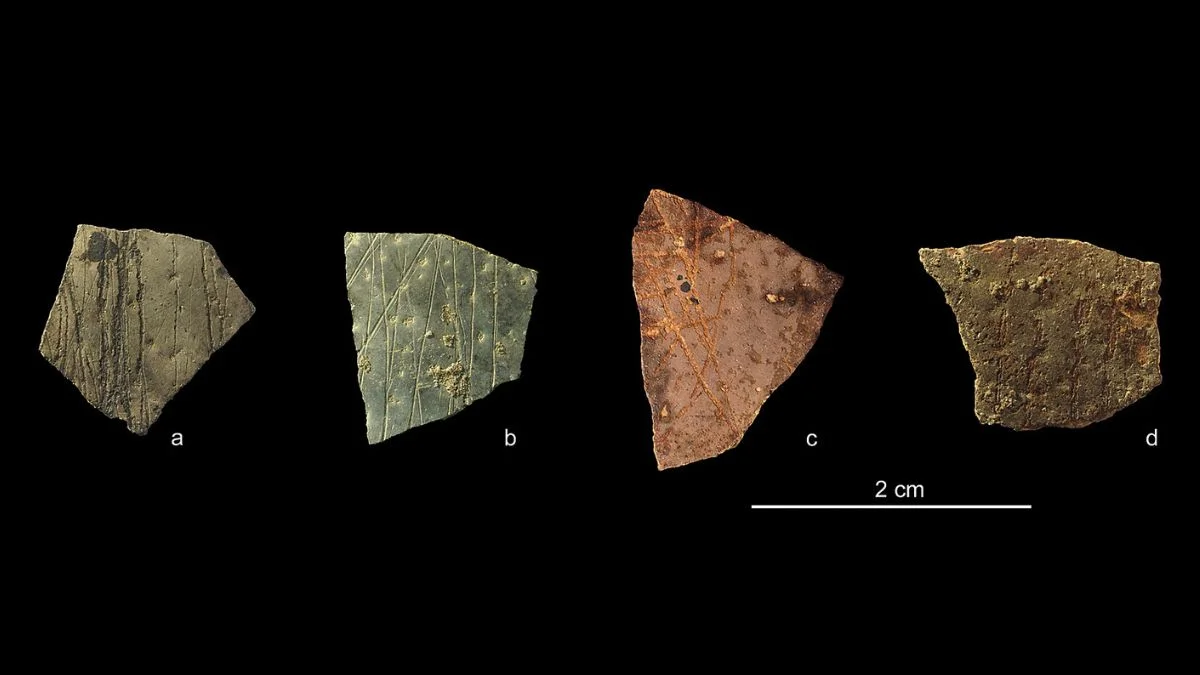
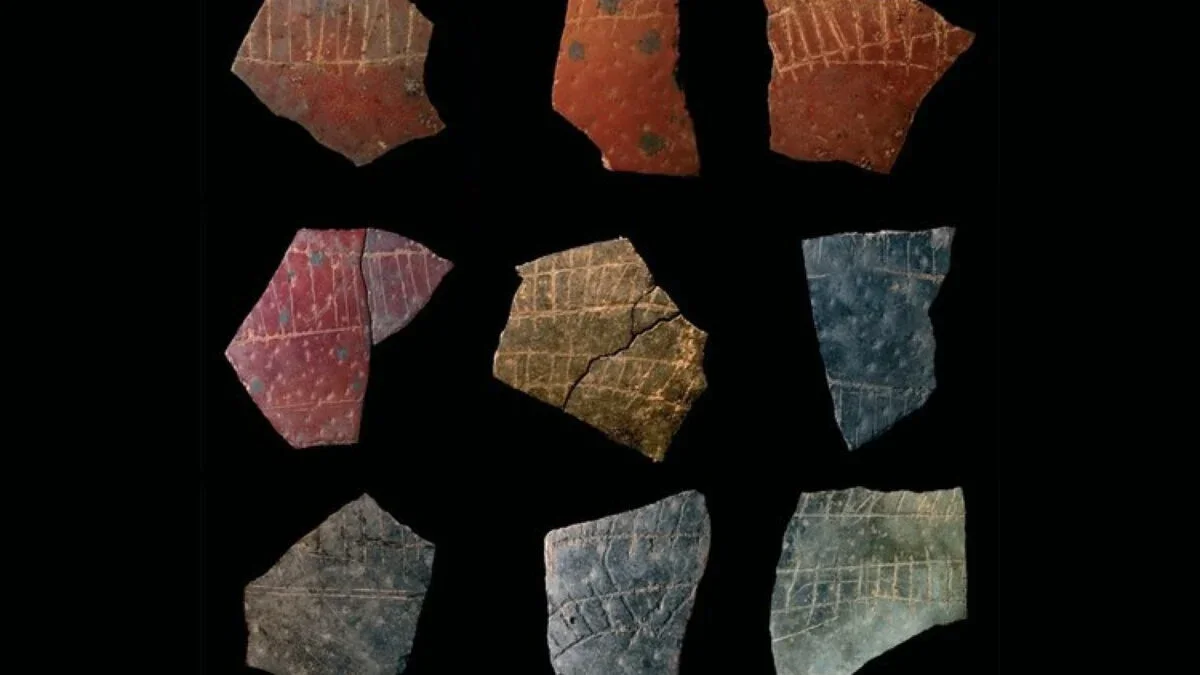
Analysis of 112 engraved ostrich eggshell fragments from Diepkloof, Klipdrift, Apollo 11 and Namibia shows that over 80% display coherent spatial organization—grids, parallel lines and right angles—indicating intentional, systematic thought and suggesting an embryonic visual grammar marking early geometric and abstract thinking about 60,000 years ago.
A study of 112 engraved ostrich eggshell fragments from southern Africa, dating about 60,000 years ago, shows coherent geometric patterns—grids, right angles, and repeating lines—indicating early Homo sapiens used abstract, visuo-spatial planning and developed a geometric grammar that underpins later symbolic thought.
Researchers at a Spanish chimpanzee sanctuary handed quartz crystals to two groups of rescued chimps; the apes showed strong interest—dragging, examining, and even trading bananas or yogurt to recover the largest crystal—while others sorted crystals by type. García-Ruiz suggests chimps’ attraction to crystals may stem from their Euclidean geometry, hinting at ancient cognitive roots shared with humans.
A PLOS One study of 112 ostrich eggshell fragments from three southern African sites dating over 60,000 years finds engravings with coherent geometric organization—parallel lines, grids, rotations and repetitions—suggesting ancient humans may have had abstract geometric thinking, though the meaning of the markings remains uncertain.
A Los Alamos team mathematically defines the neutral axis and shows hue, saturation and lightness arise from the intrinsic geometry of color, fixing gaps in Schrödinger’s century‑old theory. By using shortest-paths in a non‑Riemannian color space, they correct hue shifts caused by brightness (Bezold–Brücke effect) and strengthen color modeling for visualization and data interpretation.
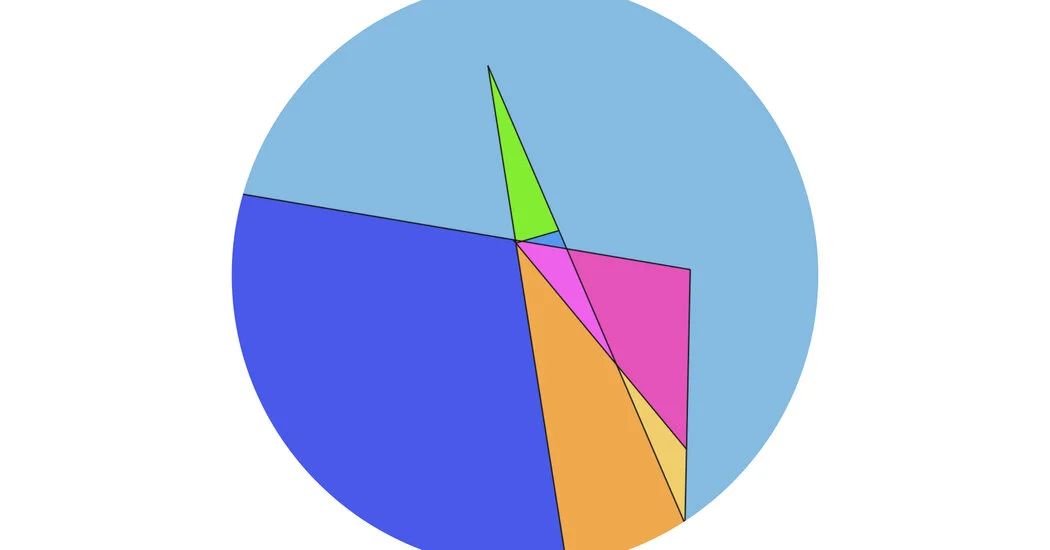
Mathematicians explore maximizing the number of pieces from slicing an infinitely large pancake with a straight knife, reworking the classic Lazy Caterer’s puzzle in an infinite-plane setting.
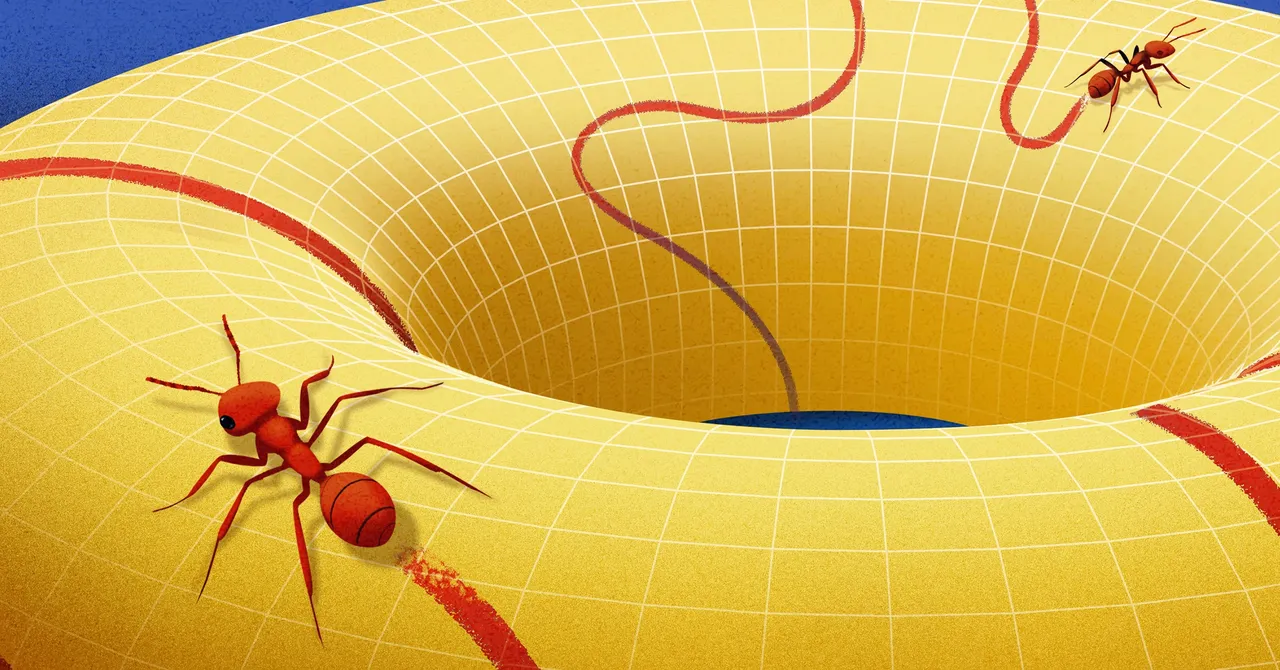
The article explains how the concept of manifolds, introduced by Bernhard Riemann, revolutionized the understanding of space in mathematics and physics, enabling the study of complex, higher-dimensional spaces and playing a crucial role in fields like general relativity, data analysis, and dynamical systems.
The Yeti LTe eMTB impresses with its exceptional six-bar suspension system, well-rounded geometry, and versatile adjustability, making it a top performer in descending and climbing capabilities despite its weight. It features a high-end build, a powerful Bosch motor, and an 800Wh battery, offering a confident and adaptable ride for various terrains. However, it comes at a premium price and some minor maintenance considerations.
A new study proposes that particle mass and fundamental forces could originate from the geometry of hidden extra dimensions, specifically through evolving seven-dimensional shapes called G₂-manifolds, potentially eliminating the need for the Higgs boson in explaining mass.
Two mathematicians have disproved a 300-year-old shape property, known as the Rupert property, by discovering a shape called the Noperthedron that cannot pass through itself regardless of tilting or drilling, challenging long-held assumptions in geometric topology.
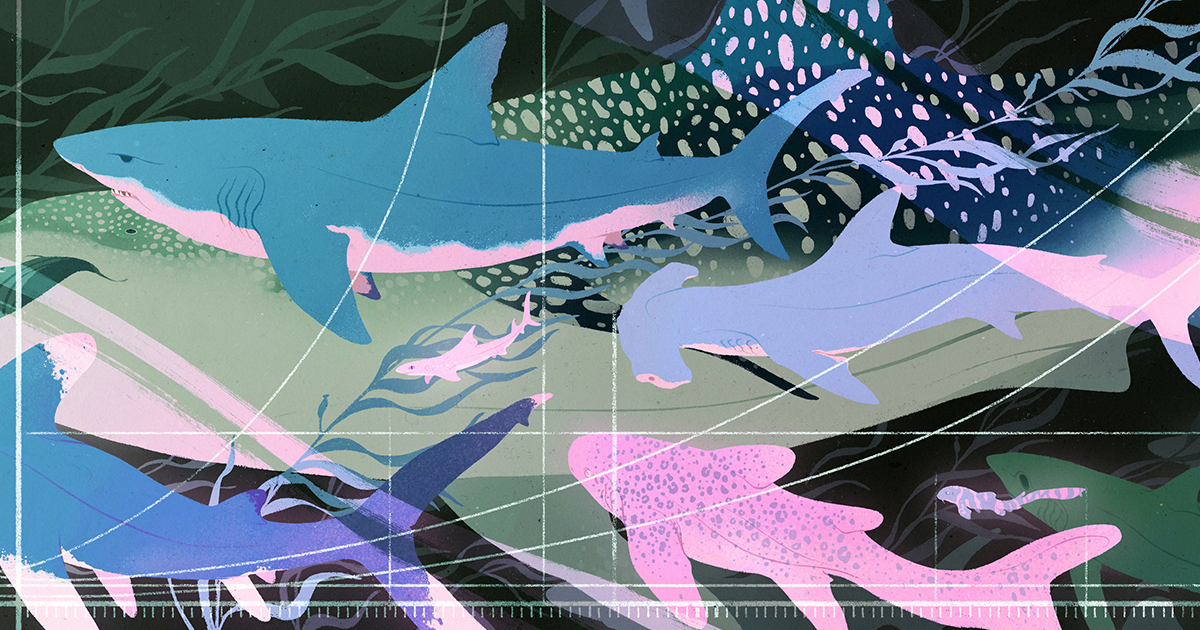
Research on over 50 shark species shows they follow a two-thirds scaling law in surface area and volume, suggesting fundamental constraints on evolution related to heat exchange, metabolism, or development. This finding supports the idea that biological forms may be governed by geometric principles, with potential implications for understanding evolution and practical applications in medicine and veterinary science.
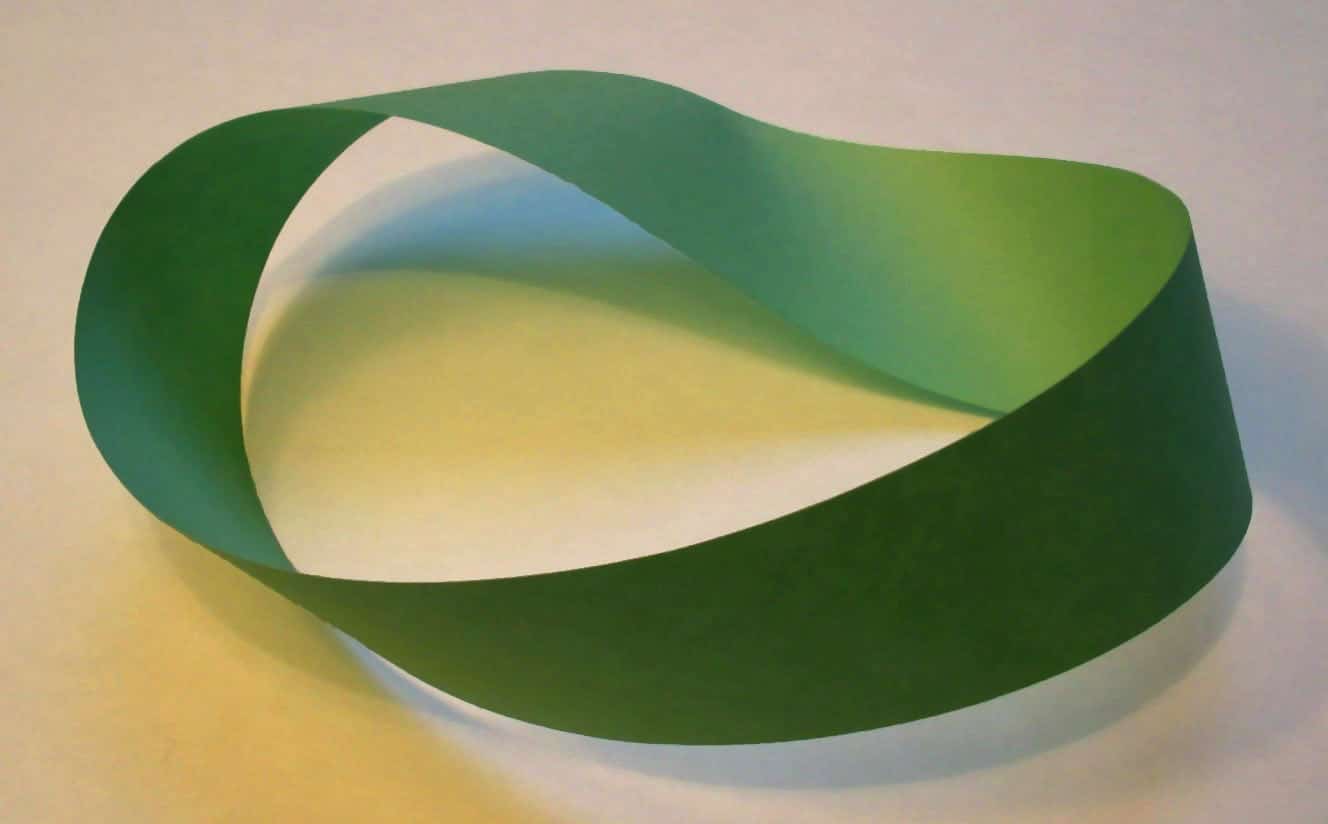
Mathematician Richard Schwartz has solved a 50-year-old puzzle about the minimal size of a developable Möbius strip, establishing that its aspect ratio must be greater than √3 (about 1.73) to avoid collapsing, and opening new questions about twisted strips and their properties.