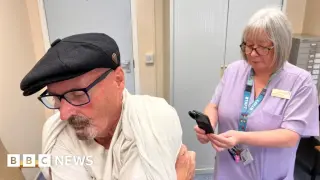
A Kent NHS trust is taking part in national dementia studies (ADAPT and GRACE), introducing blood tests for Alzheimer's in memory clinics to speed and improve diagnosis, potentially replacing invasive tests and improving post-diagnosis care while addressing local health inequalities.
An audit at Salford Royal Hospital found dozens of gynaecology patients, including cancer patients, were harmed by delays in diagnosis and treatment due to administrative failures. A prior NHS England review had flagged a backlog of over 2,000 unsent letters causing months-long delays. Staff raised safety concerns amid workforce pressures, the trust apologised, and a new leadership team is implementing improvements to patient follow-up and processes.
Southmead Hospital in Bristol launched OdonAssist, an inflatable cuff device designed to guide a baby through the birth canal as a gentler alternative to forceps and ventouse. Tested since 2018, the device has helped deliver around 300 babies in Europe and has been praised by mothers and midwives for a calmer birth with fewer marks on the baby. Invented by car mechanic Jorge Odon and developed by Maternal Newborn Health Innovations, OdonAssist received CE Kitemark approval in 2025 and, after regulatory clearances, is being rolled out across the UK and Europe.
GLP-1 weight‑loss injections, notably Wegovy and Mounjaro, are transforming obesity treatment in the UK and globally, delivering significant weight loss in trials and real life, but NHS access remains tightly restricted by cost under NICE criteria, prompting concerns about inequality and a growing private market; with more than 50 obesity drugs in trials and new forms like tablets on the horizon, experts expect broader options that could reduce surgery needs while underscoring the importance of addressing underlying causes.
UK Health Secretary Wes Streeting resigns, saying he cannot stay in government without confidence in Labour leadership despite NHS improvements (faster ambulance response times, falling waiting lists, and higher GP recruitment). He urges a broad, bold leadership contest to define Labour’s direction and warns of nationalist threats, thanking staff as he steps down.
After a decade-long battle, Leah Spasova won a case with the UK NHS ombudsman, who found her local Integrated Care Board unfairly refused funding for female sterilization while funding vasectomies for men; the decision exposed gender bias and prompted a policy review to ensure eligible women can access permanent contraception, underscoring ongoing concerns about women’s bodily autonomy in the health system.
The war in Iran has raised manufacturing and transport costs, pushing English pharmacies to raise prices on common medicines (20-30%), cause stockouts, and lift NHS medicine bills as suppliers pass through higher costs; some drugs aren’t reimbursed under price concessions, risking further shortages if shipping disruptions continue.
A 47-year-old Catford woman with incurable myeloma, diagnosed in 2017, has reached remission for the first time in nearly a decade after starting the newly approved drug elranatamab in February 2025, following years of chemotherapy. Doctors at King's College Hospital NHS Foundation Trust praised the treatment’s impact, giving her renewed hope and allowing her to regain activities she loves.
Social prescribing—doctors directing patients to nonmedical supports like arts, nature, volunteering, and community programs—has grown as health systems seek to ease hospital demand and loneliness. The UK’s NHS leads with millions of referrals in five years, spanning housing advice to debt counseling, with nature and arts activities rising in use. Early evidence is promising (creative engagement linked to lower depression risk; music reducing pain and opioid use for surgery), but many experts caution that outcomes are hard to measure and the evidence base is still developing. Similar efforts are expanding in the Netherlands and the US, where pilots and nonprofit groups aim for broader access by 2035, underscoring a shift toward addressing social determinants of health and roots causes of ill health beyond medications.
Researchers from the Institute of Cancer Research and RCSI used PhenMap, an AI tool, to analyze tumour genetics in 117 European advanced bowel cancer patients treated with bevacizumab, identifying patterns that predict non-response and potentially sparing thousands from ineffective treatment and side effects; the team plans to broaden testing and validate the approach for broader clinical use.
Oxford researchers have created an AI tool that analyzes fat around the heart on routine cardiac CT scans to predict five-year heart‑failure risk with about 86% accuracy; trained on 72,000 patients across nine NHS trusts and followed for a decade, the model outputs an absolute risk score to guide monitoring and treatment, with those at highest risk up to 20 times more likely to develop heart failure within five years.
A Jersey woman says her brain lesion was dismissed as harmless and she was misdiagnosed with epilepsy, only to be later diagnosed in England as a low-grade brain tumour. The case has prompted calls for better staffing, communication and UK liaison in Jersey's neurology service, and Health and Care Jersey has published an action plan after an independent review.
The NHS delayed alerting UK health officials about a meningitis case in Margate by about two days, despite invasive meningitis being a notifiable disease that should be reported immediately. The delay hindered contact tracing and early warnings during an outbreak that has 23 suspected/probable cases, two deaths and several in intensive care; UKHSA says a large-scale public health response followed once multiple cases emerged, while the hospital and experts condemned the delay.
Health chiefs are investigating 27 meningitis cases linked to an outbreak in Kent, including infections at Canterbury Christ Church University and a London student, with two deaths. Preventive antibiotics are being offered to visitors to a Kent club linked to the outbreak and a vaccination drive for University of Kent students is underway. Meningitis B (Neisseria meningitidis group B) can progress quickly to sepsis; symptoms include high fever, severe headache, vomiting, stiff neck, rash and sensitivity to light. If meningitis is suspected, call 999 or go to A&E; vaccines exist as part of the UK schedule, with catch-up opportunities up to age 25 for those who missed school vaccination.
England's NHS will offer Veoza (fezolinetant) as a non-hormonal treatment for menopausal hot flushes and night sweats when HRT cannot be used; NICE says it’s cost-effective and could help up to 500,000 women. Not recommended for those with breast cancer, other estrogen‑dependent cancers, or liver disease; HRT remains the first-line option. The decision applies in England; Wales and Northern Ireland often follow NICE guidance, while Scotland has not yet recommended NHS use.