Tag

Notch Signaling

All articles tagged with #notch signaling

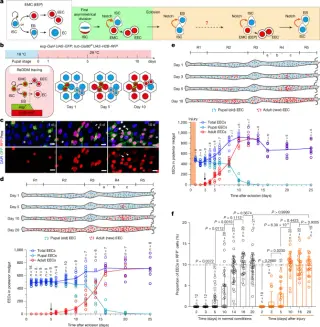
Epigenetic division counter times stem cell fate in the Drosophila gut
science1 month ago

Epigenetic division counter times stem cell fate in the Drosophila gut

Drosophila intestinal stem cells count their self-renewal divisions to time multipotent fate switching: after producing an enteroendocrine mother cell (EMC) they complete eight divisions to generate enterocytes (ECs), and at the ninth division switch back to EMC production for enteroendocrine cells (EECs). This division-counting memory is driven by opposing histone marks—TrxG-dependent H3K4me3 and H3K36me3 decline while PcG-dependent H3K27me3 accumulates—triggering fate switching once a threshold is reached. Transient Notch signaling from EMCs initiates the count, and the system is tunable via TrxG/PcG activity while remaining resilient to injury, with implications for engineered tissue growth and differentiation-d disorder therapies.
Israeli study identifies rare cochlear cells with potential to reverse hearing loss
science1 month ago

Israeli study identifies rare cochlear cells with potential to reverse hearing loss

Tel Aviv University researchers report that inhibiting Notch signaling can trigger a rare subset of cochlear supporting cells (transdifferentiating Deiters’ cells) to become hair cells, offering a potential path to regenerate hearing. Using live imaging and single-cell multi-omics, the team shows this regenerative capacity exists in humans and could be leveraged with inner-ear injections, though it remains early basic research. Translation to patients will require overcoming regulatory, cost, and safety hurdles, but the work marks a significant step toward treatments that restore hearing rather than simply aiding it.

Single-cell atlas links IBD risk to cell-type specific gene regulation
science3 months ago

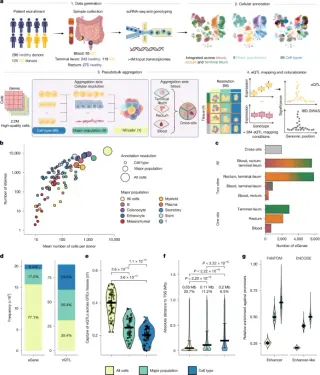
Single-cell atlas links IBD risk to cell-type specific gene regulation

Researchers built IBDverse, the largest single-cell eQTL atlas for inflammatory bowel disease, mapping cis-eQTL effects across blood and gut tissues in about 400 individuals to link genetic risk to specific cell types. They find cell-type eQTLs are more distal, enhancer-rich, and far more likely to colocalize with IBD GWAS signals than bulk-tissue eQTLs, nominating effector genes such as MAML2 and ZMIZ1 in dendritic cells and MYC and RASGRP1 in colonocytes. Notch pathway regulators in dendritic cells and Wnt-driven epithelial renewal in colonocytes emerge as key mechanisms, tying regulatory variation to barrier dysfunction and inflammation. The study also highlights therapeutic angles—including PRKCB inhibitors and targets like ITGA4/JAK2—and provides a framework for interpreting GWAS loci via cell-type–resolved eQTL mapping in complex diseases.

Notch Timing Unlocks Lab-Grown Helper and Killer T Cells for Off-the-Shelf Immunotherapy
science7 months ago

Notch Timing Unlocks Lab-Grown Helper and Killer T Cells for Off-the-Shelf Immunotherapy

UBC researchers show that precisely tuning the duration and intensity of Notch signaling in stem cells can reliably steer them to become helper or killer T cells, enabling scalable, off-the-shelf immunotherapies for cancer and other diseases. This overcomes a long-standing bottleneck by producing both T cell types from renewable sources, potentially reducing manufacturing costs and time.