Tag

Hearing Loss

All articles tagged with #hearing loss

Two Common Sensory Losses May Elevate Dementia Risk, Doctor Says
health21 days ago

Two Common Sensory Losses May Elevate Dementia Risk, Doctor Says

A preventive neurologist says hearing and vision loss are two overlooked risk factors for cognitive decline and dementia. While the exact mechanisms are still being studied, sensory loss may contribute to social isolation and reduced brain stimulation, potentially raising dementia risk. A 2024 Lancet study cited suggests mitigating such risk factors could prevent about half of dementia cases. Practical steps include protecting hearing with earplugs at loud events, wearing UV-blocking sunglasses, taking screen breaks, and staying socially and cognitively engaged, along with regular vision/hearing screenings.

Modifiable Risk Factors May Prevent Up to 45% of Dementia Cases, Study Finds
health1 month ago

Modifiable Risk Factors May Prevent Up to 45% of Dementia Cases, Study Finds

A Medscape rapid review summarizes evidence that dementia could be substantially preventable by addressing modifiable risk factors. Hearing loss is the strongest factor (RR 1.9; AR 8.2%), with depression (RR 1.9; AR 3.9%), air pollution (AR 2.3%), lower education (AR 7.1%), and smoking (AR 5.2%) also contributing. The 2024 Lancet Commission adds high LDL cholesterol and vision loss to the risk-factor list. By intervening on these factors, roughly 40–45% of global dementia cases could be prevented or delayed. Supporting strategies include controlling hypertension to keep systolic BP below 130 mm Hg from midlife and limiting alcohol use (more than 12 units/week US or 21 UK associated with higher risk), though the evidence for alcohol’s overall effect is mixed. Some factors (HRT, PTSD) lack clear links, and anxiety evidence is insufficient.

WHO Updates Dementia Guidelines Focused on Clean Air, Cautious Supplements, and Hearing Health
world1 month ago

WHO Updates Dementia Guidelines Focused on Clean Air, Cautious Supplements, and Hearing Health

The WHO released its first major revision of dementia prevention guidelines since 2019, urging action to reduce exposure to air pollution (notably PM2.5) to lower dementia risk, warning that non-deficient supplements such as vitamins B and E, omega-3s, or multivitamins are unlikely to prevent dementia and can carry risks, and highlighting hearing loss as a major modifiable risk with recommendations to improve access to hearing aids. The guidance also emphasizes cognitive training, social engagement, physical activity, a healthy diet, and managing chronic conditions, noting that eliminating pollution could prevent about 3% of dementia cases and addressing hearing loss could prevent about 7%.

Protect Your Ears: Everyday Habits That Could Cost You Your Hearing—and How to Stop It
health1 month ago

Protect Your Ears: Everyday Habits That Could Cost You Your Hearing—and How to Stop It

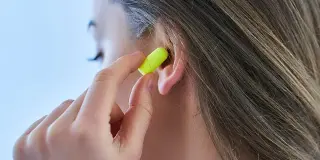
A BBC health feature explains that hearing loss can come from everyday activities, not just loud concerts. It describes how the inner ear works, notes rising risk among younger people, and offers practical protections—high-fidelity or musician’s earplugs, earmuffs, noise-cancelling headphones, and careful volume control—while warning about earwax buildup from frequent earplug use and advising testing hearing at the first sign of difficulty; hair cells don’t regrow, but research may one day restore them.

Israeli study identifies rare cochlear cells with potential to reverse hearing loss
science1 month ago

Israeli study identifies rare cochlear cells with potential to reverse hearing loss

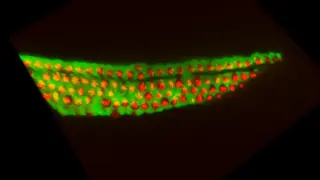
Tel Aviv University researchers report that inhibiting Notch signaling can trigger a rare subset of cochlear supporting cells (transdifferentiating Deiters’ cells) to become hair cells, offering a potential path to regenerate hearing. Using live imaging and single-cell multi-omics, the team shows this regenerative capacity exists in humans and could be leveraged with inner-ear injections, though it remains early basic research. Translation to patients will require overcoming regulatory, cost, and safety hurdles, but the work marks a significant step toward treatments that restore hearing rather than simply aiding it.

Hearing Loss Behind the Voices: A Case Reframes Auditory Hallucinations
health1 month ago

Hearing Loss Behind the Voices: A Case Reframes Auditory Hallucinations

A Canadian woman in her 50s experienced voices for years and was treated for unspecified psychosis with multiple antipsychotics, but later tests revealed bilateral sensorineural hearing loss. Even after fitting with hearing aids, the voices persisted, while brain scans and blood tests were normal and her daily functioning remained intact—suggesting the hallucinations arose from sensory deprivation rather than a psychotic disorder. The case underscores that hearing voices does not always indicate psychosis and recommends early hearing assessments and coping-focused psychotherapy to manage persistent hallucinations when hearing loss is present.

Sudden Hearing Loss at 32: urgent care could have changed the outcome
wellbeing2 months ago

Sudden Hearing Loss at 32: urgent care could have changed the outcome

A Washington Post Well+Being essay recounts Alison Hodgins’s experience with sudden unilateral hearing loss at age 32. She details Aug. 11, 2024 in Vancouver after a sauna, cold plunge, and sunset yoga, arguing that recognizing the condition as an emergency and seeking prompt treatment could have improved her outcome. The one-ear loss is permanent, and she now lives with tinnitus linked to a widely misdiagnosed condition.

Brain-Driven Hearing: Real-Time Focused Listening Using Neural Signals
science3 months ago

Brain-Driven Hearing: Real-Time Focused Listening Using Neural Signals

Columbia University researchers demonstrated the first real-time brain-controlled hearing system that uses implanted electrodes to detect which speaker a listener is focusing on and dynamically amplify that voice while quieting others, addressing the cocktail party problem. Tested in epilepsy patients, the system decoded attention from brain activity with machine-learning algorithms, improving speech intelligibility and reducing listening effort, and was consistently preferred by users. Published in Nature Neuroscience, this invasive approach paves the way for wearable, brain-sensing hearing aids that could someday operate in real-world noisy environments.

FDA backs first gene therapy to treat a rare genetic deafness (Otarmeni) with free US access
health4 months ago

FDA backs first gene therapy to treat a rare genetic deafness (Otarmeni) with free US access

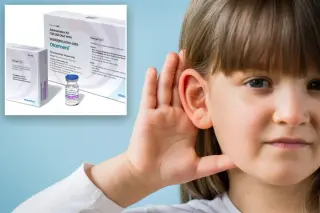
The FDA approved Otarmeni, Regeneron’s gene therapy for OTOF-related deafness—the first gene therapy for this rare inherited hearing loss—delivered via a single cochlear injection to restore otoferlin production. In a 20-child trial, several participants showed hearing improvements, with five of 12 followed for 11 months reaching near-normal hearing. Regeneron will provide Otarmeni at no cost to US patients, and the therapy was fast-tracked under the Commissioner’s National Priority Voucher program. While promising, effects were generally safe, the condition affects about 50 US babies born each year, and this advance could pave the way for more gene therapies and potentially reduce reliance on cochlear implants.

FDA approves Otarmeni, first gene therapy for rare OTOF-related infant hearing loss
health4 months ago

FDA approves Otarmeni, first gene therapy for rare OTOF-related infant hearing loss

FDA approves Regeneron's Otarmeni, the first gene therapy for a rare OTOF-mutation–driven hearing loss in infants; in a trial, a single-dose inner-ear injection improved hearing in 16 of 20 children, with some able to detect whispers; the company will provide the drug for free to U.S. patients, while pricing outside the U.S. has not been determined since it is not approved there.

FDA greenlights Otarmeni: first gene therapy to restore hearing in OTOF-related deafness, Regeneron to provide it free in the U.S.
healthcare4 months ago

FDA greenlights Otarmeni: first gene therapy to restore hearing in OTOF-related deafness, Regeneron to provide it free in the U.S.

The FDA granted accelerated approval for Otarmeni (lunsotogene parvec-cwha), a one-time gene therapy for severe-to-profound OTOF-related hearing loss, based on CHORD trial results showing 80% of participants reached a key hearing threshold at 24 weeks and 42% achieved normal hearing by 48 weeks; Regeneron will provide Otarmeni free to eligible U.S. patients as part of access programs, with continued confirmatory trials and safety monitoring ongoing.

Regeneron trims prices for some Americans and pledges free hearing-loss gene therapy after FDA nod
business4 months ago

Regeneron trims prices for some Americans and pledges free hearing-loss gene therapy after FDA nod

Regeneron said it will lower U.S. drug prices for some Americans under President Trump’s pricing plan and will offer its first hearing-loss gene therapy for free to eligible patients after regulatory approval, while also securing a three-year tariff exemption; the therapy Otarmeni targets a rare hearing-loss condition and could reduce reliance on cochlear implants, with analysts signaling potential peak sales around $130 million.

Treatable middle-ear problems tied to higher dementia risk, study suggests
health4 months ago

Treatable middle-ear problems tied to higher dementia risk, study suggests

A Columbia University study using NIH data from more than 300,000 U.S. adults found that two treatable middle-ear conditions—cholesteatoma and eardrum perforation—were linked with higher dementia odds (about 1.77x and over 2x, respectively), while otosclerosis showed no significant association; risk appeared to decrease somewhat with surgical treatment. The study is observational, indicating association rather than causation, and researchers note cognitive effects may be related to sensory deprivation from hearing loss.

Decades of Dizziness Finally Revealed a Benign Acoustic Neuroma
health5 months ago

Decades of Dizziness Finally Revealed a Benign Acoustic Neuroma

A health writer recounts how her husband’s decades-long dizziness and unilateral hearing loss were repeatedly dismissed as stress until a CT scan revealed a four-centimeter acoustic neuroma, a typically slow-growing benign brain tumor. Surgery to remove it left him with left facial and throat paralysis, underscoring how earlier imaging and specialist input could have reduced harm and why persistent symptoms deserve thorough evaluation.