Lawmakers and the White House are pursuing a broad permitting overhaul to speed energy, transmission, and infrastructure projects, with signs of momentum toward a summer deal, but deep divides over environmental rules, state versus federal authority, and the administration’s stance create an uncertain path to enactment in an election year.
California lawmakers are reviewing a deal the Trump administration struck to terminate a proposed offshore wind project off the state’s coast, seeking details on the terms, potential financial implications, and what it means for California’s clean-energy goals and environmental considerations.
PBS NewsHour reports that the Trump administration is paying nearly $2 billion to energy companies to cancel offshore wind projects, including a nearly $1 billion payout to TotalEnergies and additional payments for Bluepoint Wind and Golden State Wind, raising questions about spending authority, legality, and the transparency of subsidized project cancellations.
The Trump administration announced settlements canceling Golden State Wind’s Morro Bay offshore lease and Bluepoint Wind near New York, with Ocean Winds recovering about $120 million in lease fees after matching investments in Gulf Coast energy projects; the Interior Department also offered roughly $885 million to terminate both leases, as part of a shift toward baseload energy. The moves drew praise from supporters and criticism from California officials and renewables advocates who warn of job losses and stalled clean-energy goals.
The Interior Department will pay two energy firms, Golden State Wind and Bluepoint Wind, a total of $885 million to abandon their federal offshore wind leases off California, redirecting the investment into oil, gas, and LNG projects. Golden State Wind can recover about $120 million in lease fees after committing to invest in conventional energy assets, while Bluepoint Wind will invest up to $765 million in a U.S.-based LNG facility, with the government reimbursing that amount upon completion. The Morro Bay project, which could have produced up to 2 GW (roughly 1.1 million homes), is effectively terminated. This follows a $1 billion deal with TotalEnergies and signals a shift away from offshore wind toward fossil fuels, drawing scrutiny over legality and impact on California’s clean-energy goals, though some remain optimistic about future wind development in the state.
Vineyard Wind has finished construction on the Nantucket-area offshore wind farm but faces collapse risk after suing GE Renewables to prevent the supplier from backing out; GE says unpaid bills exceed $300M and has terminated the contract, while Vineyard Wind claims more than $545M in expenses tied to defective blades and warns that losing GE could stall commissioning, trigger loan defaults, and imperil financing for the $4.5B project.
Vineyard Wind has sued GE Renewables in Boston, alleging GE intends to abandon the $4.5 billion offshore wind project and breach contracts, which would jeopardize power commitments and loan repayments. GE says it terminated for non‑payment. The case seeks a preliminary injunction and a temporary restraining order as the 62 turbines installed offshore are not yet fully online, with hearings set for April 16 in Suffolk Superior Court after GE must respond by April 15.
Vineyard Wind has filed a breach-of-contract lawsuit against GE Renewables concerning the Vineyard Wind 1 offshore wind project off Massachusetts, alleging turbine-related defects or failures that caused delays and cost overruns for the project.
Interior will reimburse TotalEnergies up to $928 million to renounce two offshore wind leases (Attentive Energy in the New York Bight and Carolina Long Bay off North Carolina) and reinvest the funds in oil and gas, a move framed as steering away from renewables; meanwhile, the Coastal Virginia Offshore Wind project began delivering power to the grid, showing wind progress even as the administration pivots toward fossil fuels.
The Interior Department plans to reimburse TotalEnergies about $1 billion in 2022 offshore-wind lease fees in exchange for abandoning U.S. offshore wind projects and investing in fossil-fuel infrastructure, a move that raises questions about the department’s authority to issue refunds and could face legal challenges from states and affected communities; the funds would likely come from the Judgment Fund since there’s no clear statutory process for such reimbursements.
Heatmap reports that TotalEnergies will be refunded about $928 million for offshore wind leases as the Interior Department terminates those leases and redirects the funds toward U.S. oil and gas investments, a move that raises questions about where the money comes from, whether it’s a lawful appropriation or a settlement, and whether Interior has the authority to reimburse lease costs—potentially setting a controversial precedent and lacking transparency until further documentation is released.
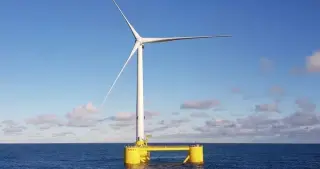
Aikido Technologies wants to place liquid-cooled AI data centers inside the ballast-filled legs of floating offshore wind turbines in the North Sea, using seawater cooling to shed heat and batteries to balance power. The prototype aims for about 100 kW initially, with later versions per leg of 3–4 MW (roughly 9–12 MW per turbine) and hybrid links to land grids. The plan, targeting a 2026 Norwegian test, builds on land experiments in Germany and faces challenges like salt exposure, motion, and connectivity.
Interior Secretary Doug Burgum and TotalEnergies CEO Patrick Pouyanné announced the cancellation of federal offshore wind leases worth about $1 billion and redirected the investment to oil and natural gas projects in the U.S., signaling a rare policy shift under Trump away from offshore wind despite prior support; environmentalists criticize the move as wasteful and contrary to clean-energy goals, while supporters note offshore wind remains costly and that policy must align with domestic oil and gas priorities; observers wonder if this signals more one-off deals and whether the U.S. offshore wind industry can regain momentum.
The Interior Department announced an agreement with TotalEnergies to renounce costly offshore wind leases and redirect about $1 billion into U.S. oil, gas, and LNG projects. TotalEnergies will be reimbursed up to the amount paid for the offshore wind leases, and the company pledges not to pursue new offshore wind development in the United States, as part of a policy described as lowering costs for American families and strengthening energy security.
Amid a fuel crisis driven by the Iran war, the Trump administration will reimburse TotalEnergies about $928 million to cancel two offshore wind leases off New York and North Carolina, effectively killing plans for wind farms and moving nearly $1 billion toward LNG and oil/gas projects; critics call it a taxpayer-funded blow to homegrown clean energy, while supporters say it cuts stranded costs.