Tag

Orbital Rescue

All articles tagged with #orbital rescue

Flagstaff Rescue Fails: Swift Observatory Headed for Fiery Reentry
science4 days ago

Flagstaff Rescue Fails: Swift Observatory Headed for Fiery Reentry

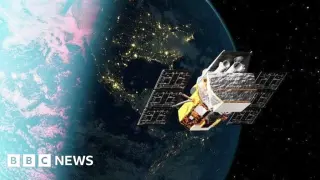
Flagstaff-based Katalyst Space Technologies canceled its Link rescue mission for NASA’s Swift Observatory after Link could not be controlled to capture or boost the telescope; Swift will reenter the atmosphere later this year, with NASA not expecting the demise before October. NASA paid about $30 million for the attempt, and Katalyst will continue to operate Link nearby to demonstrate proximity operations for future rescues. Had the mission succeeded, Hubble could have been next, but its status remains unclear.

Swift Observatory Rescue Scrambles as LINK Faces Spin Crisis
space17 days ago

Swift Observatory Rescue Scrambles as LINK Faces Spin Crisis

A NASA-led effort to save the Neil Gehrels Swift Observatory from orbital decay hit setbacks after the privately built LINK spacecraft spun out of control following its July launch. LINK’s spin has been slowed and stabilized, but a grappling rendezvous with Swift and a two-to-three month orbit-boost plan face delays. While mission teams reassess and patch software, the rescue’s timing remains uncertain, though there is still hope the observatory can resume science operations if the boost succeeds.

Swift Observatory Rescue Slips Toward Crisis as Commercial Grabber Spokesrisks Spins
sciencespace18 days ago

Swift Observatory Rescue Slips Toward Crisis as Commercial Grabber Spokesrisks Spins

NASA's mission to rescue the Swift Observatory is at risk after the LINK grabber, launched on a Pegasus XL, began spinning uncontrollably and has only sporadic communications. Ground teams are using electric propulsion to slow the spin and stabilize LINK so it can reattempt approaching Swift and boost its orbit, potentially by late August. A successful operation would mark the first commercial robotic capture of a government satellite and extend Swift's mission to study gamma-ray bursts for years.

Spin-out crisis as private LINK mission races to rescue NASA’s Swift telescope
space24 days ago

Spin-out crisis as private LINK mission races to rescue NASA’s Swift telescope

A private mission by Katalyst Space to reposition NASA’s Swift gamma‑ray observatory has hit a snag: the LINK spacecraft is spinning after launch, threatening to delay the rescue unless engineers can stabilize it. With two of three attitude‑control wheels malfunctioning and rotation reduced to about four degrees per second from nine, teams aim for a late‑August rendezvous with Swift before the telescope drops back to Earth this autumn, a success that could extend Swift’s life by years and cost roughly $30 million.

Katalyst launches autonomous Link to rendezvous with NASA’s Swift in a first-of-its-kind space rescue
technology1 month ago

Katalyst launches autonomous Link to rendezvous with NASA’s Swift in a first-of-its-kind space rescue

NASA’s Swift gamma-ray burst observatory is being rescued by Katalyst Space Technologies with its Link satellite, launched on a Pegasus XL. Over the coming weeks, Link will conduct checks and then autonomously approach Swift to attempt a robotic capture and lift the observatory to a higher, safer orbit, marking a pioneering robotic servicing mission.

NASA bets on three-armed robot to rescue aging Swift observatory
science1 month ago

NASA bets on three-armed robot to rescue aging Swift observatory

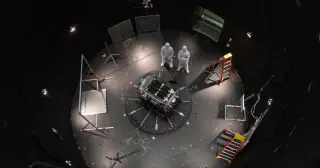
NASA is racing to save the aging Swift gamma-ray observatory from fiery reentry with a $30 million robotic rescue. Katalyst Space Technologies’ three-armed Link will launch aboard a Pegasus rocket from the Marshall Islands, rendezvous with Swift within about a month, and gradually raise its orbit from roughly 224 miles to 373 miles to avert the October “point of no return.” The mission—with Swift’s instruments powered down to slow descent—could preserve valuable data, demonstrate a new US space-repair capability, and pave the way for future rescues of other observatories such as Hubble.