Tag

Miocene

All articles tagged with #miocene

Ancient Seas, Modern Cliffs: New Study Rewrites the Twelve Apostles’ Origin
science22 days ago

Ancient Seas, Modern Cliffs: New Study Rewrites the Twelve Apostles’ Origin

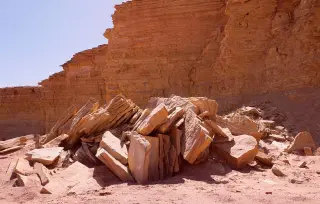
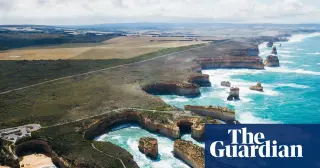
A new study in the Australian Journal of Earth Sciences shows the Twelve Apostles formed from Miocene-era seabed rocks, with the Port Campbell Limestone deposited roughly 14 to 8.6 million years ago and a warm interval around 14.1–13.8 million years ago recorded by abundant foraminifera fossils. Tectonic uplift began about 8.6 million years ago, lifting the rocks above sea level and enabling coastal erosion to sculpt headlands, arches, and eventually the sea stacks—an ongoing process following the last ice age. The rocks are ancient, but the iconic formations are geologically recent, highlighting how long-term tectonics and coastal dynamics shape the landscape.”

Ancient Coccoliths Reveal a Cooler Miocene North Atlantic Than Expected
science1 month ago

Ancient Coccoliths Reveal a Cooler Miocene North Atlantic Than Expected

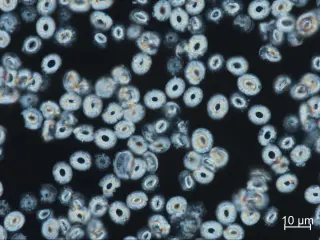
A Nature Communications study applies clumped-isotope geochemistry to exceptionally well-preserved fossil coccoliths to reconstruct 16 million years of North Atlantic temperatures, finding temperatures about 9°C cooler than previous alkenone-based estimates and closer to climate model simulations, challenging the view of extreme Miocene warmth and highlighting the need to re-evaluate climate proxies.

Magnetic Clues Reframe the Americas’ Collision Timeline
science1 month ago

Magnetic Clues Reframe the Americas’ Collision Timeline

New magnetic data from Colombian volcanic rocks shows that the collision between Central and South America began well before the previously accepted timeline, mainly during the Oligocene to middle Miocene, implying a gradual deformation rather than a late, abrupt event and potentially shifting the timing of the Isthmus of Panama with broad implications for ocean circulation, climate, and biodiversity.

Egypt fossil hints northern Africa as cradle of ape origins
science1 month ago

Egypt fossil hints northern Africa as cradle of ape origins

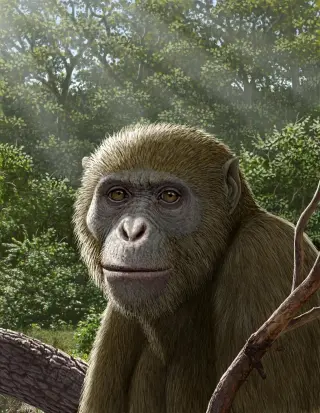
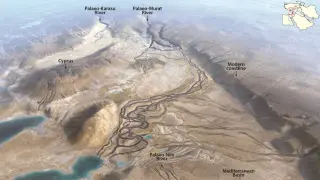
Researchers describe Masripithecus moghraensis, a newly identified fossil ape from northern Egypt dating to about 17–18 million years ago, as a close stem hominoid to the lineage that gave rise to all living apes. Using Bayesian tip-dating, the find suggests northern Afro-Arabia could be a cradle for ape origins and underscores the role of Afro-Arabia as a Miocene biogeographic crossroads, challenging the East Africa–centered view while acknowledging gaps in Africa’s fossil record.

Arctic 23-Million-Year-Old Rhino Fossil Rewrites Rhino Evolution
science2 months ago

Arctic 23-Million-Year-Old Rhino Fossil Rewrites Rhino Evolution

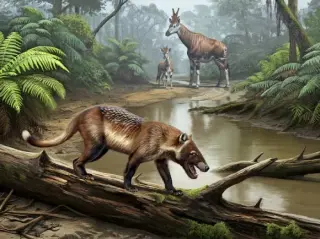
A 23-million-year-old hornless rhino, Epiaceratherium itjilik, was unearthed in Canada’s High Arctic at Haughton Crater, with about 75% of its skeleton remarkably well preserved. The find offers new insights into Arctic ecosystems, rhino evolution, and long-distance migration via a North Atlantic land bridge, while recent advances in paleontology include recovering partial proteins from enamel in 2025, expanding methods for studying ancient mammals.

Brazil Reveals 6.3-Million-Year Meteor Impact Through New Tektite Field
science2 months ago

Brazil Reveals 6.3-Million-Year Meteor Impact Through New Tektite Field

Brazilian researchers identified a new tektite field, geraisites, from a 6.3-million-year-old meteor impact that spread tektites over roughly 900 km in Minas Gerais and neighboring states; analyses of silica content, low water, lechatelierite inclusions, and argon-argon dating place the event in the late Miocene, with a buried São Francisco Craton crater likely as the source.

First Brazilian Tektite Field Traces 6.3-Million-Year Cosmic Impact
science3 months ago

First Brazilian Tektite Field Traces 6.3-Million-Year Cosmic Impact

Brazilian researchers have identified the country’s first tektite field, Geraisites, a collection of glassy fragments spread across Minas Gerais and adjacent states that indicate a substantial ancient impact. Dating with 40Ar/39Ar places the event at about 6.3 million years ago, during the Miocene, with isotopic signatures pointing to a very old continental crust source in the São Francisco craton. The field now spans over 900 km, and while no crater is yet known, the data imply a powerful impact with dispersed molten material; researchers plan aerogeophysical surveys and modeling to estimate the event’s energy, velocity, and crater geometry. This discovery expands South America’s sparse tektite record and suggests tektites may be more common than previously thought.

Peruvian Fossil Unveils 9-Million-Year-Old Shark, a Relative Of the Great White
science3 months ago

Peruvian Fossil Unveils 9-Million-Year-Old Shark, a Relative Of the Great White

Scientists in Peru's Pisco Basin unearthed a remarkably well-preserved near-complete skeleton of Cosmopolitodus hastalis, an ancient relative of the great white shark. Dated to about 9 million years ago, the specimen includes a full jaw with serrated teeth and even preserved stomach contents—sardines—offering rare insight into late Miocene marine ecosystems and early apex-predator lifestyles.

Ancient Anacondas: Giants That Have Stayed Massive for Over 12 Million Years
science5 months ago

Ancient Anacondas: Giants That Have Stayed Massive for Over 12 Million Years

Scientists discovered fossils of giant anacondas in Venezuela, revealing they reached about 5.2 meters in length around 12.4 million years ago, and surprisingly, their size has remained unchanged since then, despite climate changes and other reptiles evolving differently. The findings shed light on the evolution and persistence of these massive snakes in South America.