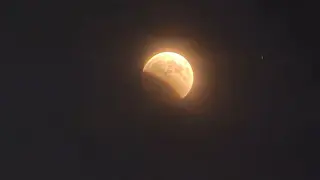
A Utah photo gallery captures the partial lunar eclipse visible across the state, including Salt Lake City, with images taken as the Moon passed into Earth’s shadow from about 7:59 p.m. to 1:01 a.m.
Space.com is live with updates for the Aug. 27–28 deep partial lunar eclipse, where up to 96.2% of the Moon will be in Earth's umbra at maximum, likely taking on a rusty reddish hue. This is the deepest partial lunar eclipse visible until the end of 2028, with the best views expected from the Americas and viewing tips provided for skywatchers.
Space.com previews the Aug. 27-28, 2026 deep partial lunar eclipse, when up to 96.2% of the Moon will be immersed in Earth's umbra and take on a rusty-red hue; visible worldwide with best views in the Americas, the article shares viewing tips and will provide live updates.
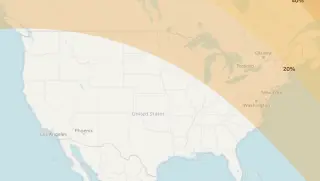
A partial solar eclipse will be visible across much of the United States on Wednesday, but no U.S. location will experience totality (which will occur in Iceland and Spain). Visibility spans Alaska, the Pacific Northwest, northern Rocky Mountains, Upper Midwest, Great Lakes, the Northeast and parts of the East Coast toward North Carolina; timing varies by location and viewers must wear eclipse glasses. NASA will livestream views from across the totality path for those not in the direct viewing area.
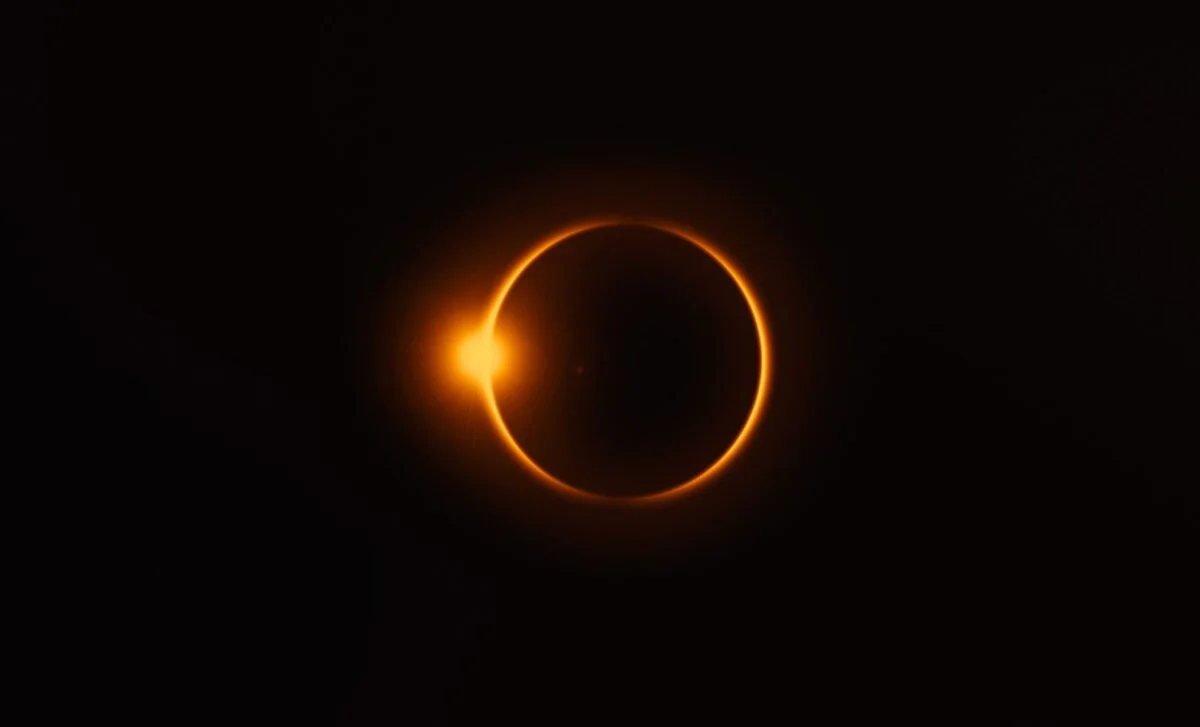
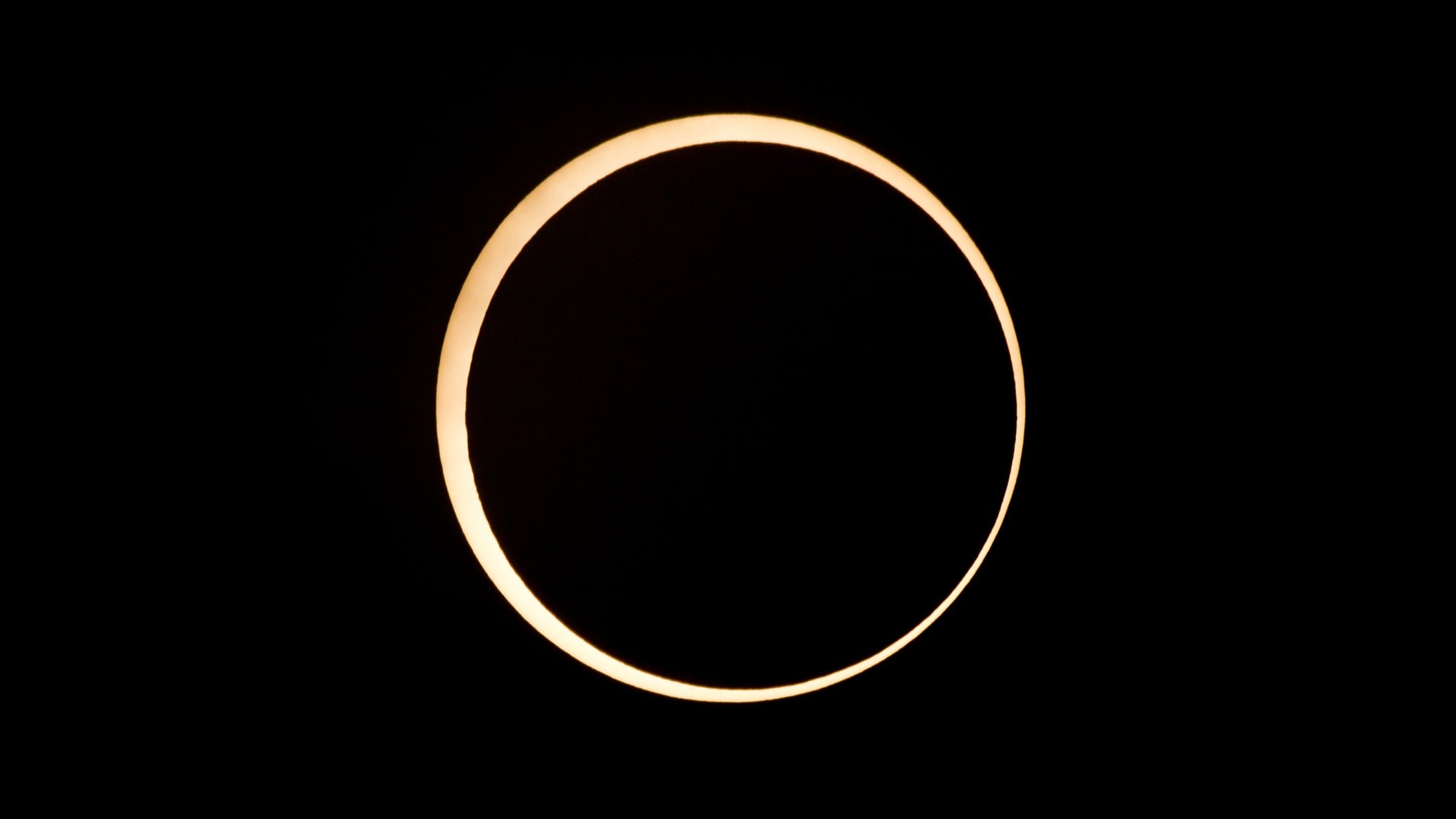
A rare annular solar eclipse on Feb 17, 2026 will create a ring of fire across a 2,661-mile path over Antarctica, with annularity lasting 2 minutes at Concordia Station and 1 minute 52 seconds at Mirny Station; outside Antarctica, a partial eclipse will be visible in parts of southeastern Africa, southern South America, and nearby oceans, though weather and extreme cold could limit viewing opportunities.
The annular solar eclipse on February 17, 2026, will create a 'ring of fire' visible only from a remote part of Antarctica, with limited opportunities for observation due to weather and accessibility. Partial views will be available in parts of Antarctica, southern Africa, and South America. The event's rarity and location make it a unique but challenging spectacle to witness.
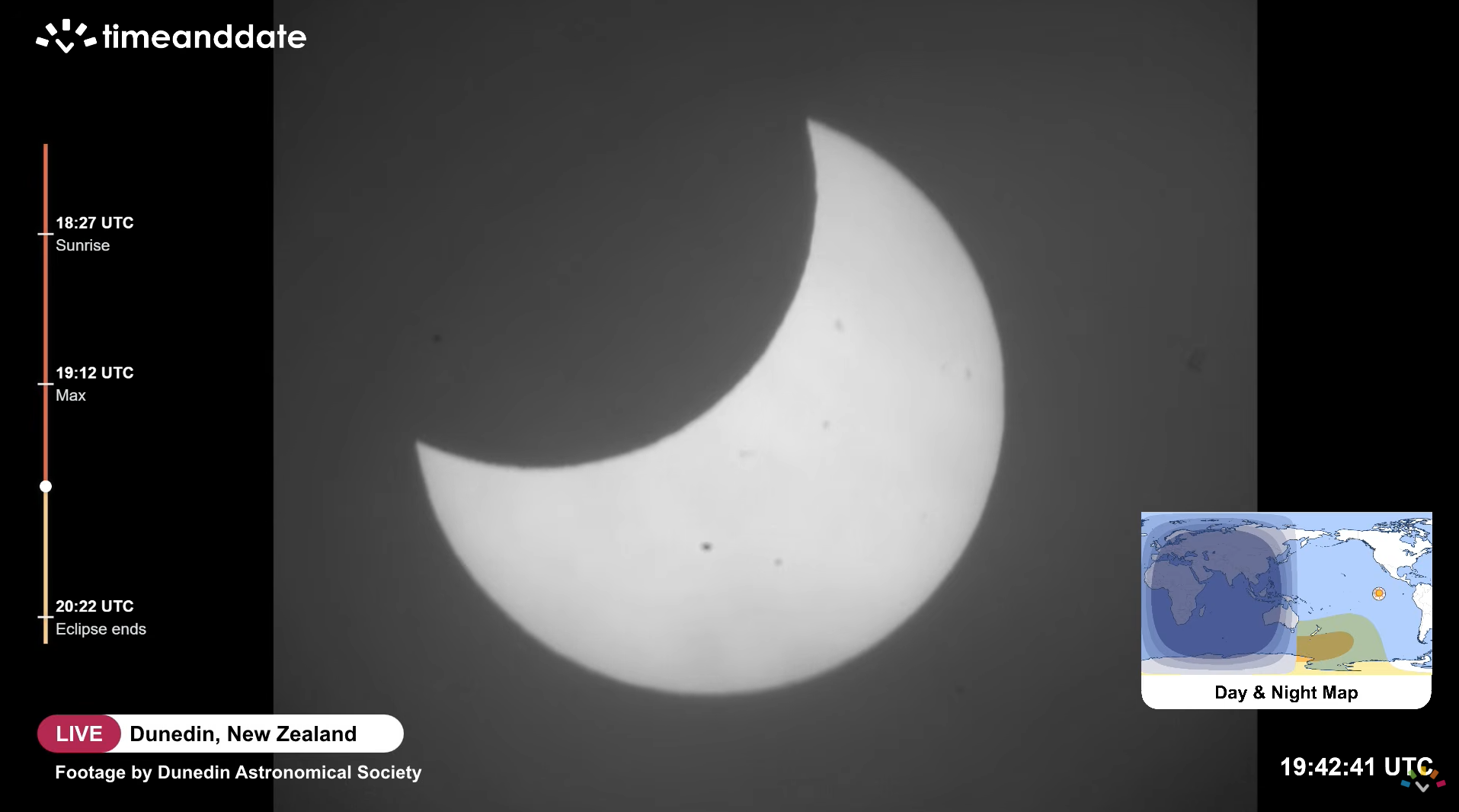
The article describes the first photos of the September 2025 partial solar eclipse over New Zealand, where up to 70% of the sun was obscured by the moon, captured during a live stream and by the Dunedin Astronomical Society, highlighting the celestial event's progression and providing educational context about eclipses.
A partial solar eclipse will occur on September 21, with maximum coverage at 3:41 p.m. EDT, visible in parts of New Zealand, Antarctica, and the South Pacific. Viewers should use proper eye protection to safely observe the event, which can also be watched live online.
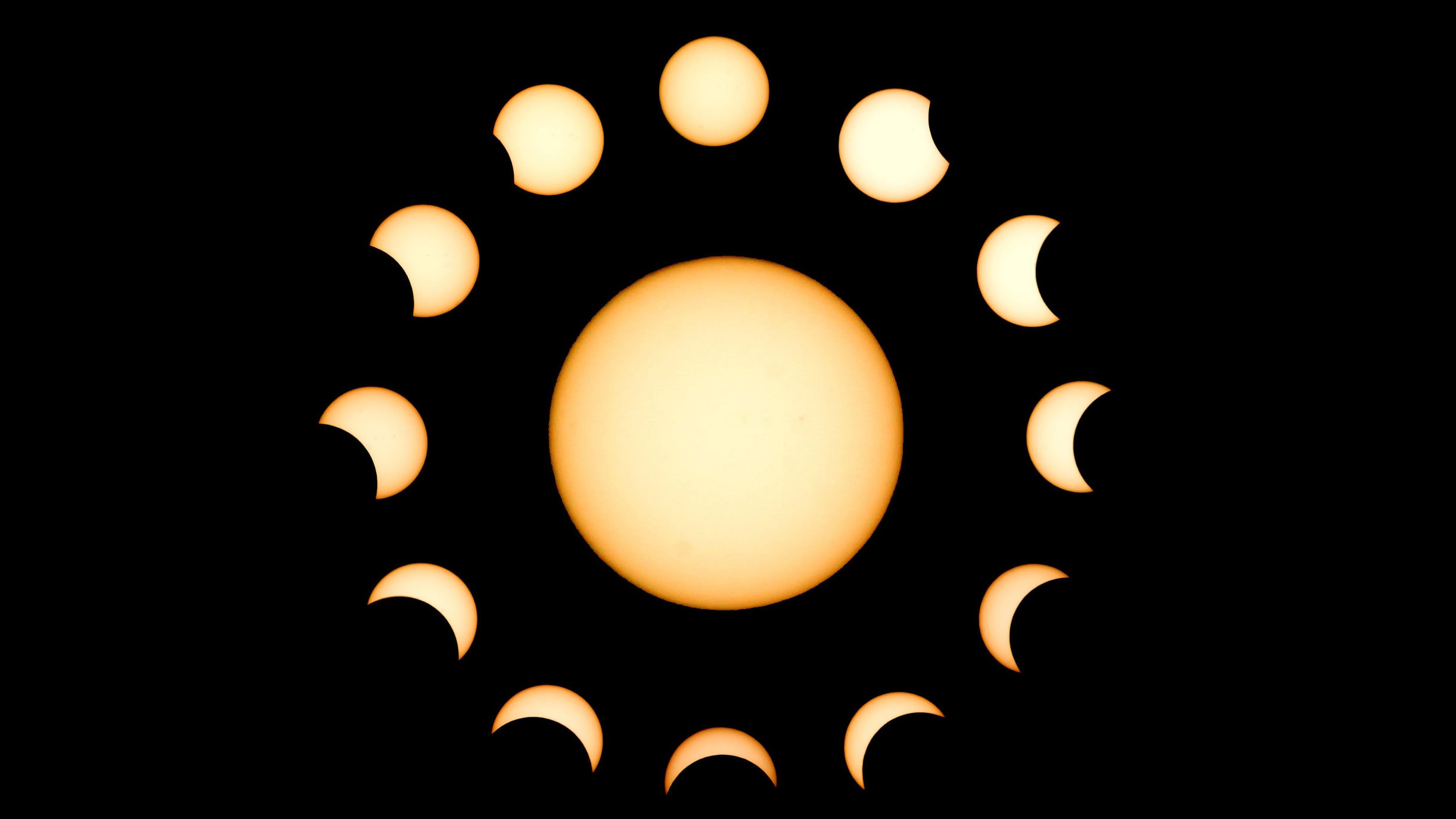
A deep partial solar eclipse will occur on September 21, 2025, with the best viewing times around 1:29 p.m. to 3:41 p.m. EDT, depending on location. Only a small portion of the world will see it directly, but live coverage will be available. Safety precautions are emphasized for viewing the eclipse.
An 'equinox solar eclipse' will occur on September 21, 2023, with limited visibility mainly in the Southern Hemisphere, including Antarctica, New Zealand, and parts of the South Pacific, offering a dramatic crescent sun view during sunrise, but it will not be visible in the Northern Hemisphere.
A partial solar eclipse will occur on September 21, 2025, visible across parts of the Southern Hemisphere, with up to 80% of the sun obscured, and will be streamed live online due to its remote viewing locations.
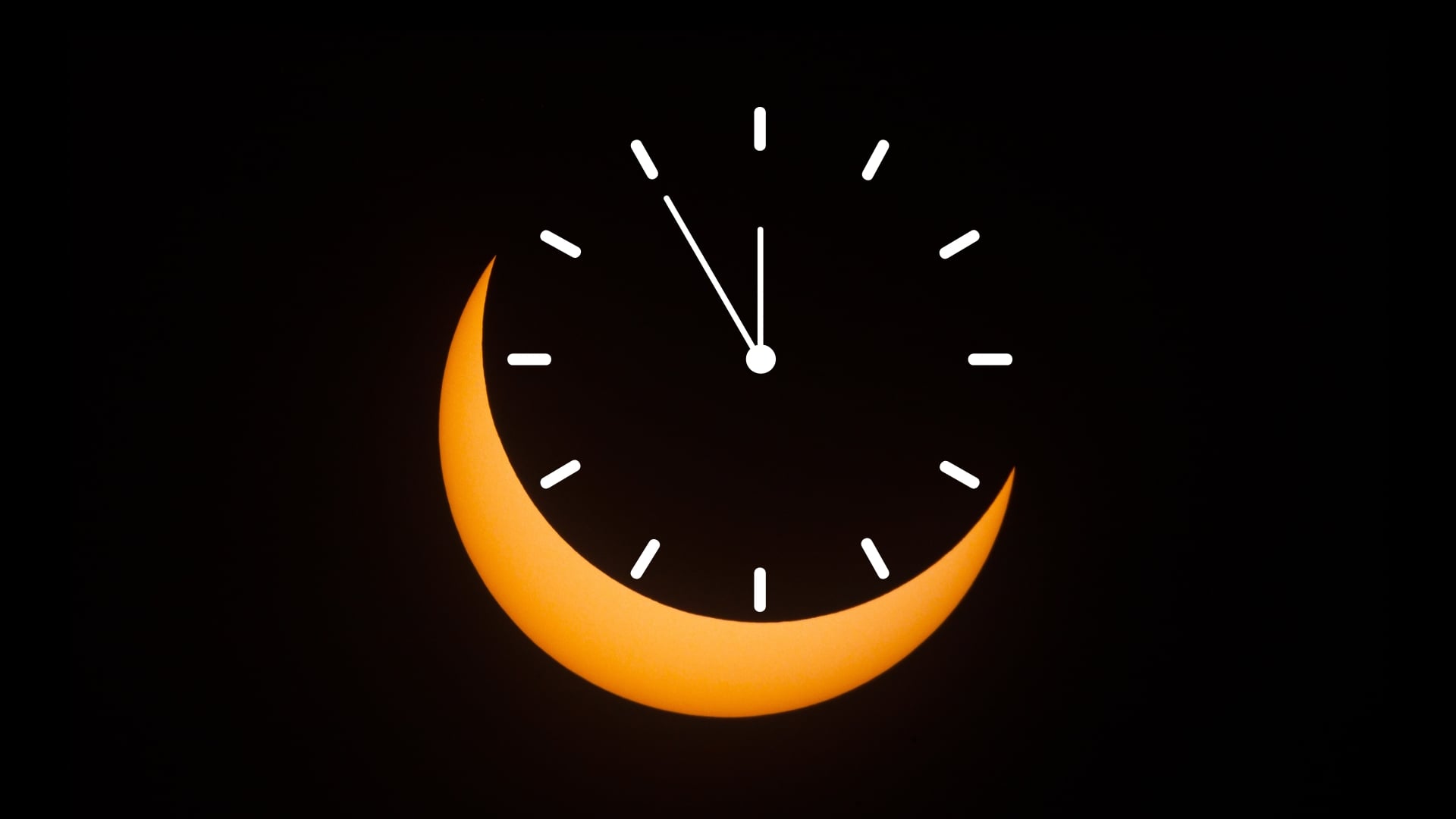
The last solar eclipse of 2025 will occur on September 21, primarily visible from eastern Australia, New Zealand, Antarctica, and parts of the South Pacific, and will be a partial eclipse lasting from late night to early morning in those regions, highlighting a significant celestial event for skywatchers and scientists alike.
Passengers on a special Delta Airlines flight for the solar eclipse didn't get to see the total eclipse, but the pilot maneuvered the aircraft so both sides could see at least a partial eclipse. Despite not getting the full experience, passengers remained in good spirits and enjoyed the unique view of the eclipse's shadow moving across the cities below. The flight included special announcements, goodie bags, and a celebratory atmosphere, with passengers expressing overall positivity about the experience.
On April 8, 2024, a partial solar eclipse was observed in Southeast Portland, Oregon, with the moon blocking around 25% of the sun, as reported by NASA. Unlike the 2017 eclipse, Oregon was only partially in the path of this event.
Nebraska was not in the path of totality for the recent solar eclipse, but there are upcoming opportunities to witness partial solar eclipses in the state. The next solar eclipse visible in Nebraska will be an annular eclipse on Jan. 26, 2028, followed by a hybrid eclipse on Nov. 14, 2031, and a total eclipse on March 30, 2033. Solar eclipses occur when the moon is positioned between the Earth and the sun, casting a shadow over the Earth, and typically happen twice a year during a new moon phase.