Tag

Pet Imaging

All articles tagged with #pet imaging

Dopamine disruption linked to long COVID brain fog and fatigue
health-and-medicine18 days ago

Dopamine disruption linked to long COVID brain fog and fatigue

CAMH researchers used PET brain imaging to find reduced markers of dopamine neuron health across striatal regions in people with long COVID, indicating loss of dopamine-releasing neurons that tracks with fatigue, reduced motivation, slower movement, and memory difficulties; the findings point to a dopamine-centered mechanism and could guide new treatments, with a planned clinical trial to test dopamine-boosting approaches alongside inflammation-focused work.

Tobacco and Cannabis Use Depletes Brain's 'Bliss Molecule'
health11 months ago

Tobacco and Cannabis Use Depletes Brain's 'Bliss Molecule'

A study using PET scans found that co-using cannabis and tobacco alters brain chemistry by increasing FAAH enzyme levels, which reduces the activity of the 'bliss molecule' anandamide, potentially explaining higher depression, anxiety, and addiction challenges in users of both substances. This research could guide new treatments for cannabis use disorder, especially among tobacco co-users.

COVID-19 Linked to Long-Term Neuroinflammation and Mental Health Issues.
health3 years ago

COVID-19 Linked to Long-Term Neuroinflammation and Mental Health Issues.

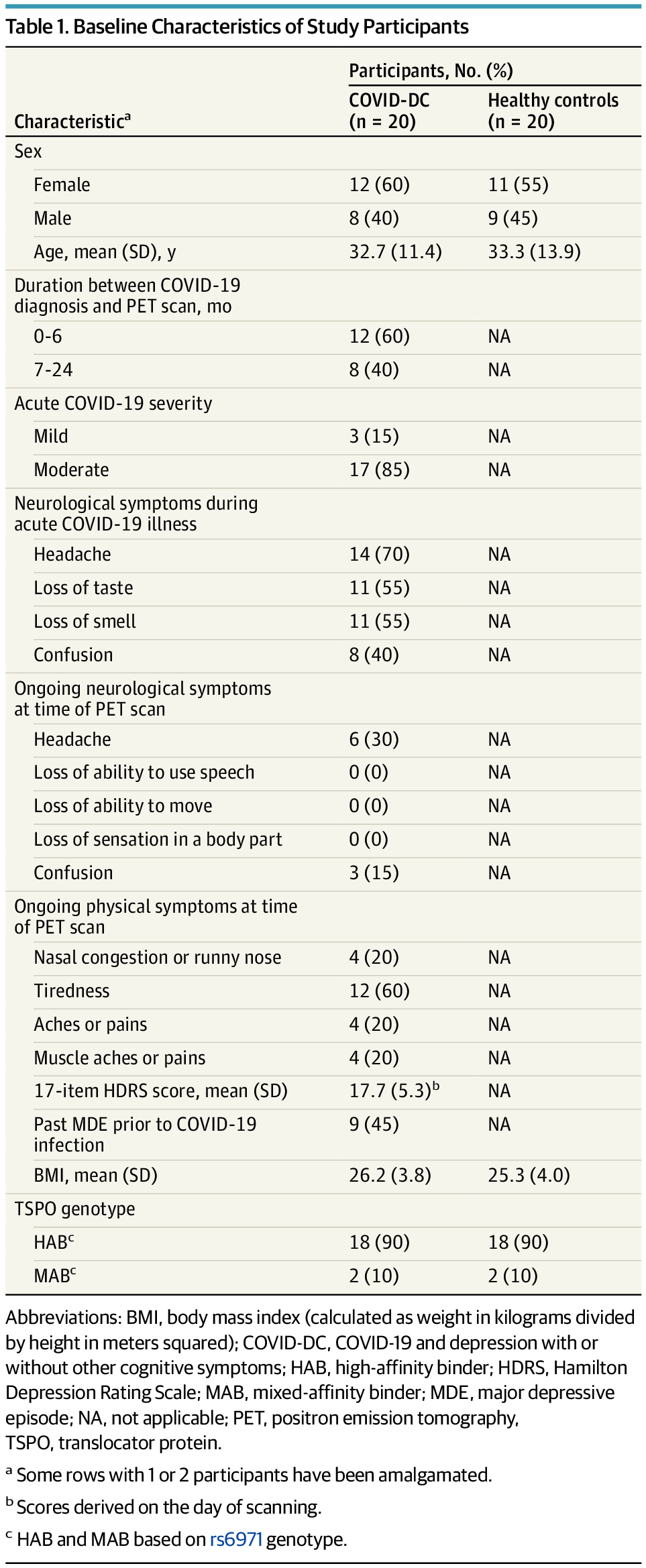
A case-control study conducted in Canada found that translocator protein total distribution volume (TSPO VT), a marker of gliosis, was elevated in the brains of individuals with persistent depressive and cognitive symptoms after mild to moderate COVID-19 infection. The study suggests that gliosis, especially in the ventral striatum and dorsal putamen, may explain some persistent depressive and cognitive symptoms, including slowed motor speed, low motivation or energy, and anhedonia, after initially mild to moderate COVID-19 illness. PET imaging of the translocator protein (TSPO) can detect gliosis composed of activated microglia or astroglia.

Visualizing the Culprit Behind Alzheimer's: A Breakthrough Approach.
health3 years ago

Visualizing the Culprit Behind Alzheimer's: A Breakthrough Approach.

South Korean researchers have discovered that reactive astrocytes, rather than amyloid-beta plaques, may be the main cause of Alzheimer’s disease. The team developed a new imaging technique using PET scans with radioactive acetate and glucose probes to visualize the interaction between astrocytes and neurons in Alzheimer’s patients. This breakthrough could lead to a new method for early diagnosis of Alzheimer’s disease and identify MCT1, an astrocyte-specific acetate transport, as a potential therapeutic target.