Tag

Plastic Pollution

All articles tagged with #plastic pollution

UN Report: Hormone-Disrupting Chemicals in Daily Goods Cost World $1.1 Trillion Annually
health-and-environment6 days ago

UN Report: Hormone-Disrupting Chemicals in Daily Goods Cost World $1.1 Trillion Annually

A new joint report by the UN Environment Program and World Health Organization states that endocrine-disrupting chemicals (EDCs) in everyday items like plastics, personal care products, and pesticides pose a growing threat to human health and the environment. The report estimates that health-related costs from exposure to these chemicals exceed $1.1 trillion annually worldwide, a figure that does not include losses from contaminated water, biodiversity loss, or impacts on food production. It calls for urgent, coordinated international action, noting that current policies are fragmented and insufficient. The report highlights that while science has advanced significantly since 2012, most of the 350,000+ registered chemicals globally have never been tested for endocrine-disrupting properties. It urges regulators to protect vulnerable populations, improve monitoring, and shift from reactive to proactive measures to prevent harm.

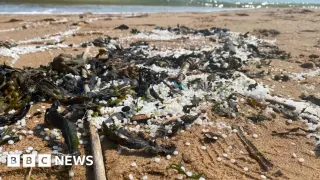
Tyne nurdle spill: Recovery stalls at 28% as calls for transparency grow
environment28 days ago

Tyne nurdle spill: Recovery stalls at 28% as calls for transparency grow

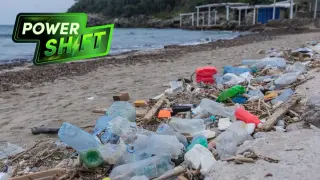
Three months after a ship collision spilled 18 tonnes of plastic nurdles into the River Tyne, recovery efforts have retrieved only 28% of the estimated 768 million pellets. While agencies acknowledge full recovery is unachievable, local councils are demanding public transparency regarding the incident's long-term environmental impact and financial compensation.

Water Activates Plastic to Create Harmful Radicals, Study Finds
science1 month ago

Water Activates Plastic to Create Harmful Radicals, Study Finds

A new study in Nature reveals that water, not just the plastic itself, may be responsible for making microplastics harmful to human health. The research shows that when fossil-fuel-based plastics interact with water, they generate unstable hydroxyl radicals that damage red blood cells and proteins. This finding challenges the long-held belief that plastic is chemically inert and suggests that the water-rich environment of the human body could amplify the toxic effects of plastic pollution.

Beach Fires Create 'Plasticoral' as Melted Waste Fuses with Coral Rubble
environment1 month ago

Beach Fires Create 'Plasticoral' as Melted Waste Fuses with Coral Rubble

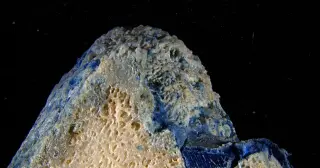
Researchers in Japan have identified a new form of marine pollution called 'plasticoral,' where plastic waste has irreversibly fused with coral rubble. This phenomenon was discovered on beaches in the Ryukyu Islands, specifically Okinawa, where spectroscopic analysis revealed household polymers melted into the microscopic pores of coral skeletons. The fusion is likely caused by beach bonfires, as ocean temperatures are currently insufficient to melt plastic. While the long-term ecological impact is unknown, previous studies suggest such plastics can leach harmful chemicals or carry pathogens to living corals.

Australian seabirds set new plastic ingestion record with 894 pieces
environment2 months ago

Australian seabirds set new plastic ingestion record with 894 pieces

Researchers on Australia’s Lord Howe Island discovered a dead sable shearwater containing 894 pieces of plastic, a new record that exceeds the previous year’s count of 778. The ingested plastic weighed 64.2 grams, representing over 15% of the bird’s body weight. This finding, part of a 16-year study, highlights a sharp rise in plastic exposure among seabirds since 2023, driven by parents mistaking ocean debris for food. Experts warn that even if plastic production stopped today, ocean pollution levels would continue to rise until 2050, necessitating stricter legislation like mandatory attached bottle caps.

Dutch Nonprofit Targets 90% Ocean Plastic Removal by 2040 via River Interceptors
environment2 months ago

Dutch Nonprofit Targets 90% Ocean Plastic Removal by 2040 via River Interceptors

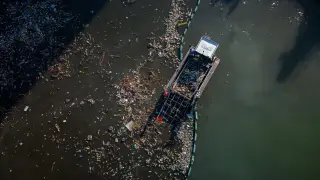
The Ocean Cleanup, a Dutch nonprofit, is deploying autonomous 'interceptors' in 11 countries to remove floating plastic, aiming to eliminate 90% of ocean plastic by 2040. The organization has removed over 66,000 metric tons of plastic to date, with 27,000 tons removed in 2025 alone. While experts agree that reducing plastic production is the primary solution, they acknowledge that cleanup is necessary for legacy waste. The initiative faces criticism regarding biodiversity impacts and the scalability of recycling recovered materials, but it continues to expand its urban river programs in Asia and the Americas.

Six Kitchen Swaps to Lower Microplastic Intake
health-and-wellness3 months ago

Six Kitchen Swaps to Lower Microplastic Intake

The Washington Post reports that despite healthy eating habits, microplastics and toxic chemicals still infiltrate food supplies. Experts suggest simple swaps, such as replacing plastic cookware and containers with glass or metal alternatives, to reduce exposure. The article notes that while these changes help, they are part of a broader effort to minimize contact with harmful plastics in everyday life.

Turning Plastic Waste Into Clean Hydrogen With a Low-Temp Alkaline Process
technology4 months ago

Turning Plastic Waste Into Clean Hydrogen With a Low-Temp Alkaline Process

A study published in PNAS describes an alkaline thermal treatment (ATT) that converts mixed plastic waste into high-purity hydrogen at lower temperatures with negligible direct CO2 emissions, potentially tackling both plastic pollution and clean-energy needs. Lab tests on PET, PE, and PP show hydrogen yields comparable to pyrolysis/gasification, with a need for pre-treatment of some plastics. While promising, researchers caution that scalability, economic viability, and full life-cycle environmental impact still require further research, along with handling contaminated plastics and recycling the sodium hydroxide.

Plastic at the Hadal Depth: The Challenger Deep Sighting and the Broader Deep-Sea Debris Trend
science4 months ago

Plastic at the Hadal Depth: The Challenger Deep Sighting and the Broader Deep-Sea Debris Trend

In 2019 Victor Vescovo reached about 10,927 metres in the Challenger Deep and reported seeing something that looked like a plastic bag, but the observation was hedged and not recovered; subsequent analysis notes that a JAMSTEC study had already logged a plastic bag at 10,898 metres, and broader research shows single-use plastic debris is common at hadal depths, making the general claim of plastic in the deep sea well-supported even if the specific bag sighting isn’t definitively confirmed.

Hard-to-die plastic: PET bottles linger for centuries and seed microplastics globally
environment5 months ago

Hard-to-die plastic: PET bottles linger for centuries and seed microplastics globally

A PET water bottle takes about 450 years to decompose; since the 1970s essentially every bottle produced remains somewhere on Earth, gradually fragmenting into microplastics that are now found from Arctic ice to deep Mariana Trench sediments, while global plastic production continues and most of it remains unrecycled, ensuring centuries of pollution as plastics persist and disperse through air, water, and soils.

Maryland researchers near breakthrough in biodegradable packaging to curb plastic pollution
environment5 months ago

Maryland researchers near breakthrough in biodegradable packaging to curb plastic pollution

A University of Maryland research team says it is nearing a breakthrough to tackle plastic pollution by developing cost-effective biodegradable packaging using AI and biomolecular techniques drawn from shrimp and crab shells, with the aim of replacing plastic bags, wraps, water bottles, and other food-packaging materials.

San Diego rail nurdle settlement tightens transport rules for plastic pellets
environment9 months ago

San Diego rail nurdle settlement tightens transport rules for plastic pellets

A settlement over nurdle spills along San Diego-area rail lines leads BNSF Railway, the Coastal Environmental Rights Foundation, San Diego Coastkeeper, and the North County Transit District to adopt nationwide policies requiring sealed plastic-pellet rail cars, penalties for non-compliance, and a donation to local cleanup efforts, in an effort to curb plastic-pellet pollution.

Global plastics boom linked to rising health burden, study warns
health9 months ago

Global plastics boom linked to rising health burden, study warns

A Lancet Planetary Health analysis estimates plastic pollution caused about 2.1 million global disability-adjusted life years in 2016 and could rise to roughly 4.5 million by 2040. Health harms come primarily from upstream plastic production and associated pollution rather than waste alone. The study argues for a cradle-to-grave, system-wide shift—reducing primary production while improving reuse and waste management—and urges stronger government action and industry transparency to curb the plastics health crisis.

Heat Boosts Microplastic Shedding from Takeaway Coffee Cups
environment10 months ago

Heat Boosts Microplastic Shedding from Takeaway Coffee Cups

A new study shows heat is the main driver of microplastic release from takeaway cups: all-plastic cups shed more particles than plastic-lined paper cups, and hotter beverages increase particle release. The researchers found a 300 mL daily hot coffee in polyethylene could lead to about 363,000 microplastics ingested annually. While long‑term health effects remain uncertain, the findings suggest using reusable cups or cooler drinks to reduce exposure, and avoiding pouring boiling liquids into plastic-lined containers.