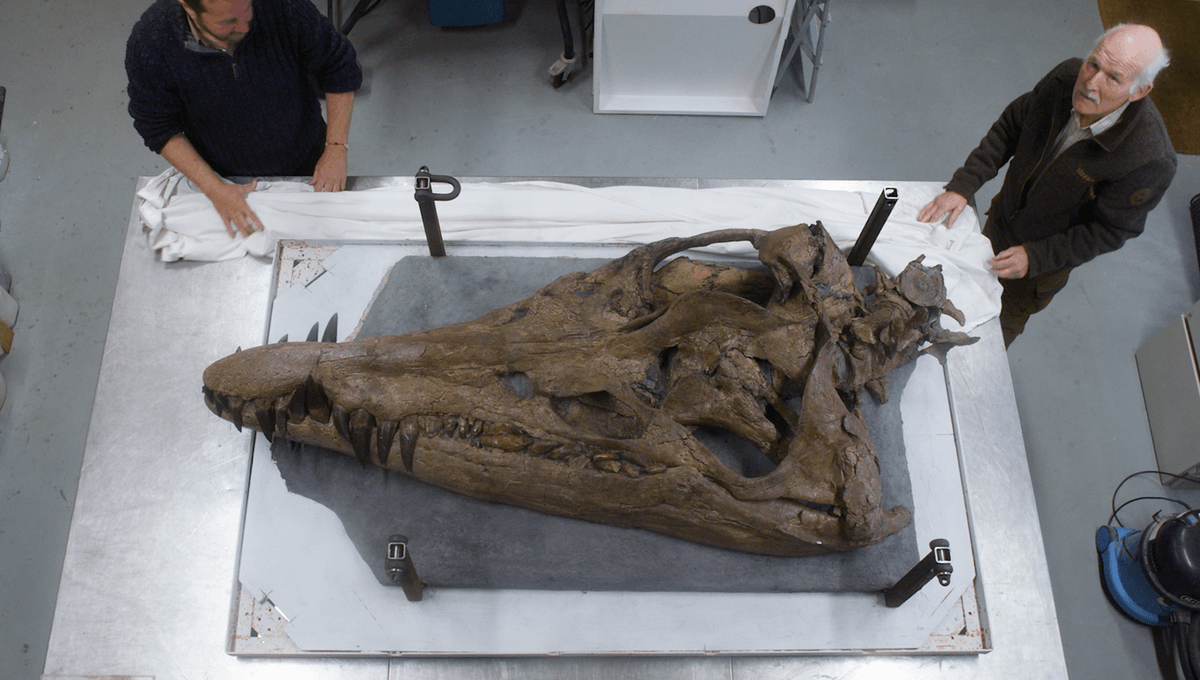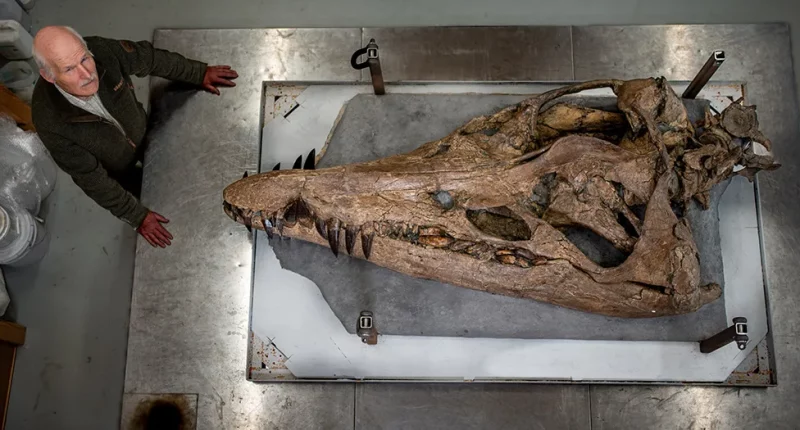
Scientists unveil SeaRex, a 150-million-year-old pliosaur skull found lodged high in a cliff along England’s Jurassic Coast; at ~95% complete with about 130 teeth, it’s been dubbed the most complete skull of its kind by Guinness World Records, recovered after a drone survey pinpointed the site and rope-access excavation suggests more bones remain in the surrounding rock.
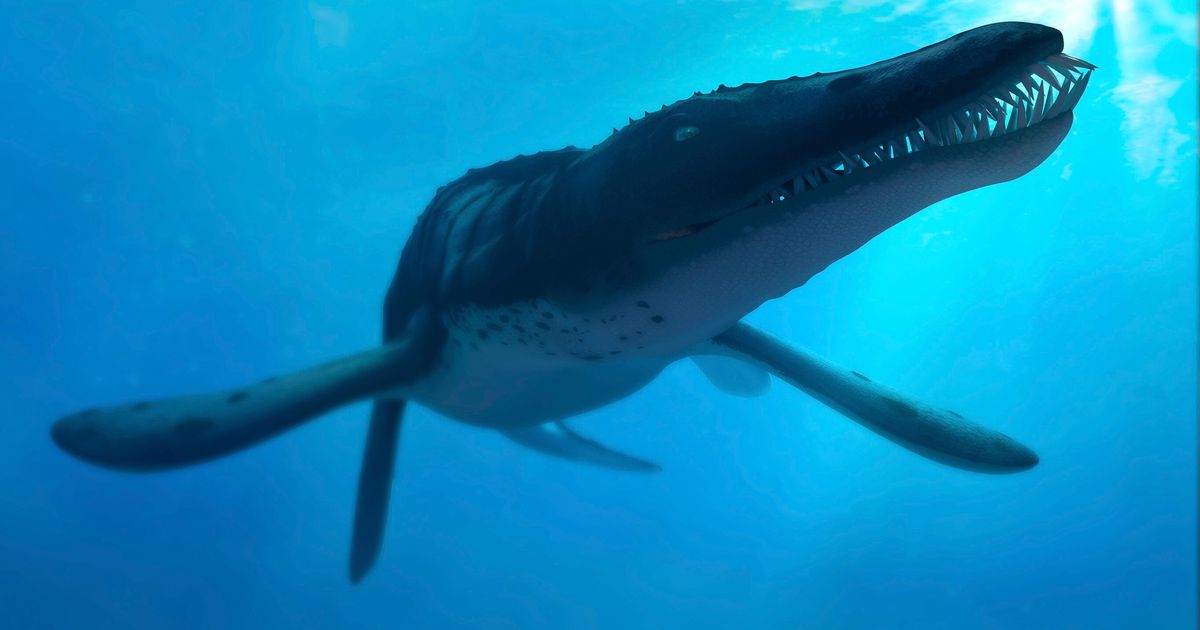
Researchers have reconstructed a 30-foot Jurassic pliosaur, a large marine reptile, after excavating its enormous fossilized skull from a U.K. cliff face. The discovery and reconstruction are featured in a new documentary, "Attenborough and the Jurassic Sea Monster," airing on PBS. The pliosaur, a top predator of the Jurassic period, had massive jaws with razor-sharp teeth and lived in warm, shallow seas. The fossilized skull, one of the largest and most complete ever found, was excavated from a cliff face in a challenging three-week operation. Experts at Imperial College London reconstructed the pliosaur's movement using a robotic prototype, and further scientific research is underway to learn more about this extinct animal. Paleontologists are now planning the next phase of excavation to recover the rest of the fossilized body before it is lost to erosion.
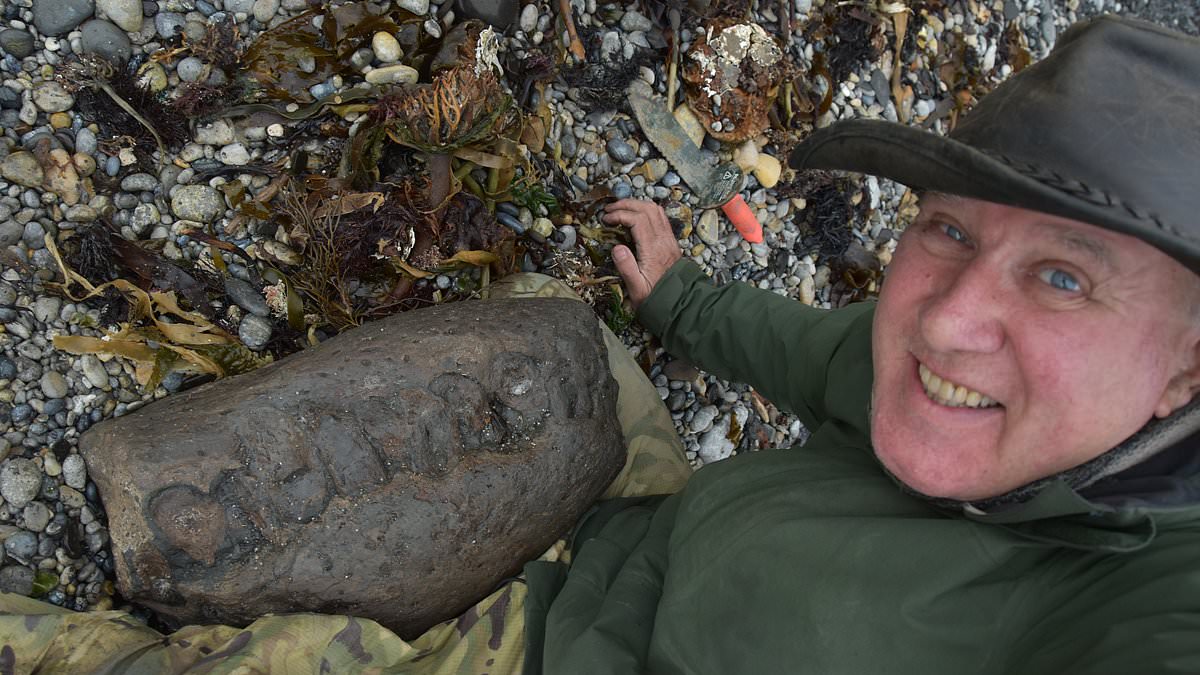
Phil Jacobs, the amateur fossil hunter who discovered a significant pliosaur fossil, has been overlooked in the BBC documentary "Attenborough and the Giant Sea Monster," which credits Sir David Attenborough with the find. Jacobs, who has been hunting fossils for 40 years, found the 150-million-year-old pliosaur skull in Dorset and was only referred to as a 'fossil enthusiast' in the show. The paleontology community is calling for proper recognition of Jacobs' contribution, with an online petition to name the new pliosaur species after him and demands for the BBC to re-edit the documentary to credit him appropriately.
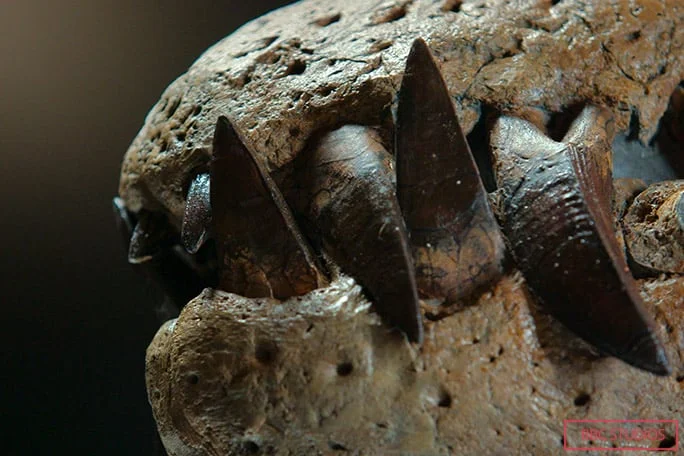
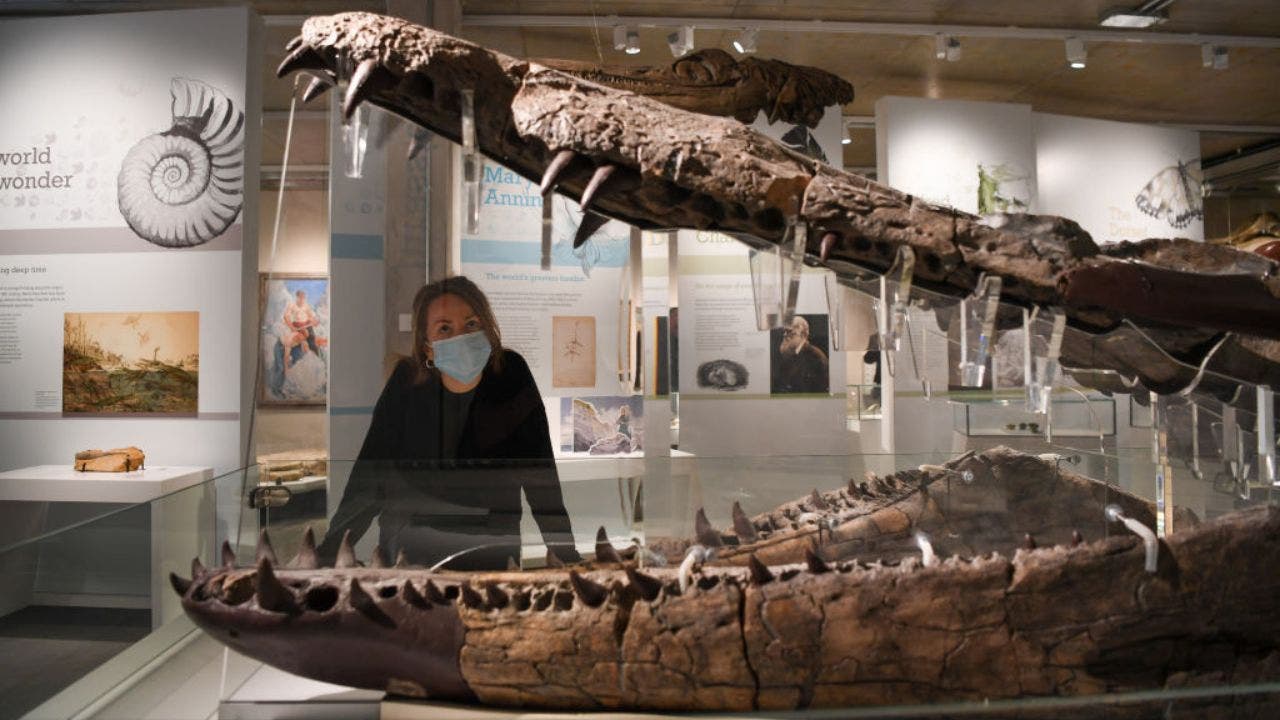
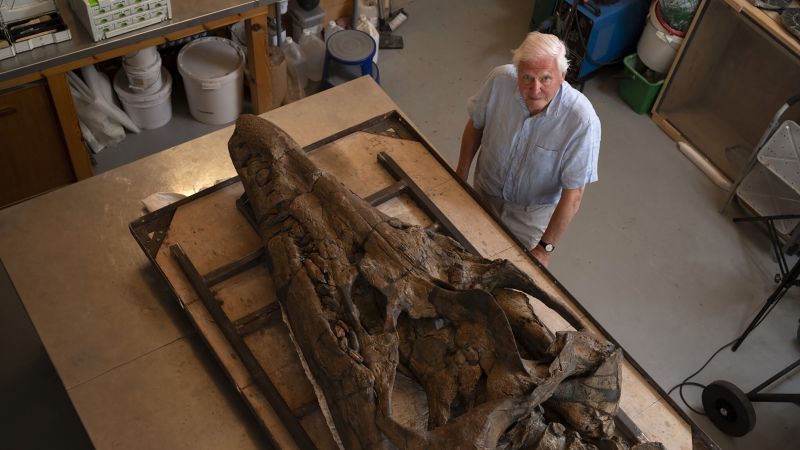
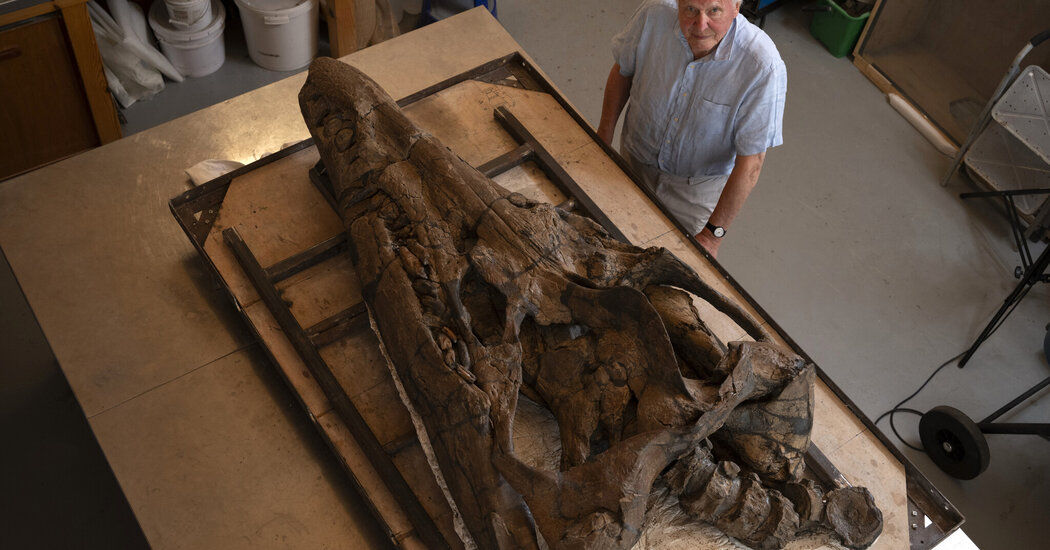
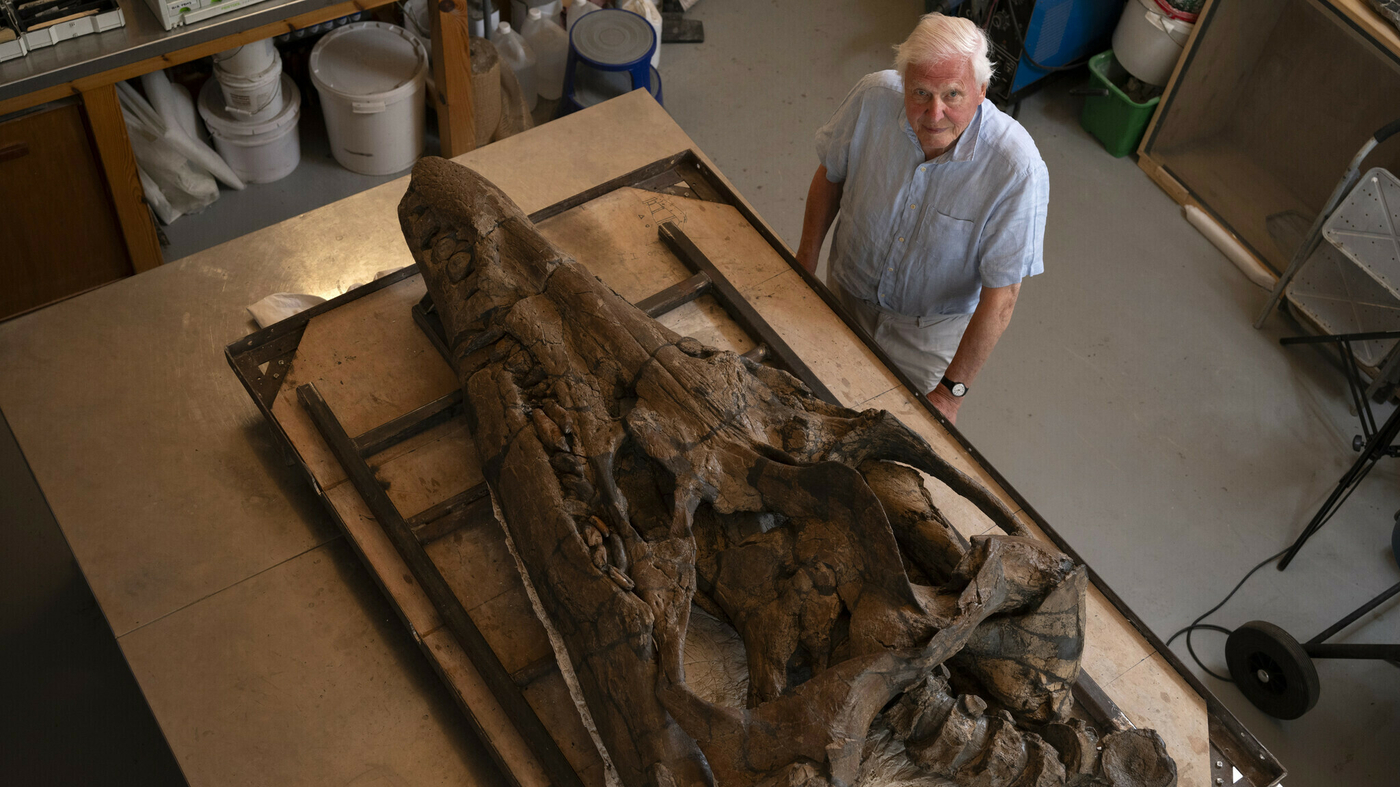
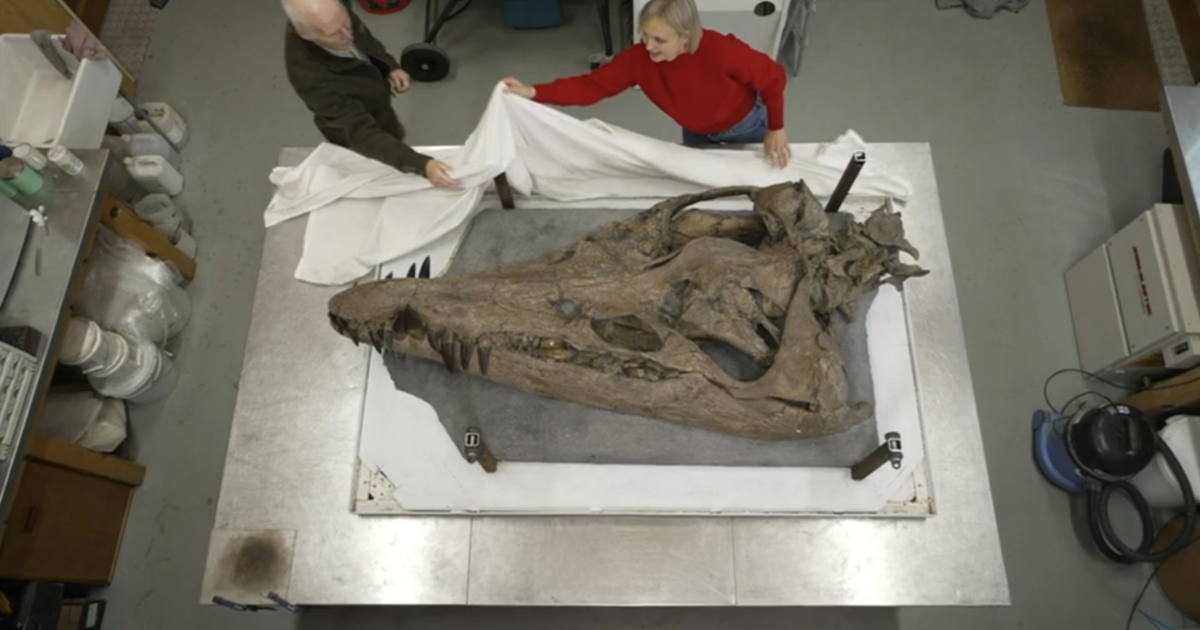
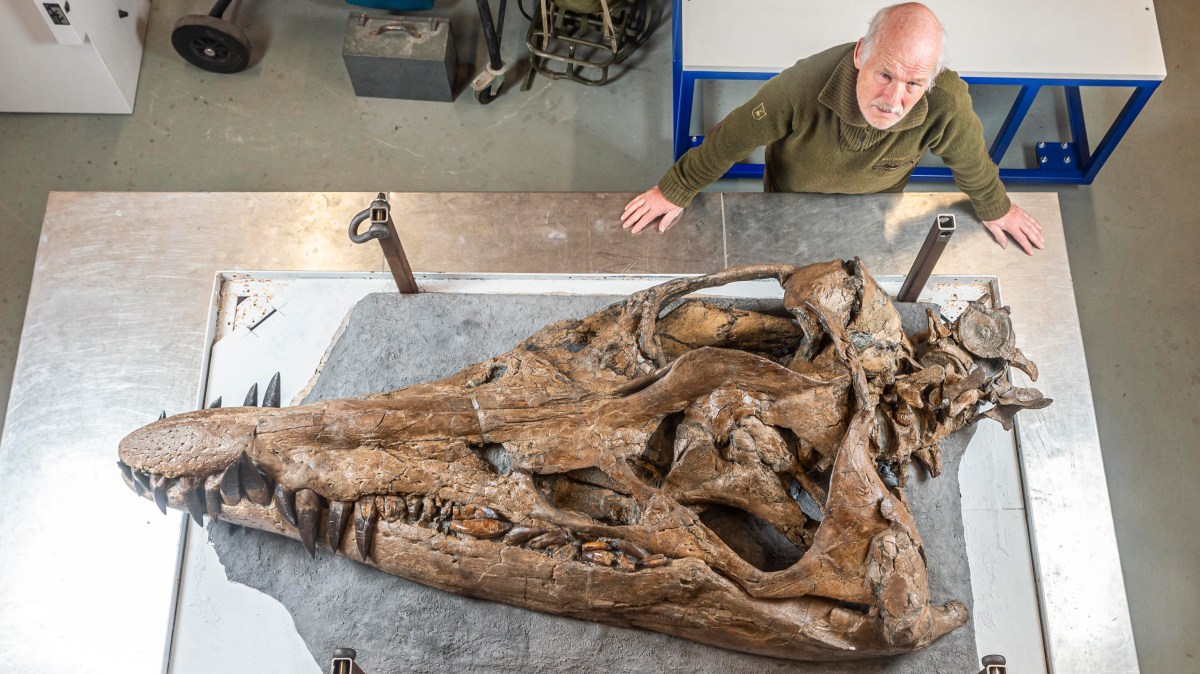
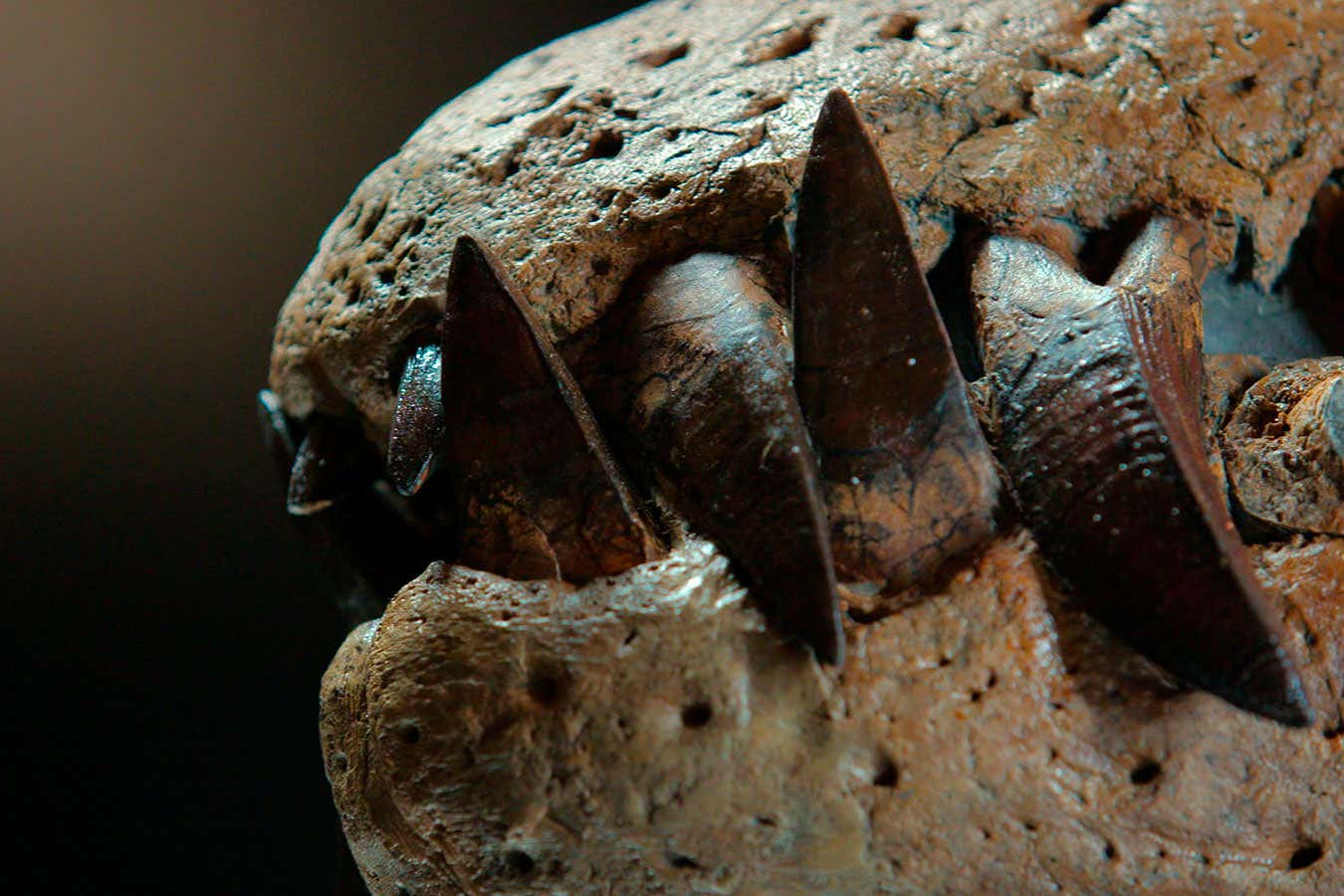
The largely intact skull of a pliosaur, a ferocious marine reptile that lived 150 million years ago, has been discovered on England's Jurassic Coast. Measuring 6 feet and equipped with 130 teeth, the skull is believed to have belonged to an underwater T-rex-like creature capable of killing in a single bite. The fossil, one of the most detailed ever found, will be displayed in a museum next year, while scientists believe the rest of the animal is still waiting to be discovered in the cliffs. The discovery will be featured in a BBC documentary with David Attenborough.
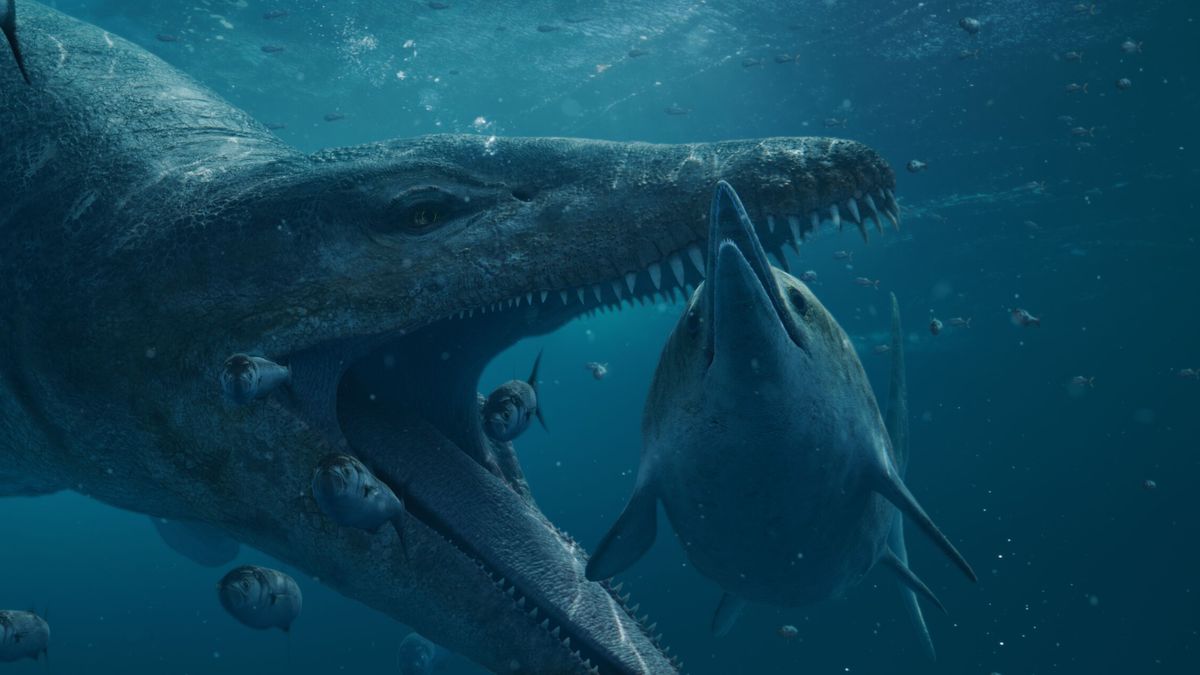
The giant skull of a 150-million-year-old predatory marine reptile, possibly a new species, has been discovered along the Jurassic Coast in the UK. Fossil enthusiasts found the snout, leading to a retrieval mission to uncover the rest of the creature. The skull, measuring 2 meters in length, will be featured in a new documentary called "Attenborough and the Giant Sea Monster." Pliosaurs, like this apex predator, were among the largest marine predators in history, using their enormous teeth to prey on creatures such as ichthyosaurs. The skull will eventually be displayed at the Etches Collection Museum in Dorset.
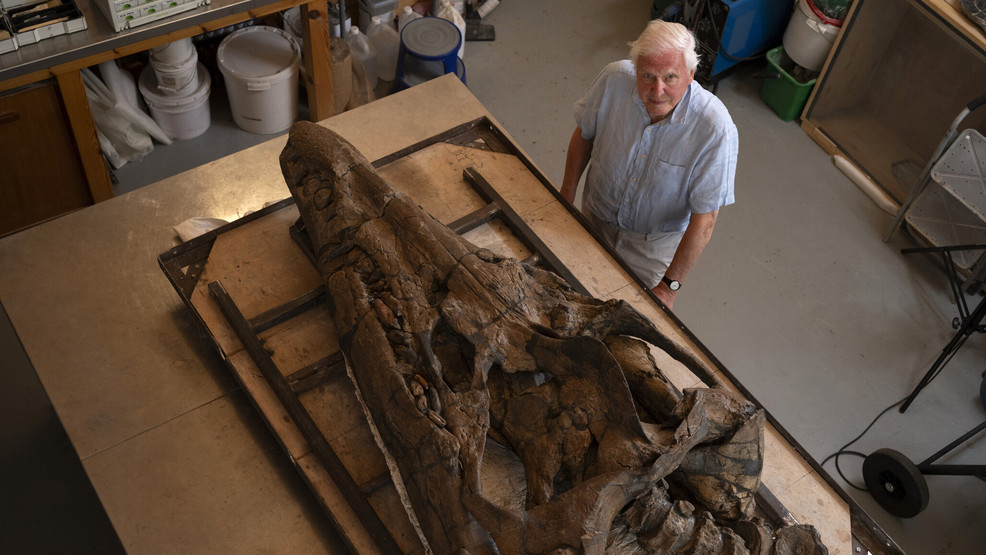
The nearly complete skull of a pliosaur, a massive predatory sea monster that lived 150 million years ago, has been excavated from a cliff on the UK's Jurassic Coast. Measuring six feet and five inches long, the pliosaur skull is one of the most intact specimens of its kind ever found. Pliosaurs were apex predators with powerful jaws and razor-sharp teeth, capable of preying on anything unfortunate enough to cross their path. The skull is currently being prepared for display at The Etches Collection Museum of Jurassic Marine Life, and its discovery is considered a once-in-a-lifetime opportunity due to the rapid erosion of the cliff.
A fossil enthusiast discovered a two-meter-long pliosaur skull with 130 teeth in the cliffs of Dorset, England. The skull, believed to be 150 million years old, was found by Phil Jacobs on the beach at Kimmeridge Bay and was excavated with the help of fossil expert Steve Etches. The rare find, which will be featured in a David Attenborough documentary, is in remarkably good condition and is attracting scientists from around the world. The pliosaur, an apex predator of the Jurassic period, was larger and more ferocious than a T-Rex.
Paleontologists have uncovered a 150 million-year-old pliosaur skull, measuring 6 feet in length, along England's Jurassic Coast. The largely intact skull, which is larger than the average human's height, is a unique find and could provide new insights into the creature's anatomy. The fossil was discovered by chance on the beach below a cliff and was extracted with the help of ropes and a makeshift stretcher. The rest of the reptile's body is believed to be in the cliff, but further excavation will require significant funding. The skull will be displayed at the Etches Collection Museum of Jurassic Marine Life and featured in a BBC documentary.
The remarkably well-preserved skull of a gigantic pliosaur, a prehistoric sea monster, has been discovered on England's Jurassic Coast. The fossil, about 150 million years old, is almost 3 million years younger than any other pliosaur find and could potentially be a new species. The skull, measuring almost 2 meters long and weighing over half a metric ton, provides insights into the characteristics of these apex predators. The discovery and excavation process will be featured in the upcoming BBC documentary "Attenborough and the Jurassic Sea Monster," presented by Sir David Attenborough.
The intact skull of a pliosaur, an ancient ocean predator and the largest carnivorous reptile to have ever lived, has been discovered along the Jurassic Coast in southern England. The more than six-foot-long fossil, found by artist and fossil hunter Philip Jacobs, is considered a "discovery of a lifetime" by experts. Pliosaurs, which reigned at the top of the food chain during the Jurassic Period, were solitary hunters that preyed on other marine reptiles. The complete skull offers new insights into the anatomy and features of these ancient sea monsters.
Scientists have discovered a mostly intact skull of a pliosaur, a giant and deadly sea reptile that lived millions of years ago off the coast of England. The six-foot-long skull reveals the massive size and powerful bite of the creature, which had 130 teeth and was compared to an underwater T. rex. The fossil will be featured in a BBC One special hosted by David Attenborough and will be displayed in a museum. However, there are concerns that the rest of the fossil may be lost due to erosion.
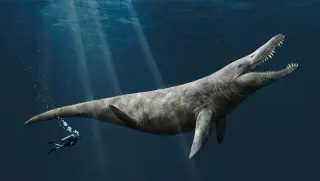
The skull of a pliosaur, an ancient sea monster, has been discovered on the U.K.'s southern Jurassic Coast. The fossilized skull, which still has 130 razor-sharp teeth, is one of the most complete pliosaur skulls ever found. The pliosaur, a marine reptile that lived around 150 million years ago, was about 10 to 12 yards long and had extremely strong jaw muscles. The discovery will provide valuable insights into the life and behavior of these prehistoric creatures.
The fossilized skull of a pliosaur, a huge marine reptile that lived 150 million years ago, has been discovered in Dorset, England. Measuring two meters long, the skull is considered one of the most complete ever found. Pliosaurs were apex predators with large heads, short necks, and tear-shaped bodies, typically reaching lengths of 10 to 12 meters. The skull was found by a local enthusiast on the Jurassic Coast and is being hailed as an exceptional fossil.
Fossil hunters have discovered what is believed to be the most complete Jurassic pliosaur skull ever found on the Jurassic Coast in Dorset, UK. The fossil, which is likely a new species, features a large sagittal crest that may indicate sexual dimorphism and suggests the animal was a juvenile. CT scans reveal sensory pits connected to blood vessels and nerves, enhancing understanding of pliosaurs' hunting abilities. The skull will be displayed to the public next year and featured in a David Attenborough documentary.
A nearly complete skull of a pliosaur, an ancient sea monster, has been discovered on the cliffs of Dorset's Jurassic Coast in the UK. The 2-meter-long fossil, with 130 razor-sharp teeth, provides new insights into the predator that lived 150 million years ago. The pliosaur is described as an underwater T. rex, measuring 10-12 meters in length with powerful limbs. The excavation, conducted after a drone survey, revealed the pliosaur's powerful bite and acute senses, including a third eye for locating prey in murky waters.