Tag

Precision Oncology

All articles tagged with #precision oncology

New combo strategy sharpens antibody-drug conjugates against advanced prostate cancer
medical-research1 month ago

New combo strategy sharpens antibody-drug conjugates against advanced prostate cancer

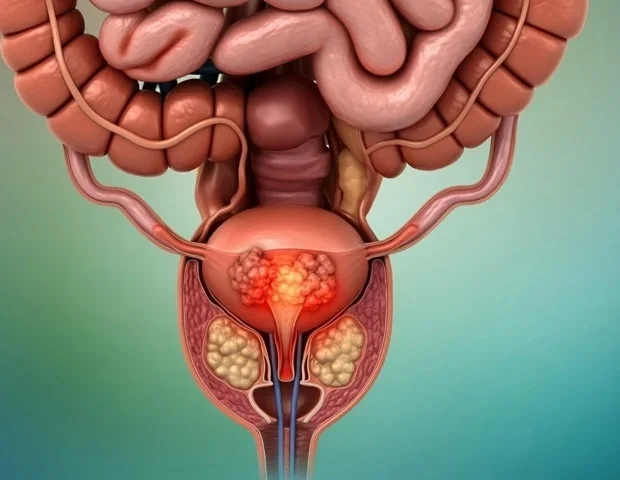
UCLA researchers report that pairing DNA-damaging antibody-drug conjugates (ADCs) with BCL-XL inhibitors boosts cancer cell death and slows tumor growth in metastatic castration-resistant prostate cancer, shown in lab and mouse models. The work highlights co-targeting proteins B7-H3, PSMA, and STEAP1 to reach more cancer cells and notes that tumors with intact TP53 respond best, suggesting genetic testing could guide patient selection. The study provides a framework for next-generation, multi-payload, multi-target ADCs to improve durability of prostate cancer therapies, pending clinical trials.
Organoid biobank maps cancer dependencies across five tumor types
science1 month ago

Organoid biobank maps cancer dependencies across five tumor types

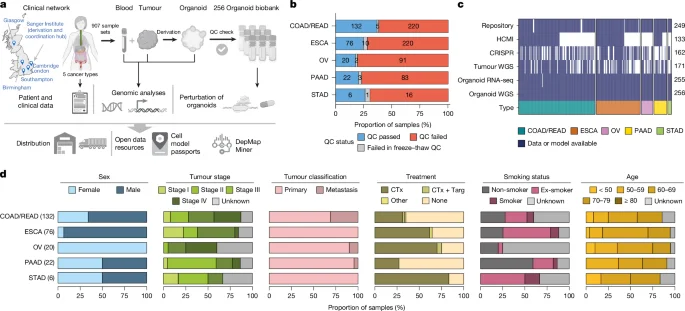
A large, open organoid biobank derived from colorectal, oesophageal, ovarian, pancreatic and gastric cancers (256 organoids from 878 donors) was established with linked clinical data and extensive genomic profiling (WGS and RNA-seq). CRISPR–Cas9 screens on 162 organoids mapped gene dependencies, revealing organoids faithfully recapitulate tumor genomics and heterogeneity, identifying organoid-specific essential genes and context-driven vulnerabilities (notably along the EGFR–RAS–MAPK axis) and observing treatment-driven evolutionary changes in paired pre/post samples. The resource, with data publicly accessible via Cell Model Passports and DepMap, advances precision oncology by enabling systematic, functionally informed cancer maps.

Genomics-guided off-label cancer therapy shows benefit in defined subgroups (DRUP trial)
health5 months ago

Genomics-guided off-label cancer therapy shows benefit in defined subgroups (DRUP trial)

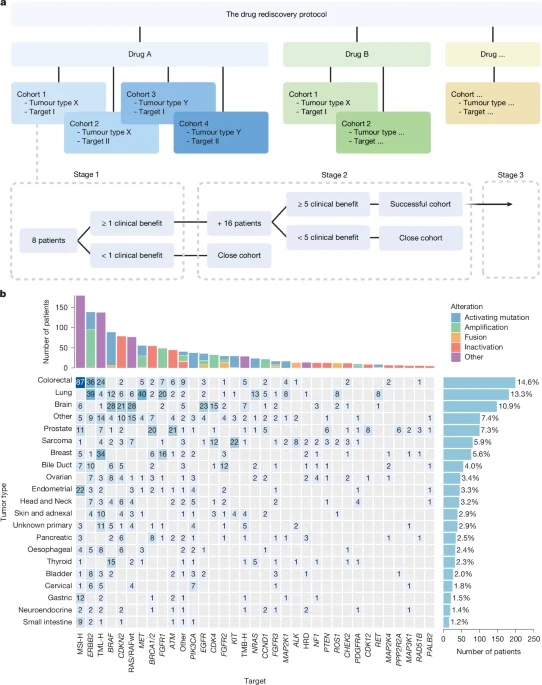
In the Drug Rediscovery Protocol (DRUP), 1,610 patients with advanced solid tumors were treated with 37 off-label drugs matched to actionable genomic alterations. Of 1,363 evaluable patients, the clinical benefit rate was 34.9% and the objective response rate was 15.7%, with median progression-free and overall survival of 3.4 months and 8.2 months, respectively; grade 3+ treatment-related adverse events occurred in 28.4%, leading to discontinuation in 9.4%. Exceptional responders (7.0%) appeared across molecular subgroups, and some results supported Dutch reimbursement. The authors emphasize meaningful benefit in defined molecular contexts despite overall modest activity, advocating structured, data-generating frameworks, earlier intervention, biomarker refinement, and international collaboration to guide safe use and potential label expansion.

"Rethinking Cancer Terminology: Addressing Fear and Misconceptions"
health-medicine2 years ago

"Rethinking Cancer Terminology: Addressing Fear and Misconceptions"

The traditional method of classifying cancers based on their organ of origin is hindering progress in cancer treatment and causing delays in accessing effective drugs for patients with specific molecular alterations. Shifting towards a molecular-based classification system would allow for more targeted and effective treatments, necessitating changes in medical oncology, education, and access to molecular testing. Regulatory agencies, scientific societies, and insurance companies need to redefine evidence requirements for treatment decisions, while hospitals and universities should restructure oncology to prioritize molecular analysis. Medical education should focus on molecular understanding of cancer, and access to molecular testing needs to be improved to enable widespread adoption of molecular-based classifications.

"Personalized Cancer Care: NHS Utilizes Whole-Gene Screening"
healthcare-and-medicine2 years ago

"Personalized Cancer Care: NHS Utilizes Whole-Gene Screening"

A study of 13,000 cancer patients in England has shown that analyzing the entire genetic code of cancer patients can help tailor treatments to individuals, leading to better outcomes. The study, published in Nature Medicine, found that genetic changes in most brain, bowel, and lung cancers could guide decisions about surgery or specific treatments. Whole-genome sequencing revealed genetic variations that may make patients more susceptible to cancer and helped identify different sub-types of cancer, guiding doctors in choosing the correct treatment. The study, led by Genomics England and NHS England, has created a resource for clinicians to better predict outcomes and tailor treatments, paving the way for precision oncology in mainstream cancer care.

"AI's Real-Time Diagnosis of Brain Tumor DNA Revolutionizes Surgery"
healthcare3 years ago

"AI's Real-Time Diagnosis of Brain Tumor DNA Revolutionizes Surgery"

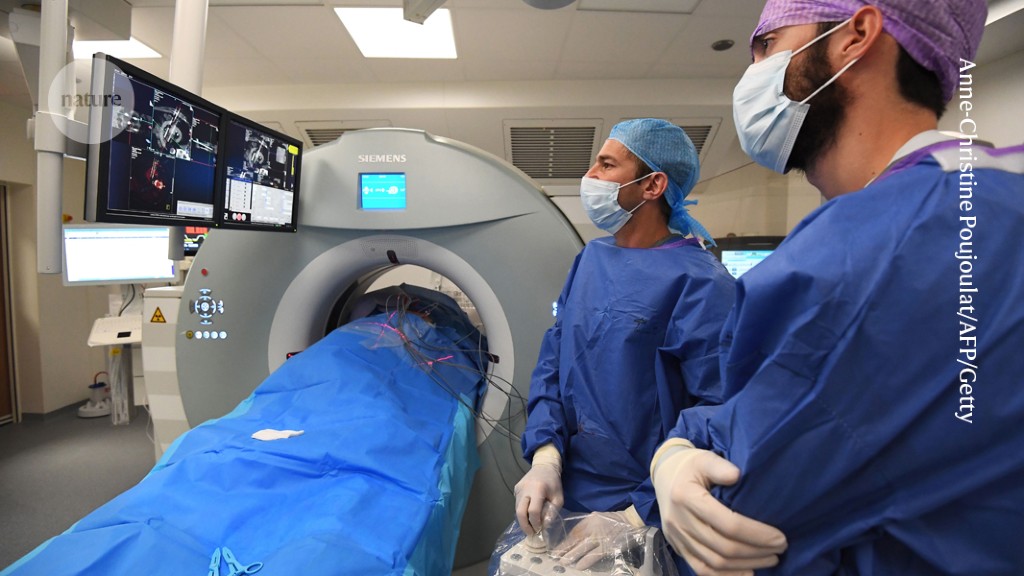
Scientists have developed an AI tool called CHARM that can rapidly decode a brain tumor's DNA during surgery, providing real-time molecular diagnosis to guide surgical decisions. This tool has the potential to help neurosurgeons determine the extent of tissue removal and enable on-the-spot treatments. CHARM offers a 93% accuracy rate in identifying specific molecular mutations and could be retrained to identify other brain cancer subtypes. While it still requires clinical validation and FDA approval, this advancement represents a significant step towards real-time precision oncology.

Sex chromosome loss linked to cancer growth and outcomes.
health3 years ago

Sex chromosome loss linked to cancer growth and outcomes.

Two new studies published in the journal Nature have found that genetics can explain why sex matters in certain cancers. In bladder cancer, men with tumors that have lost the Y chromosome fare just as badly as women, as the immune system doesn't function as well. Existing immunotherapy drugs that take the brake off T cells are more effective in bladder cancers that have lost their Y chromosomes than in those that still have it. In some colon cancers, the presence of the Y chromosome can worsen outcomes, suggesting the Y chromosome works differently depending on the type of cancer. Identifying sex differences in cancer can call attention to patients at higher risk for recurrence and therefore in need of closer surveillance and potentially additional therapies.

The Role of Genetics in Sex-Specific Cancer Outcomes.
health3 years ago

The Role of Genetics in Sex-Specific Cancer Outcomes.

Two new studies published in the journal Nature have found that the Y chromosome, which characterizes males, plays a key role in colon and bladder cancers. The studies show that genetics can sometimes explain why sex matters in cancer outcomes. Identifying sex differences in cancer can call attention to patients at higher risk for recurrence and therefore in need of closer surveillance and potentially additional therapies. The findings suggest that to best target cancer care, researchers have to study how genetics operate in the context of a patient's sex, race, age, and lifestyle.