Tag

Proxima Centauri B

All articles tagged with #proxima centauri b

Two nearby red-dwarf habitable-zone planets raise questions about habitability
space17 days ago

Two nearby red-dwarf habitable-zone planets raise questions about habitability

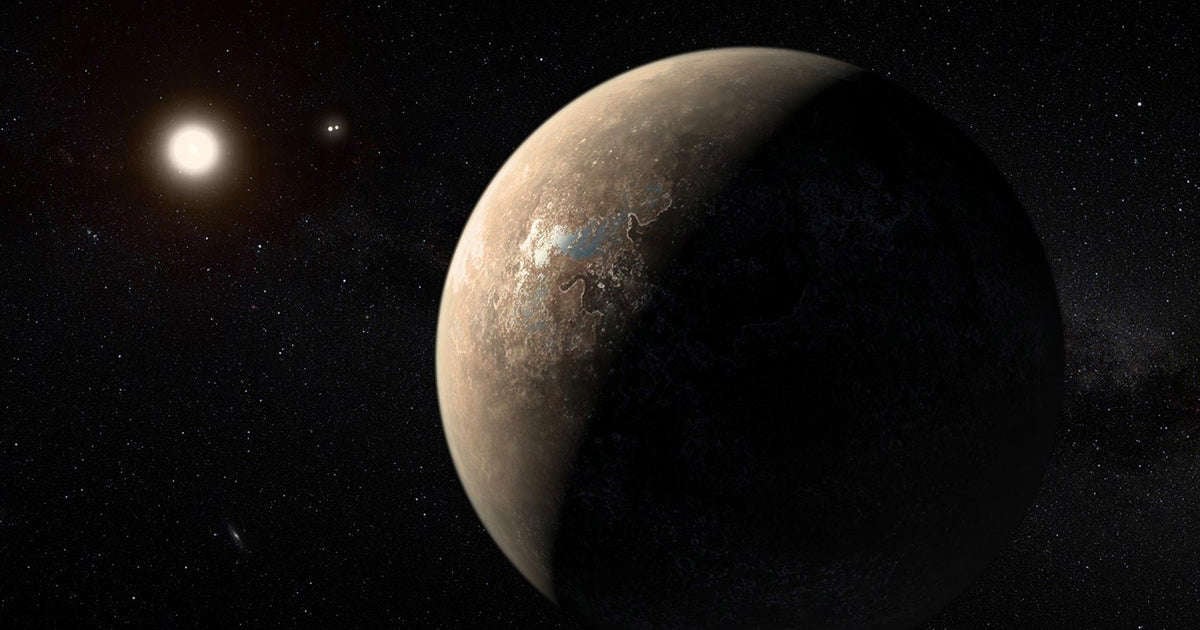
Two habitable-zone exoplanets are confirmed within 11 light-years: Proxima Centauri b (4.24 ly) and GJ 887 d (10.7 ly). Proxima b, the nearest known world, orbits Proxima Centauri every 11.2 days at about 0.049 AU; GJ 887 d, confirmed in 2026 after adding 101 HARPS observations and 12 ESPRESSO measurements and accounting for stellar activity, completes a 50.77‑day orbit at 0.212 AU with a minimum mass near 1.1 Earth masses and about 81% of Earth's insolation. Both lie in their stars’ habitable zones, but neither is known to have an atmosphere, ocean, or life, and neither transits, making atmospheric characterization difficult. Proxima b’s environment may be affected by the star’s flares, and red-dwarf planets may be tidally locked; proximity helps future studies but does not guarantee habitability.

Proxima Centauri b: the nearest habitable-zone world under a harsh red-dwarf glare
science1 month ago

Proxima Centauri b: the nearest habitable-zone world under a harsh red-dwarf glare

Proxima Centauri b sits in the habitable zone of the nearest star, but its true habitability depends on whether it retains a substantial atmosphere, which could be stripped by intense X-ray/UV radiation and stellar winds from Proxima Centauri. Models show liquid water is possible only with a suitable atmosphere, making this nearby world a key test case for whether rocky planets around red dwarfs can keep air and water, and a prime target for future atmospheric observations.

astronomy2 years ago

"Exploring Proxima Centauri's Planet with the Extremely Large Telescope"

Proxima Centauri B, the closest exoplanet to Earth, is a potential target in the search for alien life, but traditional methods for detecting biosignatures won't work due to it not being a transiting planet. A new study suggests using the reflection of starlight off the planet's atmosphere as an alternative method. However, the current configuration of the Extremely Large Telescope's High Angular Resolution Monolithic Optical and Near-infrared Integral field spectrograph (HARMONI) is not suitable for capturing enough high-resolution data to discover biogenic molecules. The study proposes modifying the mask configuration to optimize the design for studying Proxima Centauri B's atmosphere, which could be crucial if it does harbor life.

Billionaire's Quest to Bring Avatar to Life
science-and-technology3 years ago

Billionaire's Quest to Bring Avatar to Life

Elon Musk has expressed interest in colonizing Proxima Centauri B, an exoplanet located over four light-years away in the Alpha Centauri system, which has been deemed a potential candidate for sustaining life. Despite the enormous distance, Musk's audacious aspiration to colonize such a distant planet is a testament to his extraordinary visionary capacity and long-term space ambitions. However, the feat of reaching this exoplanet remains firmly in the realm of science fiction, especially when considering the current challenges we face in our endeavors to land human beings on Mars, a much closer planetary neighbor.

Elon Musk Discovers New Colonization Planet.
space3 years ago

Elon Musk Discovers New Colonization Planet.

Elon Musk has expressed interest in Proxima Centauri B, an exoplanet located over four light-years away, as a potential candidate for colonization. The exoplanet has been deemed habitable by scientists, but the vast distance presents a formidable challenge. Despite the technological advancements spearheaded by Musk and companies like SpaceX, the feat of reaching this distant planet remains firmly in the realm of science fiction. Nonetheless, Musk's audacious aspiration embodies long-term space ambitions.

Elon Musk Targets Habitable Planet in Close Proximity.
science-and-technology3 years ago

Elon Musk Targets Habitable Planet in Close Proximity.

Elon Musk has shown interest in a study detailing the habitability of Proxima Centauri b, an Earth-sized exoplanet located 4.2 light-years away from the Sun. The study concluded that the planet is potentially the closest “highly habitable” planet to our Solar System. Despite its relatively close distance, travelling to Proxima Centauri b requires technology that is still in the conceptual stages of development. Musk has frequently voiced his concerns about humanity’s long-term survival, claiming that setting up self-sustaining colonies on other planets is vital to ensure the continuation of our species. SpaceX has been developing its reusable Starship rocket with the intention of transporting people and cargo across the solar system.

science-and-technology3 years ago

Elon Musk Targets Habitable Planet in Close Proximity.

Elon Musk has shown interest in a study detailing the habitability of Proxima Centauri b, an Earth-sized planet located 4.2 light-years away from the Sun and potentially the closest "highly habitable" planet to our Solar System. The planet sits within the "Goldilocks Zone" of the red-dwarf star Proxima Centauri and computer simulations suggest it can sustain liquid water that may harbour living organisms. Despite its relatively close distance, travelling to the planet requires technology that is still in the conceptual stages of development. SpaceX has been developing its reusable Starship rocket with the intention of transporting people and cargo across the solar system.