Pope Leo XIV visited Lampedusa, thanking islanders and migrants for their solidarity amid Europe’s migration challenges, urged everyone to persevere beyond divisions, and highlighted the island’s role as a beacon of fraternity at the Mediterranean frontier.
A Guardian analysis shows that many of the 39 countries barred or restricted for US entry are among the world’s most climate-vulnerable, meaning the Trump administration’s immigration crackdown disproportionately affects people displaced by climate disasters. Bans extend to nations like Chad, Niger, Sudan, Somalia and Sierra Leone, while TPS protections are being rolled back for several affected countries. With no formal international or US framework recognizing climate-based displacement, advocates warn that climate refugees face dwindling protection and rising displacement, and prospects for new climate-migration policy remain dim amid broader anti-immigration measures.
The Trump administration expands refugee access for White South Africans, a policy change announced during a White House meeting with South African President Cyril Ramaphosa, signaling a broader shift in U.S. refugee policy.
The United States will raise the number of white South Africans admitted as refugees this year from about 7,500 to 17,500, citing an 'emergency refugee situation' and estimating a $100 million cost to resettle the extra 10,000. The move comes amid tensions with South Africa’s government and past Trump-era rhetoric; it follows a broader shift in refugee policy that paused others from war zones. The report notes apartheid-era inequalities, current unemployment disparities, and the white-genocide conspiracy still amplified by some figures, including Elon Musk and Tucker Carlson.
A year after the SAF retook Khartoum, much of the capital is a ghost town as fighting continues across Sudan, exposing a massive humanitarian crisis with millions in need and displaced. Foreign backers, political infighting, and a politicized aid system complicate relief, while local activists and health officials voice resilience and advocate decentralizing health services to help rebuild the country.
Lionel Rosenblatt, a diplomat and longtime leader of Refugees International, died at 82; famed for challenging his State Department superiors, he personally traveled to Asia to aid displaced people and helped evacuate hundreds from Vietnam, including taking one of the last commercial flights to Saigon before its fall, and later led humanitarian work around the world.
Lebanese exiles who once fought with the South Lebanon Army say Lebanon's future depends on eliminating Hezbollah, urging Israel to press the battle until the Iranian-backed group is gone, despite fears of renewed instability if Israel withdraws; they recall civil-war trauma, displacement, and the high cost of the conflict, note that a Gallup poll shows Lebanese broadly favor disarming Hezbollah, and warn that Hezbollah may exploit civilian casualties to gain sympathy while pursuing a lasting peace only after its defeat.
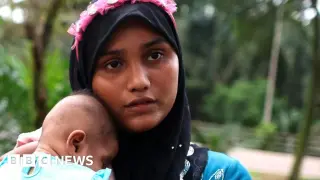
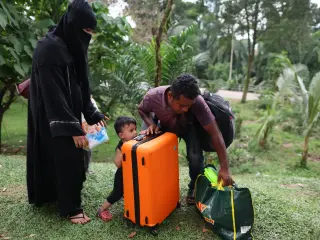
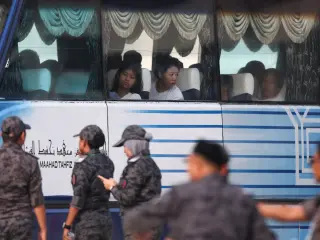
Most refugees flee overland to Bangladesh’s Cox’s Bazar, but a growing number are attempting dangerous sea journeys toward Thailand, Malaysia and Indonesia across the Bay of Bengal and Andaman Sea. UNHCR data show about 367,000 Myanmar refugees seeking safety since 2022–2026, with only ~7% traveling by sea, yet maritime departures rose to roughly 25,300 from February 2022 to March 2026, and more than 2,300 died or went missing en route. Indonesia is a major foreign destination, followed by Bangladesh. The crisis traces back to the 2017 military crackdown that displaced hundreds of thousands of Rohingya; Myanmar denies genocide allegations.
Three years into the Sudanese war between the SAF and RSF, civilians remain trapped as fighting intensifies, with about 11 million displaced and nearly half the population in acute food insecurity. Donors pledged roughly $1.3 billion in Berlin, but there is no viable path to peace and aid access is shrinking amid sieges and attacks on aid workers; external powers’ rivalries, including UAE backing of the RSF, complicate the situation. The UN warns of a protracted, multi-billion-dollar crisis requiring sustained funding and a political breakthrough.
More than 250 people, including Rohingya refugees and Bangladeshi nationals, are missing after a boat capsized in the Andaman Sea while headed to Malaysia; nine people were rescued and handed to authorities. UNHCR and IOM say the incident highlights the protracted Rohingya displacement and the lack of durable solutions amid Myanmar's violence in Rakhine state.
A boat carrying Rohingya refugees and Bangladeshi migrants sank in the Andaman Sea, leaving at least 250 people missing and triggering search-and-rescue efforts, underscoring the ongoing peril faced by people fleeing conflict and poverty in the region.
About 250 people are missing after a trawler carrying Rohingya refugees and Bangladeshi nationals capsized in the Andaman Sea, with preliminary estimates of around 280 aboard; the vessel left Teknaf for Malaysia and sank amid heavy winds, rough seas, and overcrowding. Nine people were rescued by a Bangladeshi Coast Guard vessel, and survivors described being lured by traffickers and spending days at sea after the capsize. UNHCR and IOM urged increased, sustained funding for life-saving aid for Rohingya refugees in Bangladesh and for host communities. The incident underscores the ongoing peril faced by Rohingya fleeing persecution and the protracted displacement since Myanmar’s 2017 crackdown.
German Chancellor Friedrich Merz proposed that about 80% of Syrians living in Germany should return to Syria within three years, with exceptions for essential workers; he argues the civil war is over and Syria's reconstruction will rely on voluntary returns, while opponents and diaspora are divided and protests occurred during President Ahmed al-Sharaa's visit.
German Chancellor Friedrich Merz and Syrian President Ahmad al-Sharaa met in Berlin, with Merz signaling that many Syrians could return home as bilateral ties are discussed.