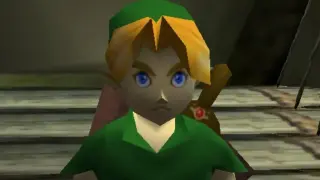
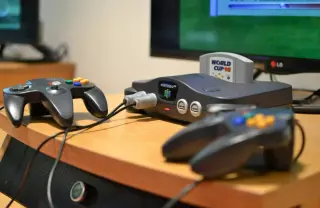
The Nintendo 64 turns 30, and its library remains influential. While the console sold 33 million units, its 3D innovations in titles like Super Mario 64 and Ocarina of Time still hold up. However, licensing issues prevent some classics from modern re-releases.
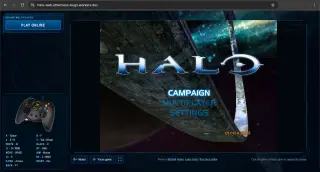
Halo: Combat Evolved is now playable in web browsers and on the Nintendo 3DS through unofficial fan ports. Mitchell Hynes released a browser version supporting the full campaign and 128-player online multiplayer, while Generalkidd ported the game to the New 3DS with local multiplayer and 3D support. Both projects leverage recent decompilation efforts, though they face significant stability issues and legal uncertainties.
The Nintendo 64 console and its landmark launch title, Super Mario 64, reached their 30th anniversary in North America on September 29, 1996. While the console sold 33 million units globally, the game remains influential for defining 3D platforming mechanics. Notably, Nintendo has not announced a remaster for the milestone, despite active marketing for other anniversaries like Zelda's 40th.
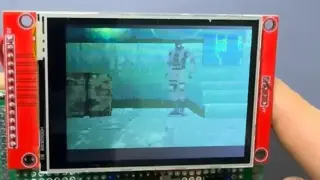
David Montero Crespo has successfully ported the 1998 PlayStation classic Metal Gear Solid to the ESP32-S3 microcontroller, demonstrating that legacy console games can run on modern low-power hardware through decompilation and recompilation.
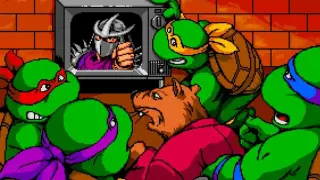
A recent ranking identifies the five best arcade beat 'em up games of all time, highlighting titles from Capcom and Konami. The list excludes console-exclusive franchises like Streets of Rage, focusing strictly on cabinet releases. Final Fight is ranked number one for perfecting the genre's mechanics, while Turtles in Time and Alien vs. Predator also feature prominently. The rankings emphasize the evolution of cooperative multiplayer and character variety in the 1980s and 1990s.
As the Nintendo 64 marks its 30th anniversary, attention has turned to the console's significant gaps in modern re-releases. While the N64 pioneered 3D gaming, many beloved titles remain legally unplayable without original hardware due to licensing disputes and technical limitations. Key omissions include 'Diddy Kong Racing,' which is blocked by Microsoft's ownership of developer Rare, and 'Castlevania: Legacy of Darkness,' which Konami has not remastered despite reviving other series entries. The console's reliance on cartridges, which offered far less storage than PlayStation discs, also contributed to a smaller library and the departure of major third-party developers like Square and Capcom.
Blizzard Entertainment is preparing to launch World of Warcraft: Forever on November 4, 2026, a reimagined version of the original game. The title introduces four new zones, including Riverglades and Zephras Isle, alongside over 1,000 new quests. Developers aim to create a 'Mandela effect' where new content feels like a nostalgic memory of the 2004 original, utilizing updated lighting and water technology to evoke player memories rather than replicating exact visuals.
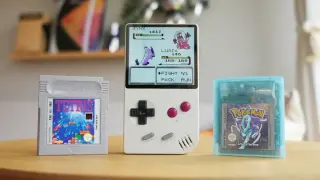
FunnyPlaying’s FPGB Mini is a pocketable handheld that plays Game Boy and Game Boy Color cartridges via an built-in emulator reading ROMs from a microSD card. Priced at $69.99 for the first batch of 20 units, the device sold out within about 10 minutes, with the company noting further stock will arrive after National Day and Mid-Autumn holidays. Key specs include a 2.98" 800×720 IPS display, RTC, USB-C, microSD expansion (up to 32GB), 1800 mAh battery (4–6 hours), and a 0.5W speaker. While praised for its design and screen, learners may encounter issues like rumble cartridge fit and a springy on/off switch. More batches are expected post-holiday, with official restock details to follow.
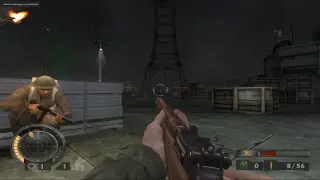
Enthusiasts demonstrated DLSS 5 upscaling in Medal of Honor: European Assault via the PCSX2 emulator on an RTX 4070 Super, using modified DLLs and custom executables to enable the feature on a range of GPUs; opinions were mixed—some warned of FPS drops and limited visuals from applying modern ML tech to a PS2-era engine, while others praised the potential for benchmarking ML performance in older titles.
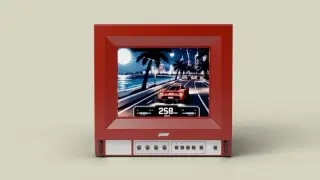
Unico USA is prepping a 10-inch, CRT-inspired LCD monitor (ULW10/ULQ10 Traveller) for Kickstarter, pairing a classic 4:3 silhouette with modern inputs (HDMI, VGA, RGB) and a rear compartment for small consoles; available in Cream White, Studio Grey, and Red & White, with a Founder's Edition offering early access perks and Kickstarter discounts; final launch date and price TBD.
Microsoft’s Disc-to-Digital feature, now available to Xbox Insiders, can convert certain physical discs into digitally playable copies on Xbox consoles and Windows PCs. Several delisted titles are reportedly working (e.g., Deadpool, Rock Band 4, Minecraft: Story Mode), but not all games are compatible—Dead Rising 3, Destiny, and Titanfall are among those that don’t work, and Ubisoft titles are largely unsupported for now. Microsoft hasn’t confirmed full compatibility yet and says more titles may be added later.
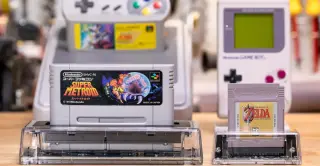
The Verge reviews Epilogue’s GB Operator and SN Operator, USB-C readers that read, back up, and let you play real Game Boy/Color/Advance and SNES cartridges on PC, Steam Deck, Xbox, and phones via Playback software and emulation, with caveats about cartridge detection, durability of old batteries, and hardware limitations.
PC port of Quintet’s 1995 SNES action-RPG Terranigma is in development by Limited Run and Clear River Games AB for early 2027 on Steam and GOG, bringing Ark’s hollow-world adventure and real-time combat to modern players.
A Washington State home burglary stole over 860 Nintendo Entertainment System cartridges that a man spent almost 40 years building, valued at $50,000–$100,000. He was three titles shy of a complete set and had hoped to pass the collection to his grandkids, but the loss may end his collecting days.
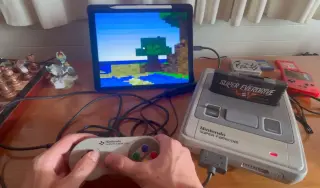
Hackaday reports on porting a basic Minecraft build to the SNES’s stock hardware (no add-on chips like the Super FX). Building on an earlier Game Boy Color version, the SNES port shows a serviceable Minecraft experience with higher resolution than the GBC, though still sprite-based. The piece notes that adding 3D accelerators could enable true polygons, and mentions an downloadable SFC file with a starting world illustrating block destruction and construction. The story highlights the SNES’s surprising potential for retro hardware hacks and invites speculation about future enhancements with accelerator chips.