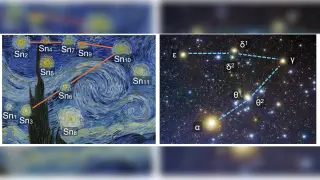
Researchers argue Vincent van Gogh’s 'The Starry Night' depicts the pre-dawn sky of July 22, 1889, not June, using geometric analysis to match the painting’s stars to the Hyades cluster.
A new study in Scientific Reports argues that Vincent van Gogh’s The Starry Night depicts the pre-dawn sky of July 22, 1889, rather than the previously assumed June date. Researchers used geometric analysis to match the painting’s stars to the Hyades cluster in Taurus, challenging long-held art historical timelines.
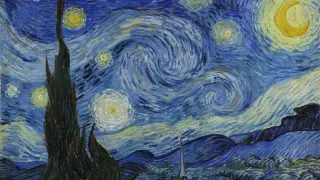
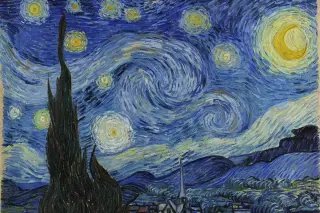
Recent mathematical analysis reveals that Vincent van Gogh’s 1889 painting 'Starry Night' accurately captures the physical concept of turbulence, a fluid dynamic phenomenon scientists only fully understood in the 20th century. This discovery highlights van Gogh’s intuitive grasp of natural patterns, surpassing other Impressionists in depicting energy cascades.
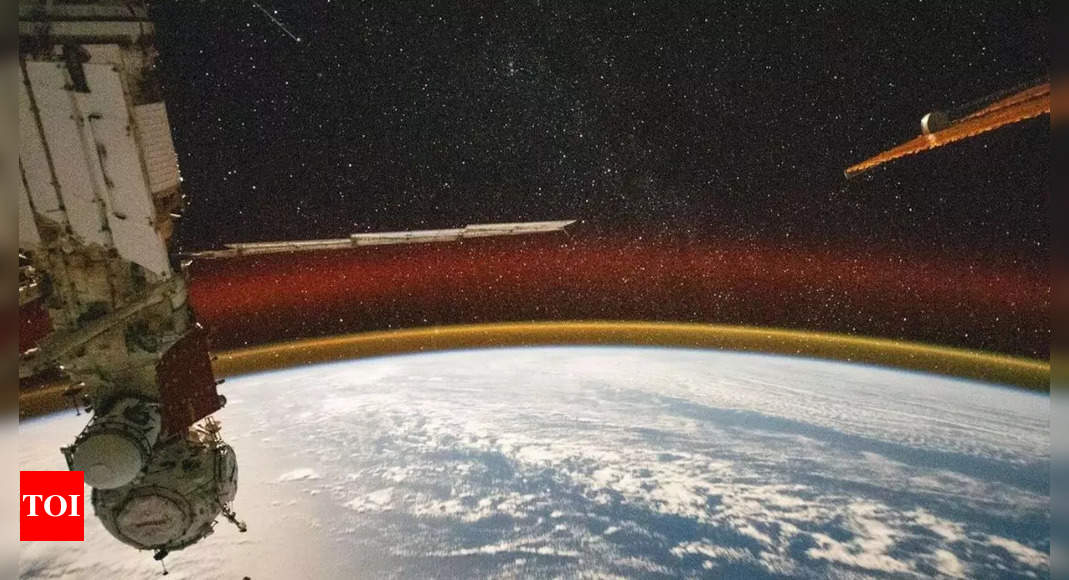
The International Space Station (ISS) has shared a stunning image of Earth's atmospheric glow and a starry sky, resembling Vincent van Gogh's famous painting, The Starry Night. The photo, taken 258 miles above the Pacific Ocean, features the Nauka and Prichal modules from Roscosmos. Netizens praised the cosmic scene, noting its similarity to van Gogh's masterpiece. Van Gogh's fascination with the night sky and artistic representation of stars parallels the ISS's high exposure photograph, offering a unique perspective of Earth and the cosmos.