New MOTHRA telescope images of the Helix Nebula reveal material ejected by dying stars moving as fast clumps that create bow shocks and shed star-made elements into surrounding gas, illustrating the cosmic recycling that seeds future stars, planets, and possibly life; the debris lingers for about 10,000 years before fully dispersing.
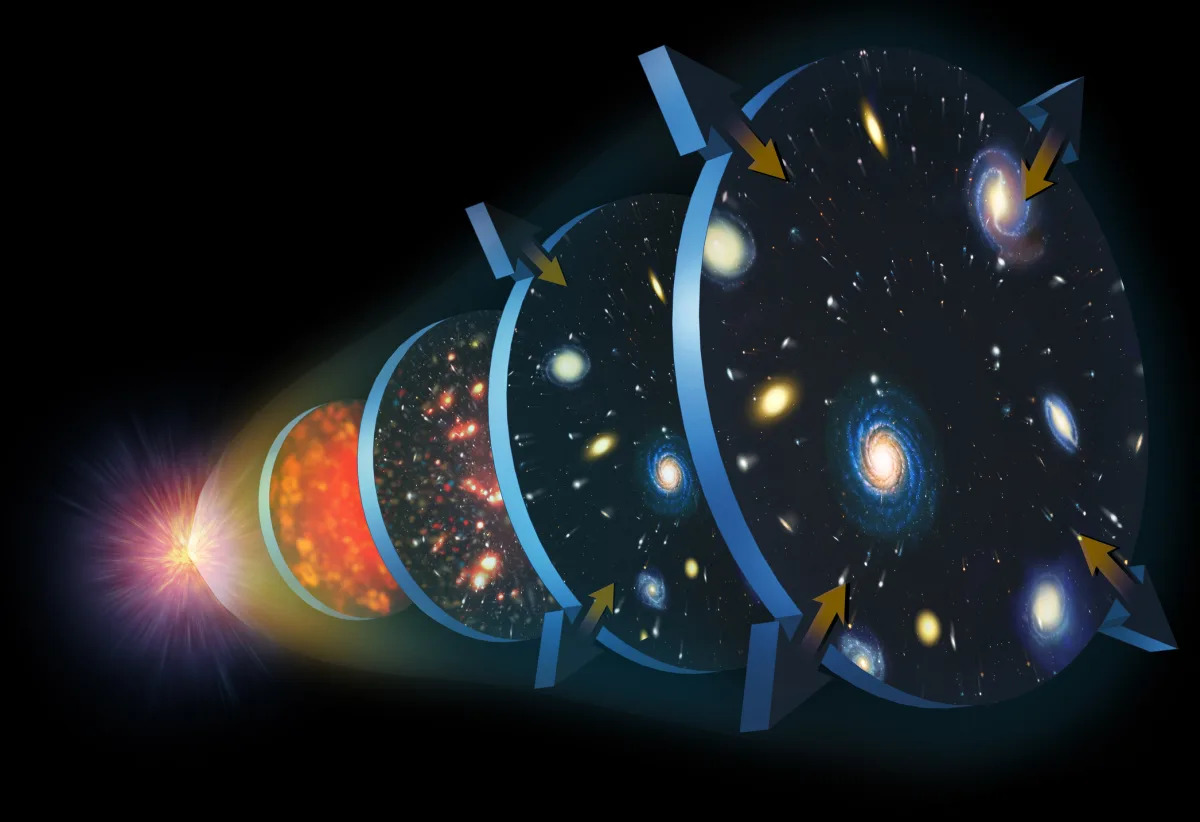
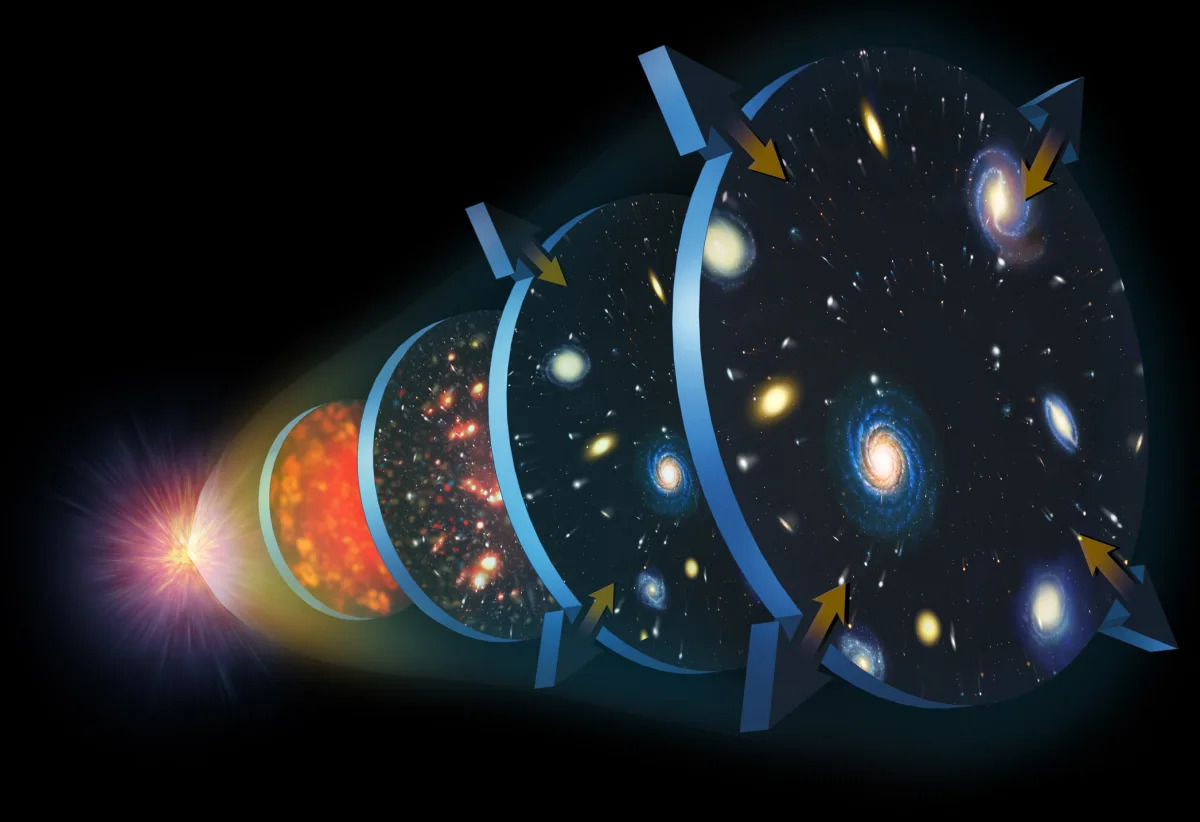
The elements in the universe formed through a series of processes starting from the Big Bang. Initially, the universe was a hot plasma of quarks and gluons, which eventually cooled down and allowed the formation of protons and neutrons. The first atomic nuclei, primarily helium-4, were produced from the binding of protons and neutrons. The appearance of elements continued with the birth of stars, where hydrogen fused into helium, and heavier elements like carbon and oxygen were formed. More massive stars produced even heavier elements up to iron. Elements beyond iron were created through stellar deaths, such as supernovas and neutron star collisions. These energetic events also spread the elements into interstellar space, where they join new gas clouds and contribute to the formation of new stars, continuing the process of elemental recycling and enrichment of the universe.
The elements in the universe formed through a series of processes starting from the Big Bang. Initially, the universe was a hot plasma of quarks and gluons, which eventually cooled down and allowed the formation of protons and neutrons. The first atomic nuclei, primarily helium-4, were produced from the binding of protons and neutrons. The appearance of elements continued with the birth of stars, where hydrogen fused into helium, and heavier elements like carbon and oxygen were formed. More massive stars produced even heavier elements up to iron. Elements beyond iron were created through stellar deaths, such as supernovas and neutron star collisions. These energetic events also spread the elements into interstellar space, where they join new gas clouds and contribute to the formation of new stars, continuing the process of elemental recycling and enrichment of the universe.
The James Webb Space Telescope (JWST) has detected significant amounts of carbon dust in galaxies as early as 800 million years after the Big Bang, challenging previous assumptions about the chemical composition of the early Universe. The discovery suggests enhanced carbon production, possibly from the deaths of massive stars, which spew out carbon into space as they die. This finding provides crucial insights into dust production models and scenarios in the early Universe, shedding light on the formation of heavier elements and the prevalence of massive stars during the Cosmic Dawn.