Tag

Nuclear Physics

All articles tagged with #nuclear physics

Nuclear Asteroid Defense Hinges on Precise Aim, New Sandia Study Finds
science15 days ago

Nuclear Asteroid Defense Hinges on Precise Aim, New Sandia Study Finds

A new study from Sandia National Laboratories reveals that using nuclear X-rays to deflect asteroids is highly sensitive to the target's shape and orientation. By developing a simulation model 1,600 times faster than previous methods, researchers found that aiming at different sides of an irregularly shaped asteroid can result in a fivefold difference in deflection velocity. While this technology offers a potential last-resort defense, the complexity of real asteroid topography makes precise targeting critical to avoid ineffective nudges or dangerous fragmentation.


Physicists Detect Faint Antineutrino Signal from Shut-Down Reactors in France
science2 months ago

Physicists Detect Faint Antineutrino Signal from Shut-Down Reactors in France

Researchers from the Double Chooz Collaboration have successfully measured the residual antineutrino flux emitted by nuclear reactors after shutdown, a phenomenon previously only theorized. Using detectors at the Chooz Nuclear Power Station in France, the team confirmed that spent fuel and waste in cooling pools continue to emit these 'ghost particles' even when the reactor core is off. This breakthrough validates a key prediction of the Standard Model and offers a new, non-intrusive method for monitoring nuclear material, potentially improving future safeguards against theft or diversion, though current precision limits detection of small-scale losses.

CERN Collisions Reveal Bowling-Pin Shape in Neon Nuclei
science3 months ago

CERN Collisions Reveal Bowling-Pin Shape in Neon Nuclei

Physicists at CERN’s Large Hadron Collider have found evidence that neon-20 atomic nuclei possess a non-spherical, bowling-pin-like structure. By comparing particle flow patterns from oxygen-16 and neon-20 collisions, the CMS Collaboration demonstrated that nuclear geometry influences the collective behavior of matter produced in high-energy impacts. While the findings confirm that nuclear shape affects collision outcomes, discrepancies in triangular flow measurements indicate that further investigation is required to fully validate current models.

Nuclear Asteroid Defense Simulation Shows X-Ray Ablation Can Disrupt City-Killers
science3 months ago

Nuclear Asteroid Defense Simulation Shows X-Ray Ablation Can Disrupt City-Killers

A new simulation by Lawrence Livermore National Laboratory researchers demonstrates that a 1-megaton nuclear detonation near a 160-meter asteroid could disrupt it via X-ray ablation rather than shockwaves. The study, published in The Planetary Science Journal, suggests that detonating the weapon at a distance of 25 meters may cause more widespread damage than a closer 10-meter detonation, as X-rays illuminate a larger surface area. While the simulations show high potential for disruption, they cannot determine the long-term fate of the fragmented asteroid due to computational limits.

Hiroshima Fallout Yields New Silicon-Rich Alloy
science3 months ago

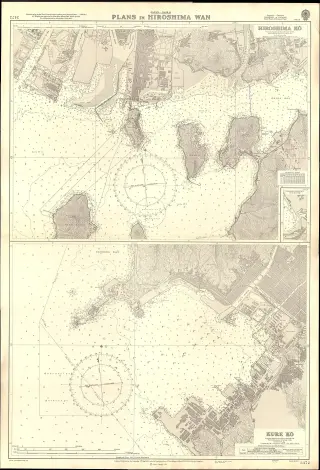
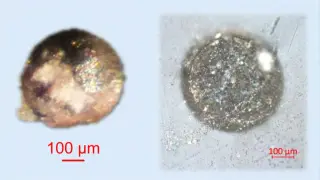
Hiroshima Fallout Yields New Silicon-Rich Alloy

A new study published in Science Advances identifies a previously unknown, silicon-rich multicomponent alloy formed during the 1945 atomic bombing of Hiroshima. Researchers analyzed microscopic 'hiroshimaites'—metallic droplets vaporized by the blast—and found complex crystalline structures containing iron, nickel, silicon, and aluminum. This discovery, alongside similar findings from the Trinity test, suggests that extreme nuclear detonations create unique chemical environments capable of forging novel materials.

Experimental Confirmation of Atomic Decay Pathway Enhances Nuclear Periodic Table
science1 year ago

Experimental Confirmation of Atomic Decay Pathway Enhances Nuclear Periodic Table

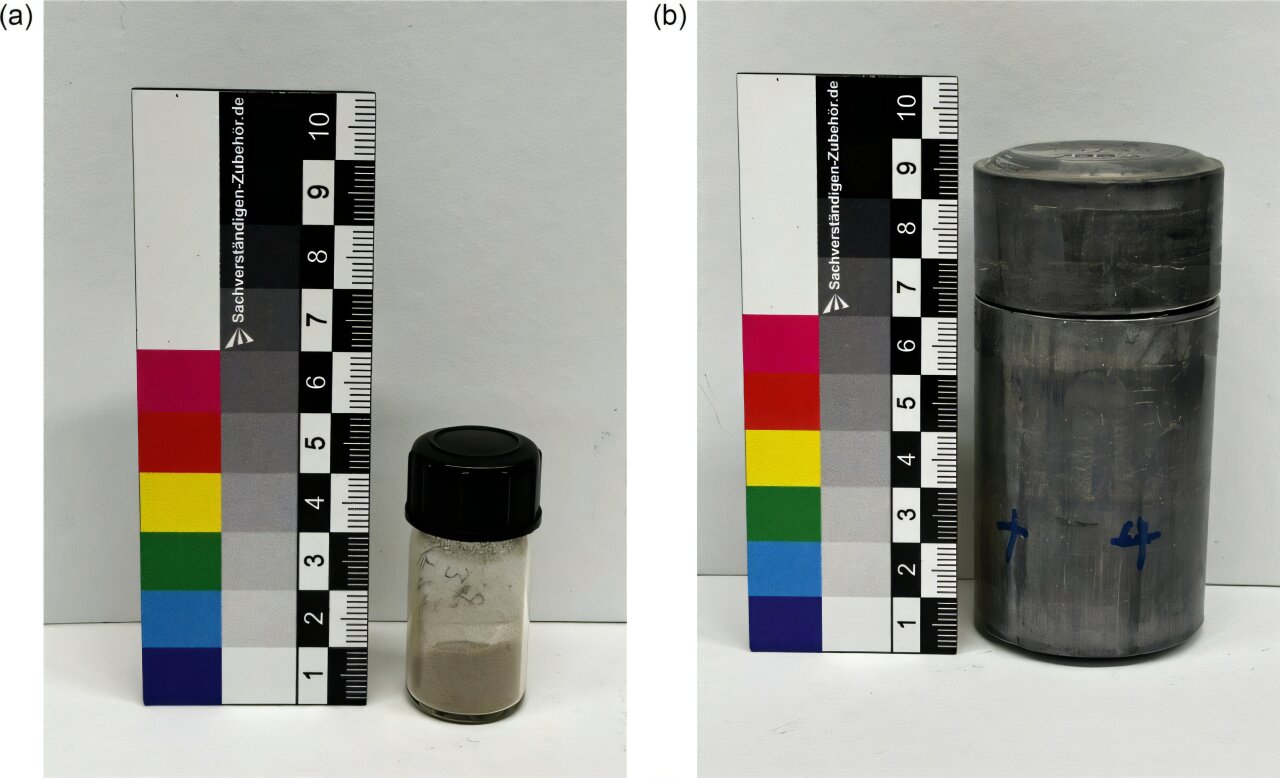
A research team from the University of Cologne has experimentally confirmed the electron capture decay of technetium-98, a process previously only theorized, by detecting rare decay events using advanced shielding and measurement techniques, thereby enriching the understanding of nuclear decay pathways and updating the nuclear periodic table.