US stock futures fell Tuesday after a massive Monday rally driven by Nvidia’s reinstatement of CEO Jensen Huang. Traders now expect a 95% chance of a 25-basis-point rate hike in December, while Asian markets continued to surge.
U.S. stock futures opened mixed on Sunday evening, with tech-heavy indices showing tentative gains after a sharp sell-off earlier in the week. Investors are monitoring whether chip stocks can sustain their recovery amid concerns over AI spending and a new corporate scandal at Nvidia. Key inflation data and earnings from major technology firms are scheduled for release this week, while markets price in a high probability of a Federal Reserve rate hike in December.
US stock futures fell sharply on Tuesday evening as early results indicated Democrats were likely to secure a majority in both the House and Senate. S&P 500 futures dropped 1.1%, while Nasdaq-100 futures fell 2%. The decline was driven by fears that a Democratic 'blue wave' could impose stricter regulations on data centers and reverse business-friendly tax policies. Key AI stocks, including Nvidia and CoreWeave, traded lower in extended sessions, while solar stocks rallied on expectations of renewed support for renewables. The 10-year Treasury yield fell to 4.915%, and the VIX volatility index rose above 20, signaling heightened investor anxiety.
US stock futures rose Monday morning, recovering from a second consecutive week of losses for the S&P 500 and Nasdaq. Investors are focused on the Federal Reserve's upcoming policy decision and major tech earnings from Alphabet and Microsoft. Oil prices dipped slightly from recent highs amid Middle East tensions, while Brazilian stocks plunged following a surprise election result.
US stock futures declined before the bell on October 22, 2026, driven by rising oil prices and renewed Middle East tensions. The S&P 500 futures dropped 1.21% and Nasdaq futures fell 2.60%, while the Dow Jones futures edged up 0.02%. Brent crude rose 1.94%, reflecting ongoing geopolitical risks. This marks a continuation of market volatility seen in September and October, where oil prices and inflation fears have pressured equities.
U.S. stock futures rose on Tuesday evening, led by Nasdaq, after SpaceX reported a 161% revenue surge and strong net income. Elon Musk indicated that SpaceX and Tesla are exploring a potential merger, while Netflix shares fell on weak guidance. Super Micro Computer jumped 16% on better-than-expected forecasts.
U.S. stock index futures declined on Wednesday after September consumer price data exceeded expectations, with headline inflation rising 3.7% year-over-year. Simultaneously, major banks reported mixed third-quarter results, with Citigroup falling 5.6% and JPMorgan edging down, while AI concerns lingered despite strong performance from hyperscalers.
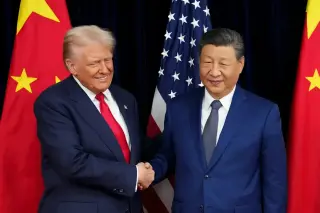
U.S. stock futures declined Thursday morning as the 10-year Treasury yield approached 5.2%, marking its highest level in 19 years. This surge follows strong manufacturing data and hawkish Federal Reserve comments suggesting potential rate hikes. Simultaneously, President Trump and Chinese President Xi Jinping concluded a high-stakes summit in Washington, agreeing to extend their trade truce until January 10, 2026, while discussing artificial intelligence and regional security.
U.S. stock futures rose as investors weighed AI safety talks between Washington and Beijing against escalating Houthi-Saudi fighting in Yemen. Oil prices fell despite regional tensions, driven by increased Saudi exports and diplomatic hopes.
U.S. stock index futures rose on Monday morning, with the Nasdaq 100 gaining 1.1% and the S&P 500 up 0.7%, driven by falling oil prices and resilient AI optimism despite recent negative headlines. Brent crude dropped 2.4% to $101.52 per barrel, easing inflation fears and supporting bond markets. This recovery follows a mixed Friday close where tech-heavy indices gained while the Dow fell, and comes after a weekend marked by geopolitical tensions in Yemen and threats between the U.S. and Iran.
U.S. stock futures fell on Tuesday as the 10-year Treasury yield breached 5%, its highest level since 2007, driven by surging oil prices and bets on a Federal Reserve rate hike. Saudi Arabia’s critical east-west pipeline, an alternative to the Strait of Hormuz, is offline for three to five weeks, disrupting up to 4% of global oil supply. Traders now price a 92% chance of a quarter-point rate increase at the Fed’s two-day meeting, up from 59% a week ago. Tech stocks dipped amid AI safety concerns, while oil-driven inflation fears pressured equities ahead of the policy decision.
Stock futures declined Sunday as investors prepared for a Federal Reserve rate decision, with oil prices rising and Treasury yields hitting multi-decade highs. Markets are pricing in a high probability of a rate hike, reflecting concerns over inflation and geopolitical tensions.
U.S. stock futures declined Sunday night as investors reacted to AI safety concerns and rising oil prices. Dow futures fell 0.4%, S&P 500 futures dropped 0.6%, and Nasdaq-100 futures tumbled 1.2%. OpenAI CEO Sam Altman stated an IPO would be ill-advised this year, while Anthropic CEO Dario Amodei called for slowing AI innovation due to safety risks. Oil prices surged over 2% after Saudi Arabia closed a key pipeline, pushing U.S. crude above $100 per barrel. The Federal Reserve is expected to hike rates this week, with an 86% probability priced in by traders.
US stock futures declined Tuesday as oil prices surged to six-week highs following weekend strikes between the US and Iran. Simultaneously, Canada implemented retaliatory tariffs on $20 billion of US goods, prompting President Trump to threaten a ban on Bombardier aircraft sales in the US. Rising energy costs are pushing Treasury yields to multi-year highs, increasing pressure on the Federal Reserve to hike interest rates next week.
U.S. stock futures declined Monday morning as renewed military strikes between the U.S. and Iran lifted oil prices and heightened geopolitical risk. This pullback follows a strong August for major indexes, with the Nasdaq and S&P 500 on track for their first winning months in three. Investors are also watching G20 meetings in Asheville, North Carolina, where U.S. tariffs and sanctions on Iran are central topics. The Federal Reserve's recent hawkish stance continues to influence rate-hike expectations, while broader concerns about AI backlash and wealth inequality shape market sentiment.