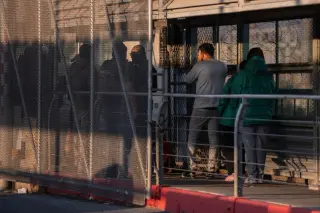
A federal appeals court rejected the Trump administration's bid to broaden mandatory no-bond detention for immigrants, curbing the administration's ability to detain more migrants while legal challenges proceed.
The Supreme Court will decide whether cities and states may ban ownership of AR-15–style rifles and other semi-automatic weapons, in cases from Cook County, Illinois, and Connecticut, testing the Bruen-era framework that ties modern gun regulations to historical tradition and potentially reshaping U.S. gun policy.
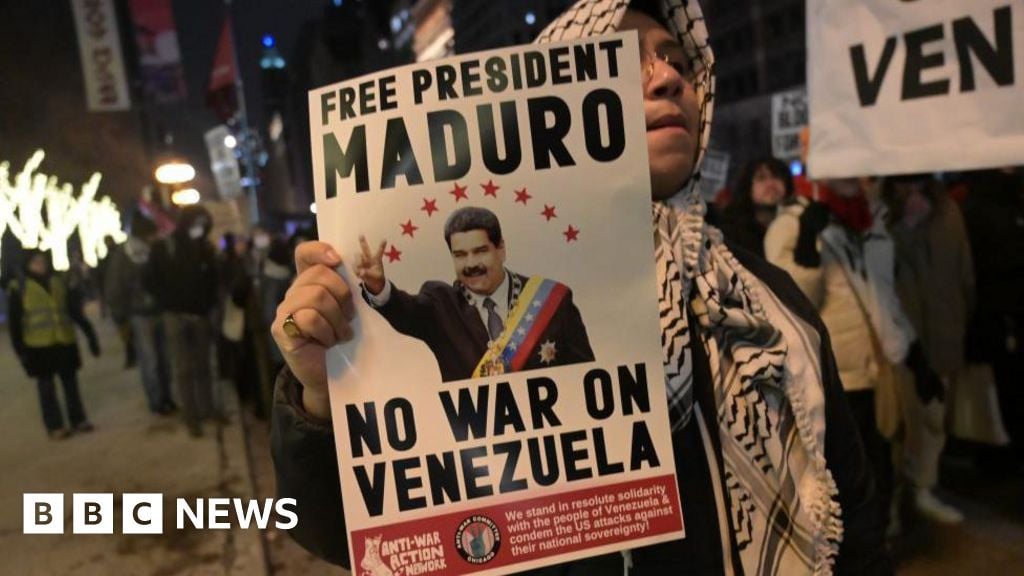
The US's seizure and prosecution of Venezuelan President Nicolás Maduro on drug charges raises complex legal questions, including potential violations of international law and questions about the legality of the US operation under international and domestic law, though Maduro's trial in the US is likely to proceed despite these issues.
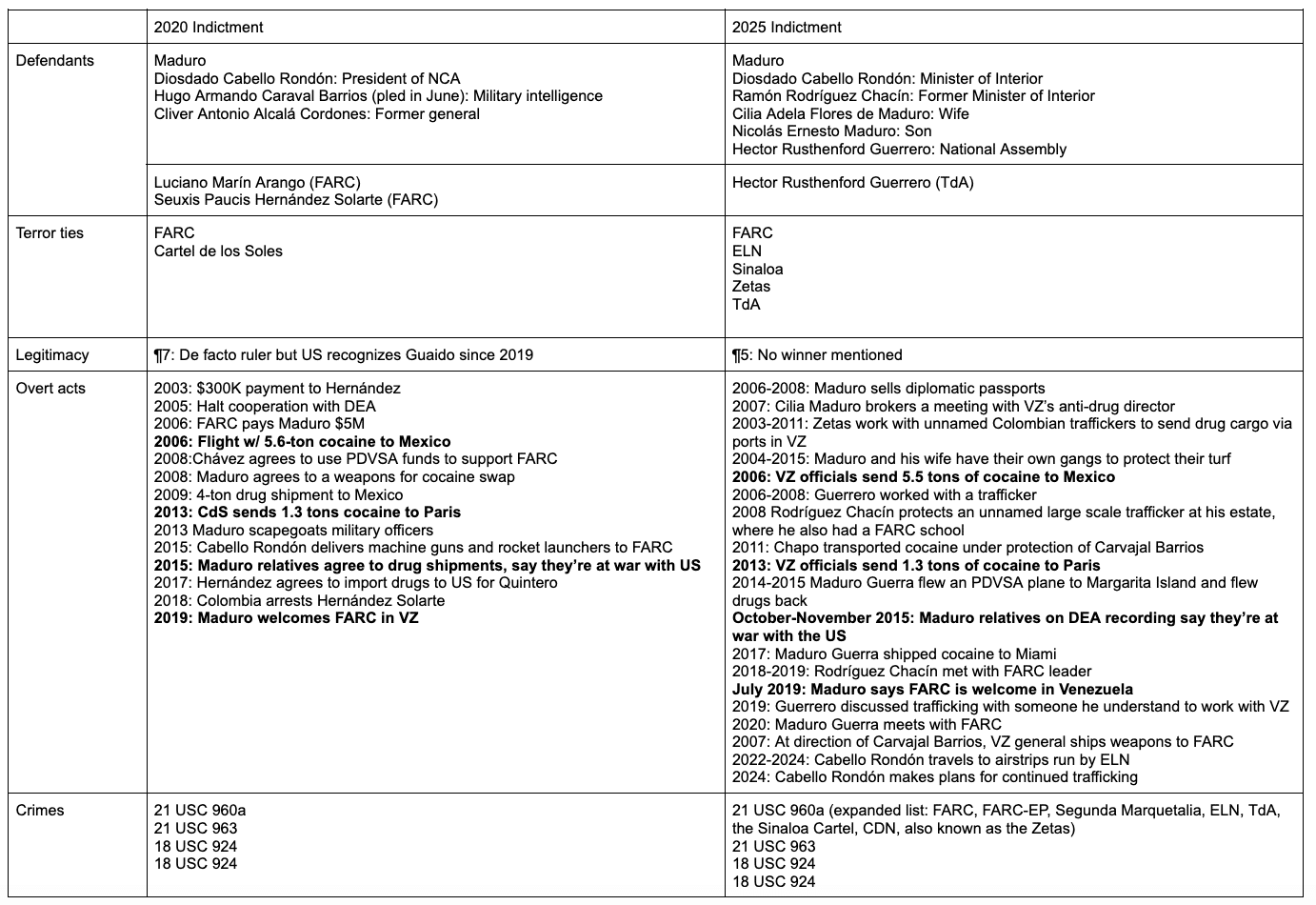
The DOJ's recent indictment of Nicolás Maduro and his family emphasizes political motives, challenging his legitimacy as Venezuela's leader to bypass immunity claims, and expands charges to include various drug cartels designated as terrorist organizations, raising concerns about the political and legal implications of the case.
The US is experiencing a boom in psychedelic churches, with some gaining legal exemptions to use substances like ayahuasca as sacraments, driven by evolving court interpretations, religious freedom claims, and a shift away from traditional religion, though these practices still face legal and logistical challenges.
TikTok has reportedly signed a deal to spin off its U.S. operations into a joint venture with Oracle, Silver Lake, and MGX to comply with 2024 U.S. law banning TikTok unless ByteDance divests ownership. Oracle's stock rose over 4% on the news, as the deal secures a key cloud partnership and addresses regulatory requirements. The deal is expected to close by January 22, 2024, and reflects ongoing efforts to navigate U.S. restrictions on TikTok.
The US President has extended the enforcement delay of the TikTok ban until December 16, 2025, preventing the Department of Justice from taking action against entities for noncompliance with the foreign adversary applications law, citing national security concerns.
The U.S. Supreme Court unanimously reinstated lawsuits against the PLO and PA for terrorist attacks, ruling that a 2019 law expanding U.S. courts' jurisdiction over such cases does not violate due process, emphasizing the narrow scope of the law and its alignment with foreign policy interests.
The US President has extended the enforcement delay of the TikTok ban until September 17, 2025, preventing the Department of Justice from taking action against entities for noncompliance during this period, citing national security concerns and preserving executive authority.
Kilmar Abrego Garcia, who was wrongly deported to El Salvador, is returning to the U.S. to face charges of smuggling undocumented immigrants and other crimes, amid legal disputes over his deportation and rights.
TikTok has filed an emergency request to block a U.S. law that mandates its Chinese parent company, ByteDance, to divest its ownership or face a ban in the U.S. The request follows a federal court ruling that upheld the law's constitutionality, dismissing TikTok's claims of First Amendment violations. The law, part of a broader national security package, gives ByteDance until January 2025 to comply. TikTok argues the law is a de facto ban and plans to appeal to the Supreme Court. The situation remains uncertain, especially with the upcoming change in U.S. presidential administration.
TikTok plans to appeal to the Supreme Court after a federal appeals court upheld a law that could ban the app in the U.S. unless it is sold by January 19. The court ruled that TikTok poses a national security threat, as Chinese authorities could potentially access American data. The decision has sparked a debate over digital free speech and the government's power to regulate foreign tech companies. TikTok argues the ban would silence millions of users, while potential buyers, including former Trump officials, are considering bids. The Supreme Court's decision could delay the ban.
TikTok is developing a separate recommendation algorithm for its U.S. users to address political concerns and potential legal requirements for divestiture from its Chinese parent company, ByteDance. This complex task involves splitting millions of lines of code and could take over a year to complete. TikTok and ByteDance are also challenging a U.S. law that mandates a sale or ban of the app by January 19, arguing it is not feasible.
A 1930s law is preventing potentially more effective foreign sunscreens from being sold in the U.S., raising concerns about the efficacy of American-made sunscreens.
The Supreme Court is considering limiting the scope of a federal statute that criminalizes the acceptance of gifts and payments by state and local officials and institutions receiving federal money to influence or reward their actions. The case involves a former mayor charged with violating the law after receiving payment from a company following a manipulated bidding process. Justices seemed inclined to narrow the law's reach, debating whether it applies only to before-the-fact bribes or also to after-the-fact gratuities.