Tag

Woods Hole Oceanographic Institution

All articles tagged with #woods hole oceanographic institution

WHOI Unveils Deep Venture: A 36,000-Foot Rated AUV Designed to Scout Seafloor for Crewed Submarines
science-and-technology5 days ago

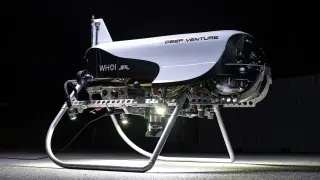
WHOI Unveils Deep Venture: A 36,000-Foot Rated AUV Designed to Scout Seafloor for Crewed Submarines

The Woods Hole Oceanographic Institution (WHOI) unveiled Deep Venture, an autonomous underwater vehicle (AUV) rated for full ocean depth of 36,000 feet, on November 20. Built in collaboration with NASA’s Jet Propulsion Laboratory, the 550-pound, 6-foot-long robot is designed to scout seafloor sites for crewed submarines like Alvin. It recently completed a test dive to 19,700 feet off Bermuda, capturing high-resolution images and 3D maps to help scientists select optimal dive locations. The vehicle features a modular science bay for sampling and uses photogrammetry for mapping, aiming to reduce reliance on specialized launch equipment and allow deployment from ordinary research ships.


DARPA-funded team deploys historic neutrino sensors in Lake Superior before Fermilab beam ends
science14 days ago

DARPA-funded team deploys historic neutrino sensors in Lake Superior before Fermilab beam ends

Researchers are installing the first neutrino detectors in a freshwater lake, aiming to capture data from a particle beam that will cease in February. The project, led by the University of Minnesota Duluth and sponsored by DARPA, uses sensors lowered to the bottom of Lake Superior to detect faint light emitted by neutrinos. While the primary goal is fundamental physics, the technology may have future defense applications, though officials emphasize the current focus is on broad scientific exploration.

Woods Hole Vessel Deploys First Freshwater Neutrino Detectors in Lake Superior
science16 days ago

Woods Hole Vessel Deploys First Freshwater Neutrino Detectors in Lake Superior

The 238-foot research vessel Neil Armstrong has arrived in Duluth, Minnesota, to install the first neutrino detectors in a freshwater lake. Led by the University of Minnesota Duluth and funded by DARPA, the project aims to detect 'ghost particles' 200 meters below the surface of Lake Superior. The sensors will monitor neutrinos from a Fermilab beam that is scheduled to shut off in February, marking a unique opportunity to study particle interactions in a new environment before the equipment is retrieved and sent to the Mediterranean.

New Footage Reveals Gravity, Not Currents, Drives Feeding in Tiny Oyster Larvae
science2 months ago

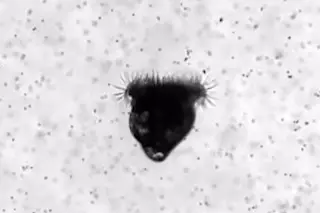
New Footage Reveals Gravity, Not Currents, Drives Feeding in Tiny Oyster Larvae

Researchers at the Woods Hole Oceanographic Institution used high-speed imaging to discover that eastern oyster larvae rely on gravity, rather than water currents, to capture food. This finding suggests that ocean acidification, which weakens larval shells, could directly impair their ability to feed and survive.

"Unconventional Methods: Scientists Experiment with Ocean Chemical Dumping to Combat Climate Change"
environment2 years ago

"Unconventional Methods: Scientists Experiment with Ocean Chemical Dumping to Combat Climate Change"

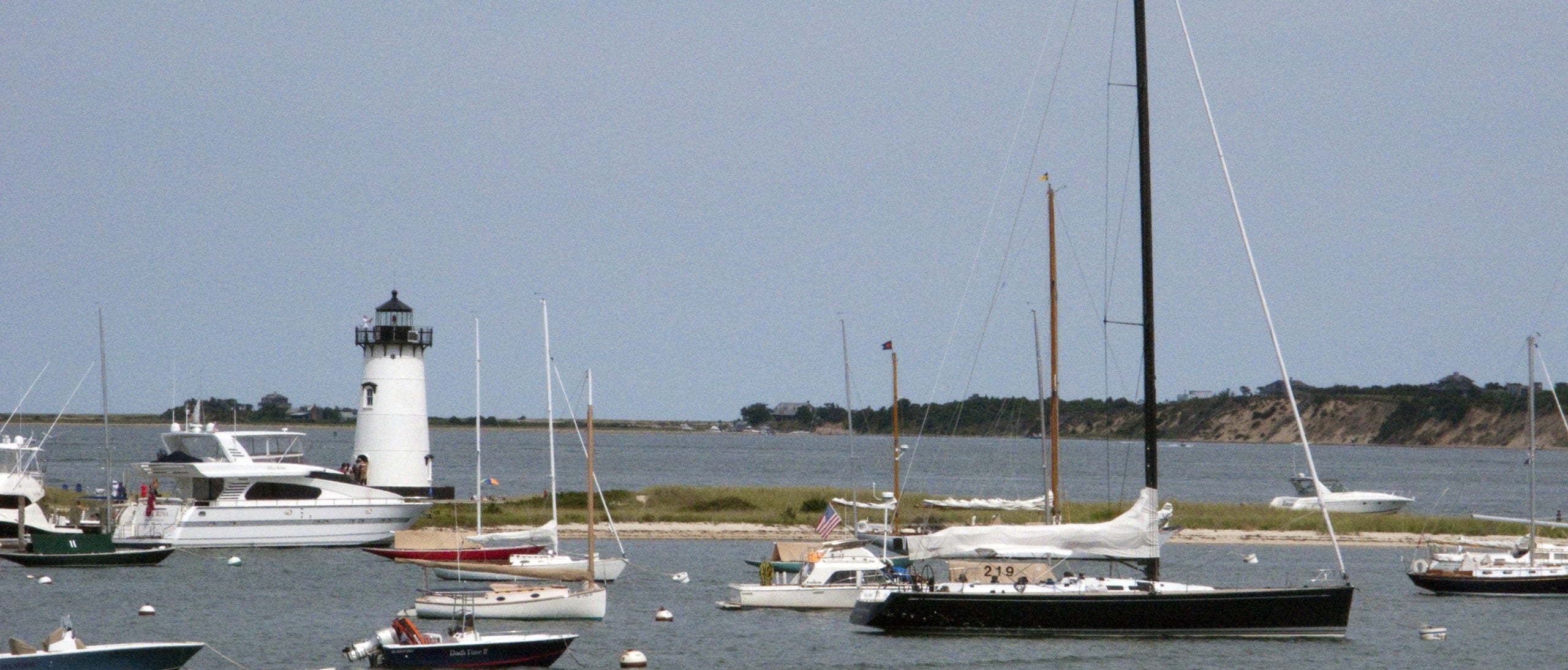
Scientists from the Woods Hole Oceanographic Institution plan to pour 6,000 gallons of sodium hydroxide into the ocean near Martha's Vineyard to study its potential to counteract ocean acidification and climate change. The $10 million project, funded by NOAA and private donors, aims to make ocean waters more efficient at storing carbon dioxide. The EPA must approve the release of the chemicals, and the concept reflects a wider trend of climate scientists exploring geoengineering projects to address environmental challenges.