Tag

Nasa Jpl

All articles tagged with #nasa jpl

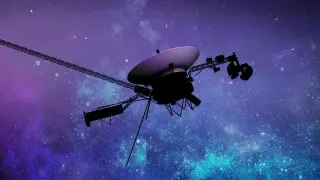
Voyager 1's two-day command cycle as it drifts toward interstellar space
science2 days ago

Voyager 1's two-day command cycle as it drifts toward interstellar space

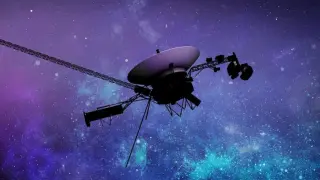
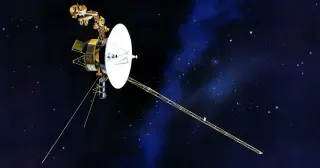
Voyager 1 is about 16 billion miles from Earth and moving away from the Sun, so a command sent at the speed of light takes roughly 22.5 hours to reach it and the reply takes about 22.5 hours to return, creating a two‑day command‑and‑response cadence. After a memory‑chip failure in 2023, a 2024 patch and careful line‑by‑line code review restored coherent data transmission, and the current data rate is about 160 bits per second as the probe slowly powers down its instruments. By November 2026 Voyager 1 will become the first human‑made object to pass one light‑day from Earth, while Voyager 2 remains on a longer, slower path toward similar autonomy and fading transmissions.

Psyche Mission to Use Mars Gravity Assist to Reach Metal-Rich Asteroid
space-exploration14 days ago

Psyche Mission to Use Mars Gravity Assist to Reach Metal-Rich Asteroid

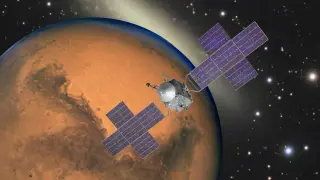
NASA’s Psyche spacecraft will perform a gravity assist by flying within roughly 2,800–3,000 miles of Mars on May 15 to gain speed and redirect toward the metal‑rich asteroid 16 Psyche. The Mars flyby will also calibrate Psyche’s instruments, including its multispectral imager, as it heads toward its 2029 rendezvous with the asteroid believed to be an exposed nickel‑iron core. A February trajectory correction set up the maneuver, and scientists also anticipate potential Mars dust‑ring observations and a search for small moons to aid future mission planning.

NASA Trials Groundbreaking Liquid-Lithium Engine for Mars Mission
space22 days ago

NASA Trials Groundbreaking Liquid-Lithium Engine for Mars Mission

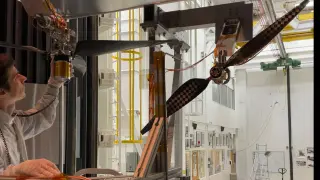
NASA completed high-power tests of a liquid-lithium, magnetoplasmadynamic thruster at up to 120 kilowatts, a major step toward crewed Mars propulsion. Lithium promises higher exhaust velocities and reduced propellant mass versus xenon, but handling molten lithium and corrosion pose severe engineering challenges. Next steps include thousands of hours of endurance testing and scaling toward megawatt-class power (2–4 MW) for long-duration deep-space missions.

NASA Demonstrates High-Power Lithium Electric Thruster for Mars-Mmission Ambitions
technology28 days ago

NASA Demonstrates High-Power Lithium Electric Thruster for Mars-Mmission Ambitions

NASA’s Jet Propulsion Laboratory successfully tested a lithium-fed magnetoplasmadynamic thruster in February 2026, achieving up to 120 kilowatts—over 25 times the power of the Psyche mission’s thrusters and the highest power for U.S. electric propulsion tests. The data from this milestone will guide scaling toward megawatt-class systems, which could power future nuclear-electric propulsion for crewed Mars missions and require multiple thrusters with robust heat tolerance for long-duration operation (potentially 2–4 MW total).

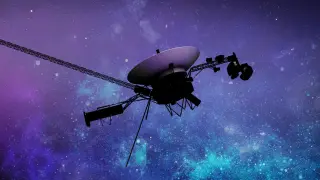
Voyager 1 Trims Instruments to Stretch Interstellar Mission
science28 days ago

Voyager 1 Trims Instruments to Stretch Interstellar Mission

NASA's Voyager 1 has shut down the Low-energy Charged Particles instrument to conserve dwindling power from its aging RTGs. The move is part of a broader “Big Bang” plan to power down nonessential systems and keep heaters on, allowing the mission to continue collecting data beyond the heliosphere. Voyager 2 has already shed similar instruments, and planners will test the approach in May–June with the goal of implementing it on Voyager 1 by July, potentially reactivating LECP if more power becomes available.

House probes missing space and nuclear scientists amid national-security concerns
politics-and-policy1 month ago

House probes missing space and nuclear scientists amid national-security concerns

The House Oversight Committee is probing the disappearances and deaths of at least 10 scientists tied to U.S. nuclear and aerospace programs dating back to 2023, asking FBI, NASA, the Energy Department, and the Defense Department for briefings; cases span California, New Mexico, and Massachusetts, with some deaths not clearly connected to work, as investigators weigh security risks and the protection of sensitive scientific secrets.

Power-saving move extends Voyager 1s interstellar journey
space1 month ago

Power-saving move extends Voyager 1s interstellar journey

NASA shut down the Low-energy Charged Particles instrument on Voyager 1 to conserve dwindling power, as part of a planned sequence that has already retired seven of ten instrument sets; the move aims to preserve the spacecrafts core systems so it can continue its interstellar voyage, following Voyager 2s LECP shutdown in March 2025.

Mars Global Localization Gives Perseverance GPS-like Autonomy
space2 months ago

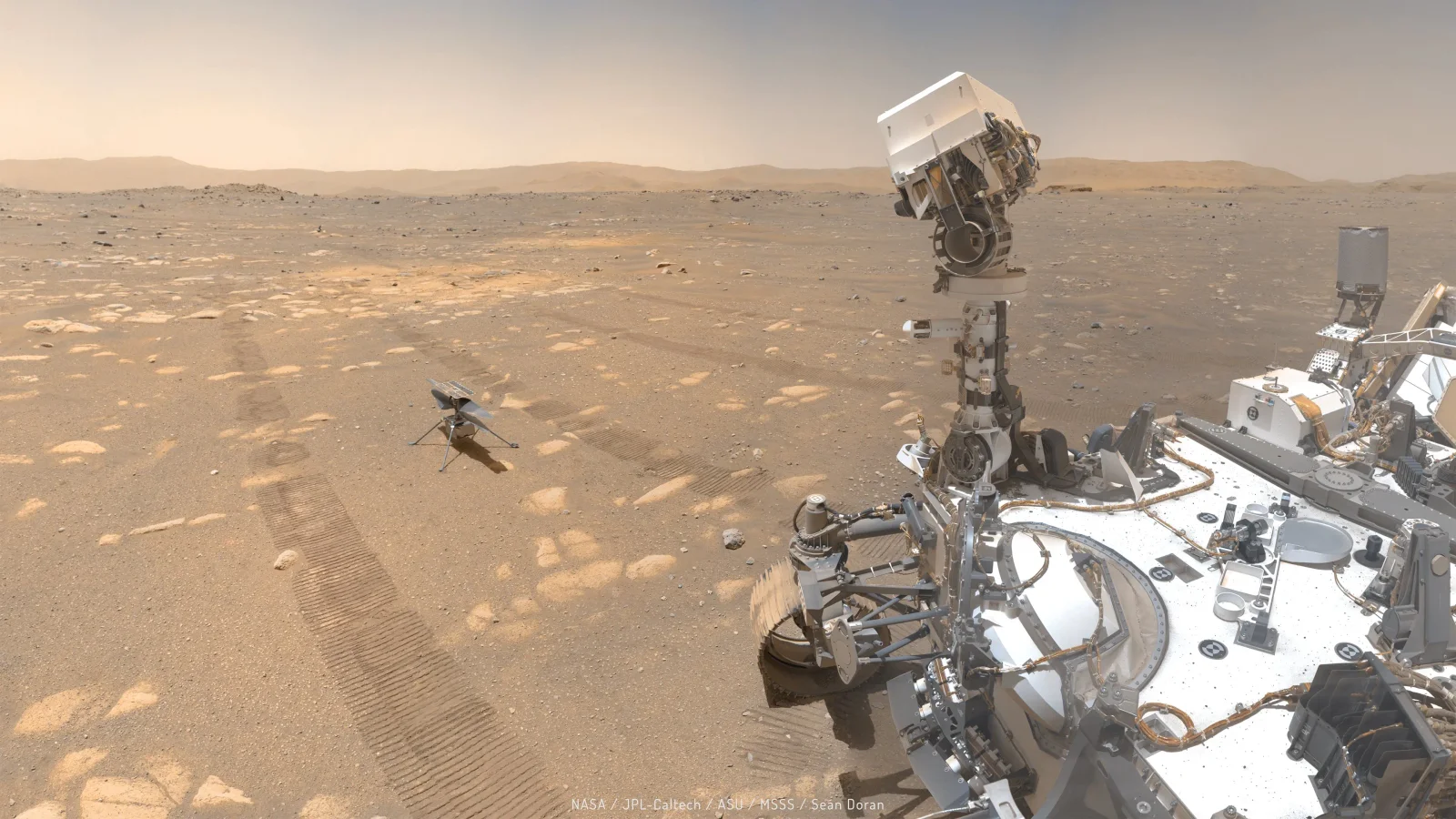
Mars Global Localization Gives Perseverance GPS-like Autonomy

NASA's JPL repurposed Perseverance's Helicopter Base Station to run a terrain-based localization algorithm that compares the rover's navigation-camera panoramas with onboard Mars terrain maps, delivering GPS-like positioning and enabling more autonomous navigation without constant Earth-based guidance. The test used the faster HBS hardware and found RAM bit faults, which were isolated to keep the algorithm reliable, showcasing Ingenuity-era hardware enabling new capabilities for the rover.

"NASA's JPL Imaging Spectrometer Set for Tanager 1 Integration"
science-and-technology2 years ago

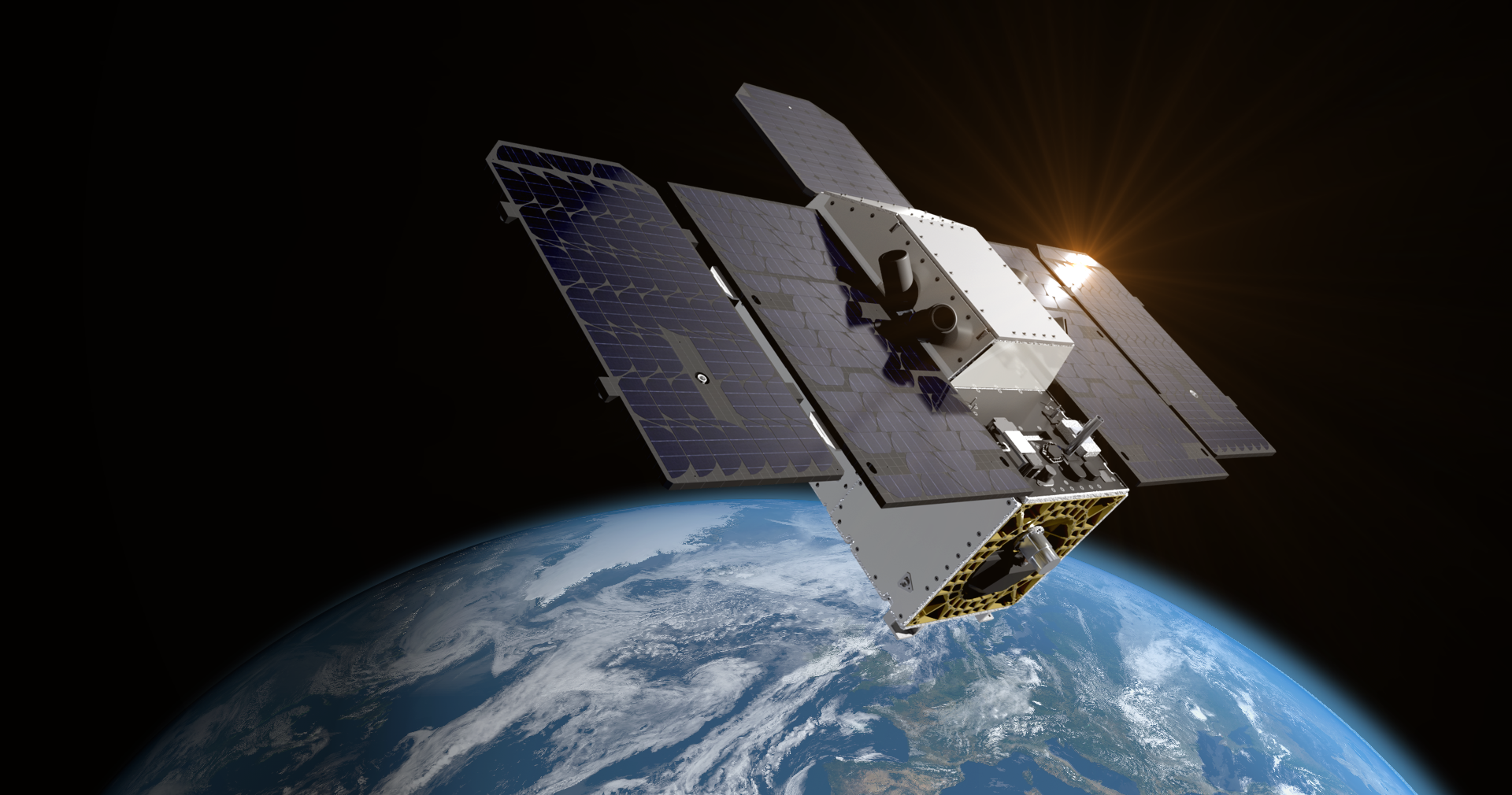
"NASA's JPL Imaging Spectrometer Set for Tanager 1 Integration"

NASA JPL has handed off the imaging spectrometer to the Carbon Mapper Coalition for integration onto the Tanager 1 hyperspectral satellite. This instrument will allow the satellite to detect and quantify point source emissions of methane and carbon dioxide, marking a major milestone in understanding global greenhouse gas emissions. The Pelican Program is also progressing, with the first Tech Demo (TD1) fully built and expected to launch later this year. The Early Access Program (EAP) is collaborating with users to understand the value of hyperspectral data in various industries. Tanager 1 and Tanager 2 are expected to launch in 2024.