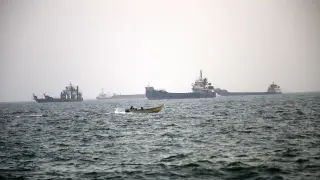
Oil prices rose after President Trump threatened to strike Iran, with Brent around $91 and WTI near $87 as shipments through the Strait of Hormuz remain well below pre-war levels and diesel supplies tighten amid regional disruptions.
Oil prices jumped more than 2% after the U.S. attacked Iran's Larak Island in the Strait of Hormuz, with Brent around $90.31 and WTI near $85.23 per barrel as Tehran retaliated; traders warned of continued volatility with a likely $85–$95/bbl range until Hormuz developments become clearer and shipping traffic stabilizes.
Oil prices fell by more than $2 a barrel as investors booked profits after gains, despite the US expanding secondary sanctions on Iran. Brent settled at $92.17 a barrel and WTI at $85.01, with Morgan Stanley forecasting Brent could reach about $100/bbl later in the year. Analysts say the sanctions may have limited immediate impact on Iran’s oil revenues unless Tehran’s trading partners cut purchases, and they note ongoing congestion through the Strait of Hormuz as a supporting factor for prices.
Oil prices fell as investors awaited details of the US government’s toughest-ever sanctions campaign against Iran, with WTI around $85.9 and Brent about $93 as Treasury officials prepared to unveil a new package; Iran said it could counter the pressure, while analysts warned volatility could persist and noted a potential Brent range of $70-$100 in H2 2026 depending on Hormuz flow and Tehran’s response.
Oil prices fell on Friday as shipping through the Strait of Hormuz rebounded to its highest level since the Iran war began, easing fears of supply disruptions. Brent crude dropped over 2% and WTI slid about 3% to below $70 a barrel, aided by renewed US–Iran talks and a memorandum that could reopen Hormuz and secure free navigation for oil tankers.
Brent crude briefly dipped under $80 a barrel (the first since March) and U.S. WTI fell as markets cooled after earlier spikes driven by Iran tensions; prices had surged toward $120 following US and Israeli strikes, with traders now weighing a potential deal to end the conflict and reopen the Strait of Hormuz, which could influence a 60-day negotiation on Iran’s nuclear program and regional access.
Oil prices fell about 5% to seven-week lows after Iran and Israel halted attacks following a Trump appeal, with Brent around $89.95 a barrel and WTI about $86.35. Traders cited ceasfire hopes and ongoing tensions, including Iran’s threats to resume hostilities and continued shipping disruptions through the Strait of Hormuz, as factors. Analysts noted shifting supply-demand dynamics, with the EIA forecasting lower 2026 world petroleum production and demand, while markets await API/EIA storage data and China’s weak crude imports.
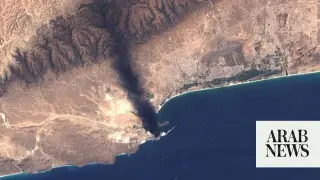
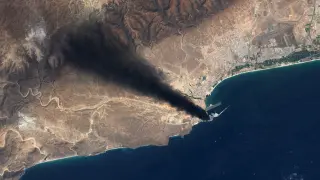
Oil prices edged lower after Oman said Mina al Fahal port operations were proceeding normally, easing concerns from an explosion that had prompted reports of suspended loadings. Brent dipped to about $94.79 a barrel and WTI around $92.48, with both set for their first weekly gain in three weeks as Middle East tensions and Hormuz traffic remain in focus. OPEC kept its 1.2 million bpd oil-demand growth forecast for the year, while Iranian exports stay depressed due to naval blockades.
Oil prices slipped to a two-week low as investors priced in progress toward a U.S.–Iran peace deal, with Brent around $98.90 a barrel and WTI about $92, while blockades in the Strait of Hormuz continue to constrain supply. Trump said there’s no rush into a deal, suggesting near-term relief may be limited, and analysts say it could take months for flows to normalize even if a deal advances.
U.S. crude traded under $100 a barrel after President Trump said talks with Iran are in the final stages, with WTI around $97.74 and Brent near $104.62; analysts warn Hormuz disruptions could keep prices volatile, though a quick peace that reopens the strait could ease prices later in the year.
Oil prices climbed after President Trump said the Iran ceasefire was 'life support' and dismissed Tehran's latest offer as 'garbage,' dimming hopes for a quick deal to reopen the Strait of Hormuz. Brent traded around $107.77 a barrel and WTI near $102.18 as analysts warned that reopening Hormuz by force could be costly and that the market could stay volatile or take years to normalize if the strait remains closed, keeping prices elevated through 2027.
Goldman Sachs again lifts its oil-price outlook, forecasting Brent around $90/bbl and WTI about $83/bbl in Q4, with current trading near $106.68/bbl Brent and $95.35/bbl WTI as Iran–U.S. talks stall. The bank warns the Middle East supply shock is curbing demand, expecting global demand to fall by roughly 1.7 million bpd in the current quarter and about 100,000 bpd in 2026 versus 2025, and estimating 14.5 million bpd of lost Middle East production. ING analysts likewise see a tightening market and a roughly 13 mbpd shortfall that will push prices higher, while noting that sustained inventory draws could intensify demand destruction if the shock lasts longer.
Oil prices oscillated after Trump extended a fragile Iran ceasefire, keeping markets unsure about de-escalation and supply risk. Brent traded near $99.8 and WTI near $90.9 as mixed signals from Tehran and Washington persisted, with the U.S. blockade of Iranian ports continuing and Iran signaling talks in Pakistan may be unproductive, underscoring a fragile outlook for energy markets around the $100 per barrel level.
Oil prices rose after Iran accused the United States of violating elements of a two-week ceasefire, with Brent up about 2.5% to $97.14 and WTI up about 2.7% to $96.96 as markets weigh renewed tensions and potential supply risks.
Oil futures look poised to rise at the week’s start, with WTI topping $102 a barrel and Brent approaching $114.50, supported by weekend gains and bets on higher prices. Analysts warn that a sustained move above $102.25 for WTI could trigger a bullish leg toward about $111–$124, while a break below $85.50 would open downside toward $81–$73.