
New Models Reveal Thwaites Glacier Melting Faster Than Predicted, Doubling Sea-Level Threat
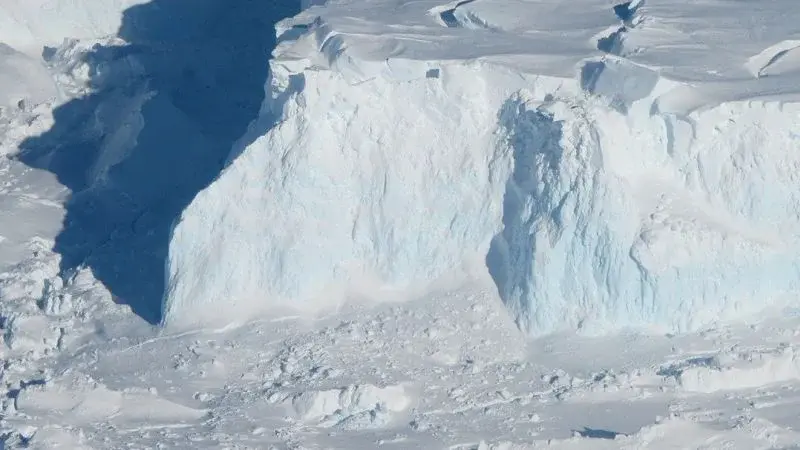
A new study indicates that Thwaites Glacier, known as the 'Doomsday Glacier,' is melting more aggressively than previously estimated. By accounting for dynamic 'grounding zones' where seawater penetrates under the ice, researchers project the glacier could contribute up to 1.2 inches to global sea-level rise by 2100, even without further warming. This potential impact is double previous estimates, raising concerns about coastal flooding in major cities like Miami and Manila.
Key points
- Researchers from UC Irvine and NASA's Jet Propulsion Laboratory developed a new ice sheet model that accounts for 'grounding zones,' areas where seawater flushes in and out with tides, causing vigorous melting.
- The study, published in Nature Communications, finds Thwaites could contribute up to 1.2 inches (30 mm) to sea-level rise by 2100, doubling previous projections.
- The glacier currently contributes about 4% to global sea-level rise; a total collapse could raise levels by more than 2 feet, potentially triggering up to 10 feet of rise from the broader Antarctic ice sheet.
- There is a 60% chance the glacier will unpin from the Mouginot Ridge by the end of the century, accelerating its retreat down sloping bedrock.
- British Antarctic Survey research suggests Thwaites is locked into losing ice for at least 150 years, even if ocean cooling were to occur, due to past changes.
Background
Recent coverage has highlighted accelerating ice loss globally. In September 2026, reports indicated Himalayan glaciers are melting 65% faster than a decade ago, while Swiss glaciers shed a record 5.5% of their ice in 2026. These trends underscore the broader instability of polar and alpine ice reserves, providing a backdrop for the alarming new findings regarding Thwaites Glacier in Antarctica.
How outlets are covering it
CNN and Gizmodo emphasize the 'aggressive' nature of the melting and the doubled sea-level threat, highlighting the complexity of the 'grounding zone' mechanism. The Nature Communications abstract provides the technical basis, noting that models must account for 2-5 km wide grounding zones to match observed retreat. British Antarctic Survey (BAS) offers a distinct perspective, focusing on the 'committed' nature of the ice loss; their simulations show that even if ocean melting stopped entirely, Thwaites would continue to lose ice for 150 years due to past changes, whereas neighboring Pine Island Glacier would stabilize. While CNN and Gizmodo focus on future projections under current conditions, BAS highlights the irreversible trajectory already set by historical warming.
Why it matters
The findings suggest that previous sea-level rise forecasts may have underestimated the risk to coastal populations. A 1.2-inch rise, while seemingly small, significantly magnifies the danger of coastal flooding. The study implies that even if global warming is halted, the damage already done to Thwaites Glacier will continue to drive sea-level rise, necessitating immediate adaptation strategies for vulnerable coastal communities worldwide.
What to watch
Scientists plan to deploy instruments at Thwaites' grounding line in 2028 to document seawater flushing directly. Further research is needed to understand the specific melting processes within the grounding zone to improve prediction accuracy. Policymakers are urged to prepare for higher sea levels, as the glacier's retreat is now considered a 'gamechanger' for forecasting.
- Scientists find Doomsday Glacier is melting ‘more aggressively’ than thought, with big impacts for sea level rise CNN
- Thwaites Glacier could contribute twice as much sea-level rise as previously projected Phys.org
- Ocean Water Is Seeping Under the Doomsday Glacier—and Its Sea-Level Threat Just Doubled Gizmodo
- Sea-level contribution from Thwaites Glacier doubles in an observation-constrained ice-sheet model Nature
- Thwaites Glacier will keep losing ice even if oceans cool British Antarctic Survey (BAS)
Want the full story? Read the original reporting
Read on CNN