
New Study Doubles Thwaites Glacier Sea-Level Threat via Tidal Melting
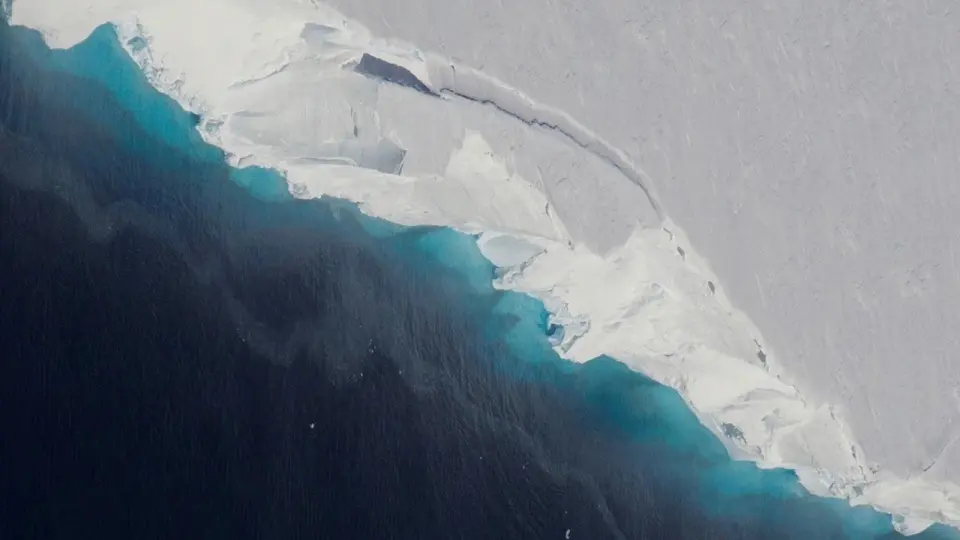
A new study published in Nature Communications reveals that Antarctica's Thwaites Glacier is melting twice as fast as previously modeled. By accounting for dynamic 'grounding zones' where tidal water pumps warm seawater under the ice, researchers project the glacier could add 30 millimeters to global sea levels by 2100, even without further warming. This finding doubles earlier estimates and highlights significant risks for coastal flooding.
Key points
- The study, led by Mattia Poinelli and Eric Rignot, identifies a 'grounding zone' rather than a static line, allowing tidal water to penetrate deep under the ice.
- This mechanism accelerates melting, potentially doubling Thwaites' contribution to sea-level rise to 30 millimeters by 2100.
- The glacier currently contributes 4% to global sea-level rise; total collapse could raise levels by 65 centimeters, plus 2.4 meters from the West Antarctic Ice Sheet.
- There is a 60% chance Thwaites will unpin from the Mouginot Ridge by 2000, triggering rapid retreat.
- Researchers plan to deploy instruments in 2028 to gather direct data from the glacier's underside.
Background
Thwaites, often called the 'Doomsday Glacier,' has been a major focus of climate research due to its size and role in holding back the West Antarctic Ice Sheet. Previous models underestimated its melting rate by assuming a stable grounding line. Recent archive coverage from October 2026 highlighted the same doubling of sea-level threats, confirming the significance of this new modeling approach.
How outlets are covering it
The Weather Network and Al Jazeera emphasize the doubling of sea-level rise projections, citing the new 'grounding zone' model. NASA Science highlights the improved accuracy of the model, which matched historical satellite data four times better than previous versions. CNN notes the 'tidal pumping' mechanism and the 60% risk of unpinning from the Mouginot Ridge. While all sources agree on the accelerated melting, CNN and Al Jazeera stress the need for more direct observational data to confirm these projections, whereas The Weather Network focuses on the immediate implications for coastal flooding.
Why it matters
The revised projections indicate that coastal communities may face higher sea levels and increased flooding risks than previously anticipated. The finding that this acceleration occurs even without further warming underscores the irreversible nature of current climate impacts. Accurate modeling of Thwaites is critical for global climate policy and adaptation strategies.
What to watch
Researchers plan to deploy instruments in 2028 to directly measure seawater flushing under the glacier. Continued monitoring of the Mouginot Ridge and other grounding zones will be essential to refine future sea-level rise predictions.
- Antarctica's Doomsday Glacier is melting twice as fast as we previously thought The Weather Network
- NASA Study Refines Projections for Thwaites Glacier NASA Science (.gov)
- Scientists knew the Doomsday Glacier was melting. They didn’t realize how ‘aggressively’ CNN
- Senegal-sized Antarctic glacier melting faster than thought: Why it matters Al Jazeera
- Antarctica’s ‘doomsday’ glacier will keep melting even if oceans cool New Scientist
Want the full story? Read the original reporting
Read on The Weather Network