
Inflammation Triggers Chimeric mRNA Fusion to Boost Immune Response
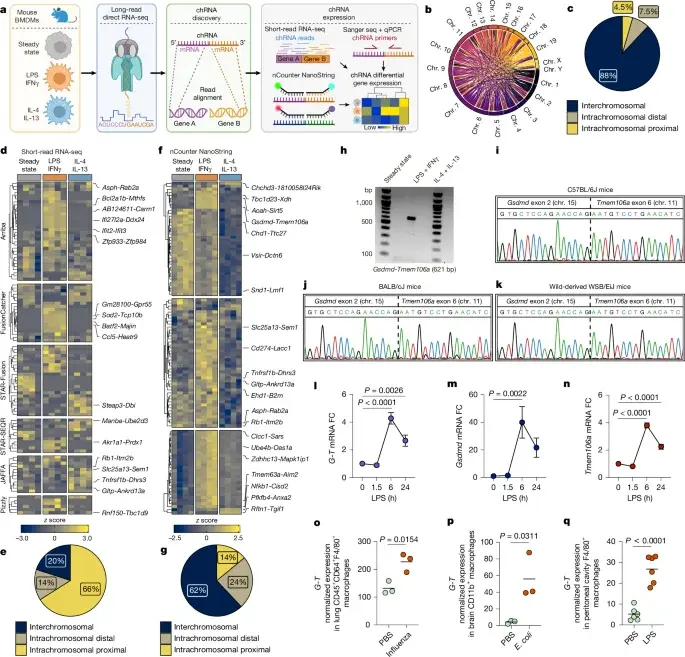
Researchers have identified functional chimeric mRNAs in mammalian cells that form through trans-splicing during inflammation. These hybrid transcripts, specifically a fusion of gasdermin D and Tmem106a, produce proteins that enhance pore formation and cytokine release in macrophages, balancing antibacterial defense against sepsis risks.
Key points
- Long-read RNA sequencing identified 30,390 chimeric mRNA candidates in mouse macrophages, with 88% arising from interchromosomal gene pairs.
- Inflammation induces chromatin conformation changes, bringing distant genes into proximity to facilitate trans-splicing.
- The specific fusion of Gsdmd and Tmem106a creates a protein that localizes to the plasma membrane and accelerates pore formation.
- This chimeric protein enhances IL-1beta release, improving protection against bacterial infections but increasing lethality in sepsis models.
- The process is dependent on CTCF-mediated DNA interactions, which are disrupted when CTCF is depleted.
Background
Previous research, such as the 2026 study on osteopontin in breastmilk, highlighted how biological factors shape immune development, but this new study shifts focus to the molecular mechanisms of innate immunity. While trans-splicing was known in invertebrates, its functional role in healthy mammalian immunity was previously unclear, with chimeric mRNAs mostly associated with cancer or technical artifacts.
Why it matters
This discovery expands the understanding of mammalian protein diversity by showing that cells can generate new functional proteins through RNA fusion rather than just DNA mutations or cis-splicing. It reveals a dynamic regulatory mechanism where inflammation physically reorganizes the genome to produce specific immune effectors, offering potential targets for modulating inflammatory diseases and sepsis.
What to watch
Researchers will likely investigate whether other chimeric mRNAs identified in the study have functional roles in different tissues or disease states. Further work may explore how to therapeutically modulate these fusion events to treat infections without triggering excessive inflammation or sepsis.
Want the full story? Read the original reporting
Read on Nature