
Western Washington Residents Witness 96% Lunar Eclipse with Rust-Colored Moon
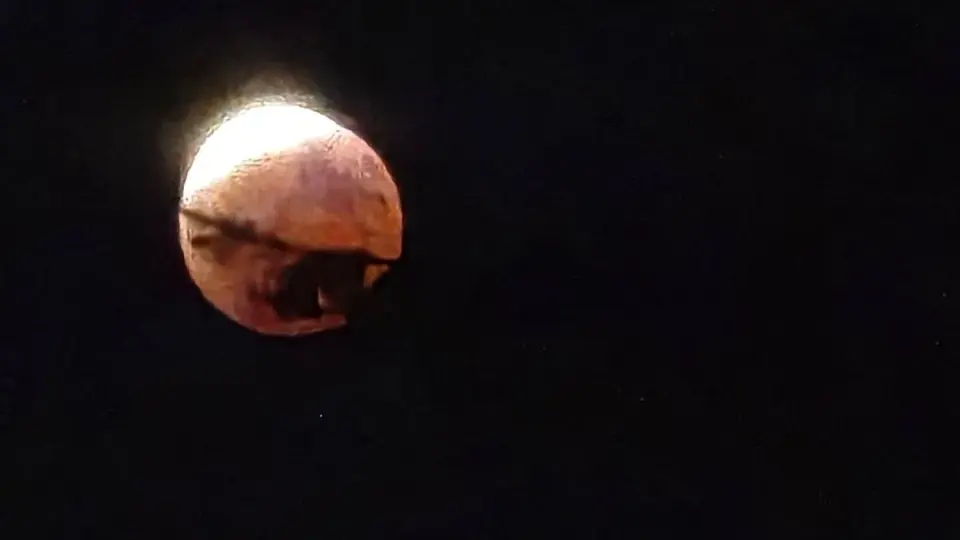
A near-total lunar eclipse occurred on August 27, 2026, visible across western Washington. Earth’s shadow covered 96% of the moon, creating a reddish hue. The event peaked at 9:15 p.m. Pacific Time and was visible to the naked eye.
Key points
- The eclipse began before moonrise in western Washington, becoming visible after the moon rose at 7:51 p.m. in Seattle.
- Peak coverage reached 96% of the moon’s surface, resulting in a rust, copper, and brown appearance.
- The event concluded around midnight Pacific Time and required no special equipment for observation.
- NASA described the shadow as taking a 'bite' out of the moon, highlighting the partial nature of the eclipse.
Background
This event followed a significant solar eclipse in Europe earlier in August 2026. Previous archive coverage noted that this lunar eclipse was part of a period of frequent celestial events, with the next total lunar eclipse not expected until 2028. The partial phase lasted approximately three hours, while the full partial phase spanned over five hours globally.
Why it matters
The event provided a rare opportunity for public observation of a near-total lunar eclipse, demonstrating the visual effects of Earth’s shadow on the moon. It highlighted the accessibility of astronomical events, as they can be viewed safely without specialized equipment, fostering public engagement with science.
What to watch
The next total lunar eclipse is scheduled for 2028. Astronomers and enthusiasts are encouraged to monitor future celestial events, with the next solar eclipse expected in February 2027 per NASA schedules.
Want the full story? Read the original reporting
Read on KOMO