
Sp Falcon 9 Stage to Strike Moon Aug 5, Exposing Lunar Governance Gaps
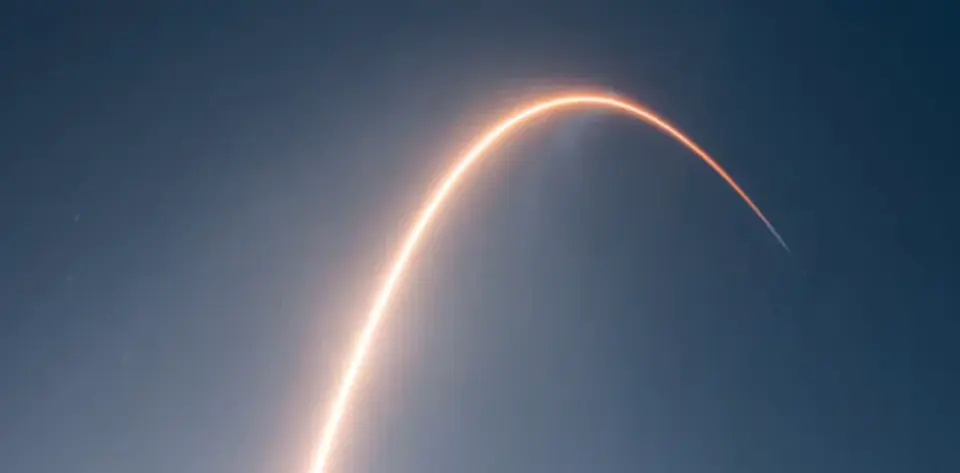
A spent SpaceX Falcon 9 upper stage is predicted to impact the Moon near Einstein Crater on August 5, 2026, at approximately 2:35 AM EDT. The object, launched in January 2025 to deliver commercial landers, lacks fuel for controlled reentry and is drifting toward the lunar surface. While the impact poses no danger, it offers a rare scientific opportunity to study crater formation and dust plumes. The event highlights a critical regulatory gap: current international space law lacks mechanisms to coordinate activities that permanently alter the lunar environment, raising concerns about future debris and heritage protection.
Key points
- The impact is expected near Einstein Crater on August 5, 2026, at roughly 2:35 AM EDT, traveling at 5,400 mph (8,700 km/h).
- The object is the upper stage of a Falcon 9 rocket launched in January 2025 for the Firefly Blue Ghost and ispace Hakuto-R missions.
- Scientists predict the impact will create a crater 20–30 meters across and eject a visible dust plume, observable from Earth and space-based telescopes.
- NASA’s Lunar Reconnaissance Orbiter and South Korea’s Pathfinder are scheduled to image the site before and after the impact.
- The event underscores the lack of a practical framework for regulating lunar activities, as the 1967 Outer Space Treaty does not address environmental protection or coordination of debris.
Background
Previous coverage noted that the upper stage has been in a highly elliptical Earth orbit since its January 2025 launch. Earlier reports indicated that amateur astronomer Bill Gray first identified the trajectory, though he had previously misidentified a Chinese booster as SpaceX debris. The impact site is near the lunar limb, making visibility from Earth uncertain but potentially visible as a sunlit plume. NASA’s LRO is expected to pass over the site approximately one week after the impact to assess the damage.
How outlets are covering it
The Conversation emphasizes the regulatory vacuum, arguing that the 1967 Outer Space Treaty is insufficient for managing permanent lunar changes and calls for a 'Notices to Lunar Operators' system similar to aviation. Scientific American focuses on the scientific opportunity, highlighting a preprint by 23 astronomers urging global observation to study impact dynamics and debris hazards. Engadget and heise online provide technical details on the object’s size (approx. 39 feet long, 4,000 kg) and visibility, noting that the impact is likely best seen from South America and parts of North America. heise online also notes that SpaceX has not commented on the impact, while The Conversation points out that the US government is theoretically liable for SpaceX’s actions under national law.
Why it matters
This incident serves as a test case for the governance of lunar activities as commercial and state actors increase their presence. Without coordination mechanisms, future debris could damage scientific sites, heritage landmarks like Apollo footprints, or operational infrastructure. The event forces a conversation about implementing practical tools, such as lunar registries and impact notifications, to prevent unintended consequences in a shared environment.
What to watch
Astronomers and space agencies will monitor the impact on August 5, 2026, using ground-based telescopes and orbital assets like NASA’s LRO and South Korea’s Pathfinder. Following the impact, UNOOSA and the UN Committee on the Peaceful Uses of Outer Space may accelerate discussions on lunar coordination frameworks. A fourth UN Conference on Outer Space is being called for to develop operational tools for managing lunar activities and protecting cultural and scientific sites.
- An abandoned SpaceX rocket is about to crash into the Moon. The real problem comes next The Conversation
- When a SpaceX rocket crashes into the moon, scientists will be watching Phys.org
- A SpaceX rocket is about to crash into the moon—scientists will be watching Scientific American
- A SpaceX Falcon 9 Rocket Is Expected To Crash Into The Moon This August Engadget
- SpaceX space debris before impact on the moon: NASA probe to check heise online
Want the full story? Read the original reporting
Read on The Conversation