
Mars Image Algorithm Reveals Hidden Ancient Art on Earth
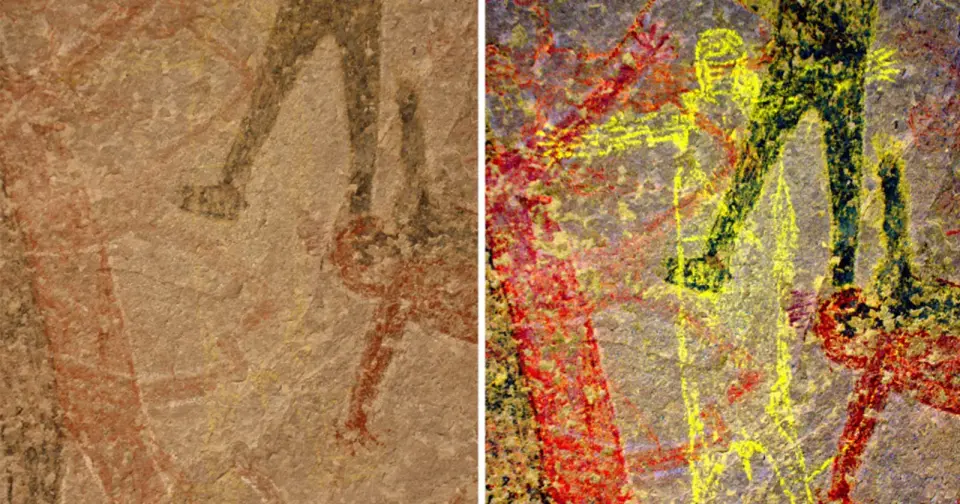
A decorrelation stretch technique originally developed by NASA’s Jet Propulsion Laboratory to enhance satellite images of Mars has been adapted to reveal faded ancient artwork on Earth. Jon Harman, a rock art enthusiast with a background in medical imaging and mathematics, created the Dstretch plug-in after seeing the technique’s effectiveness on Martian surface photos at a 2005 conference. By mapping original colors to an expanded range rather than simply increasing contrast, the algorithm uncovers details invisible to the naked eye. Harman first tested it on images from the Cave of San Borjitas in Baja California, Mexico, where it revealed a previously hidden yellow figure. The tool has since been adopted by archaeologists globally to document undocumented figures in Egypt, Canada, and Greece, and even to analyze tattoos on mummified remains. One major application occurred between 2010 and 2012, when Singaporean archaeologist Noel Hidalgo Tan used Dstretch to discover over 200 faded paintings at the Angkor Wat temple complex in Cambodia. The method preserves hue, saturation, and intensity while distributing pixels across all possible colors, making subtle variations in rock art visible. This cross-disciplinary application demonstrates how planetary science tools can solve terrestrial historical mysteries, bridging gaps between geology and archaeology through advanced digital imaging.
Key points
- Jon Harman developed the Dstretch plug-in based on NASA’s decorrelation stretch algorithm, originally designed for Mars satellite imagery.
- The technique enhances color variations by mapping original colors to an expanded range, preserving hue and saturation while revealing hidden details.
- Harman first validated the tool on rock art in Baja California, Mexico, where it revealed a yellow figure in the Cave of San Borjitas.
- Archaeologist Noel Hidalgo Tan used Dstretch between 2010 and 2012 to uncover more than 200 faded paintings at Angkor Wat in Cambodia.
- The algorithm has been applied to discover undocumented art in Egypt, Canada, and Greece, as well as to enhance images of tattoos on mummified remains.
Background
Previous coverage in our archive focused on Mars-related imaging anomalies, such as the 'jellyfish' artifact in Curiosity photos and the use of the Atacama Desert as a terrestrial analog for Mars. While those stories highlighted the challenges of interpreting planetary data, this story illustrates how Mars-focused image processing techniques have found practical applications in terrestrial archaeology, specifically in revealing faded rock art that is otherwise invisible to the naked eye.
Why it matters
This development demonstrates the interdisciplinary utility of space technology, showing how algorithms designed for planetary geology can solve problems in cultural heritage preservation. By revealing hidden historical artifacts, Dstretch helps archaeologists document and protect fragile cultural sites, ensuring that faded evidence of human history is not lost to time. It also highlights the value of open-source tools in advancing research across different scientific fields.
What to watch
Researchers may continue to apply Dstretch to other faded artifacts, including mummified remains and ancient manuscripts. The tool’s success in Cambodia and other regions suggests it could be used to uncover more undocumented rock art sites worldwide, potentially reshaping our understanding of ancient cultures and artistic practices.
Want the full story? Read the original reporting
Read on PetaPixel