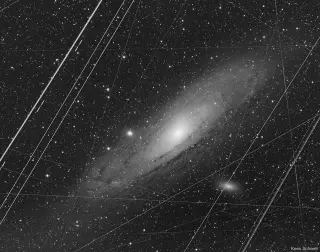
Astronomer Reveals How Software, Not Photoshop, Cleans Andromeda Galaxy Images
NASA's Astronomy Picture of the Day features a before-and-after comparison of the Andromeda galaxy, demonstrating how long-exposure images taken from Earth suffer from artifacts like satellite trails and cosmic ray streaks. The 'after' image was not created using Photoshop but through specialized software that removes these terrestrial imperfections to reveal the galaxy's true appearance.