
SIU Researchers 3D-Print Edible Cookies From Plastic Waste Using Engineered Yeast
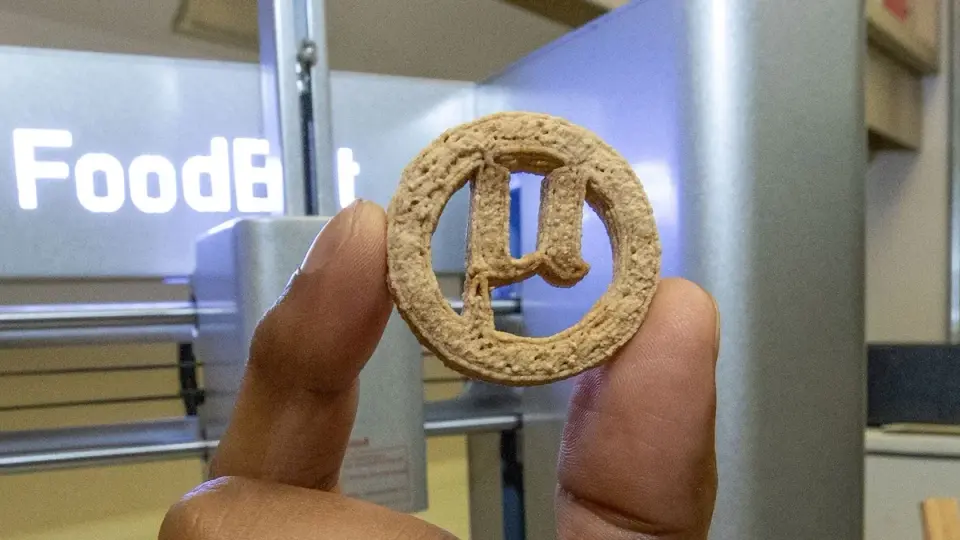
Researchers at Southern Illinois University Carbondale have developed a method to convert polyethylene terephthalate (PET) plastic and agricultural waste into edible cookies dubbed 'µBites'. The process, funded by NASA’s Deep Space Food Challenge, uses oxidative hydrothermal dissolution to break down materials, which are then fed to genetically engineered yeast to produce proteins, fats, and flavors. The resulting slurry is 3D-printed into cookies. While safety tests are pending, the team aims to use this technology for space missions, disaster relief, and potentially addressing global food scarcity.
Key points
- The µBites system converts PET plastic and corn stalks into food using a 33-step process involving high-temperature dissolution and engineered yeast.
- Genetically modified yeast strains produce specific ingredients, including vanilla flavoring, beta-carotene for vitamin A, proteins, and lipids.
- The final product is shaped via 3D printing and cooked in a microwave; current production costs approximately $60 per kilogram.
- The technology is designed for portable use in extreme environments such as submarines, disaster zones, or future Mars missions.
- Human taste tests are currently blocked by institutional approval, though blind sensory tests indicate pleasant aroma and texture.
Background
This development follows earlier coverage in August 2026 regarding NASA-backed microbial methods for converting plastic waste into edible space food. The current update provides specific details on the 'µBites' branding, the involvement of the American Chemical Society, and the specific use of CRISPR-edited yeast strains to address both plastic pollution and food security challenges.
How outlets are covering it
ScienceAlert and Popular Science emphasize the technological innovation and potential for solving food scarcity in extreme environments, highlighting the efficiency of converting carbon waste into nutrition. The Guardian focuses on the economic aspect, noting the current high cost of $60 per kilogram, and the long-term vision for reducing hunger by 2050. New Scientist offers a critical perspective, with researcher Jason Hallett from Imperial College London calling the concept a 'practical dead end' due to the sheer volume of global plastic waste (400 million tons annually) and the logistical impossibility of scaling this process to solve the plastic crisis. While the SIU team views the project as a proof of concept for upcycling, skeptics argue it cannot replace traditional recycling or address the root causes of plastic pollution.
Why it matters
This research represents a significant step in the intersection of waste management and food security. By demonstrating that plastic can be upcycled into nutritious food, it offers a potential solution for resource-constrained environments where traditional supply chains fail. Furthermore, it addresses the dual challenges of plastic waste accumulation and rising global food demand, potentially shifting public perception of plastic from a pollutant to a raw material for biological production.
What to watch
The research team is awaiting institutional approval to conduct human taste tests and simulated digestive studies. They plan to improve the conversion efficiency from the current 50% to nearly 100% by recirculating unconverted carbon. Additionally, they are exploring the application of the µBites ingredients in other food products, such as milk and meat alternatives, and animal feed. The team estimates that 20 years of further research are needed before the technology can be commercially viable for large-scale plastic waste conversion.
- Scientists Just Made A Cookie Out of Recycled Plastic 'Slurry'. Welcome to 2026 ScienceAlert
- Hard to swallow? The future of snacking may be 3D-printed cookies made from upcycled plastic The Guardian
- Engineers 3D-printed edible cookies from plastic Popular Science
- Plastic bottles can be turned into edible, vanilla-flavour cookies New Scientist
- Engineered yeasts help turn PET plastic and crop waste into protein-rich cookies Phys.org
Want the full story? Read the original reporting
Read on ScienceAlert