
DART’s Asteroid Deflection Test: Four Years Later, the Data Is Still Being Analyzed
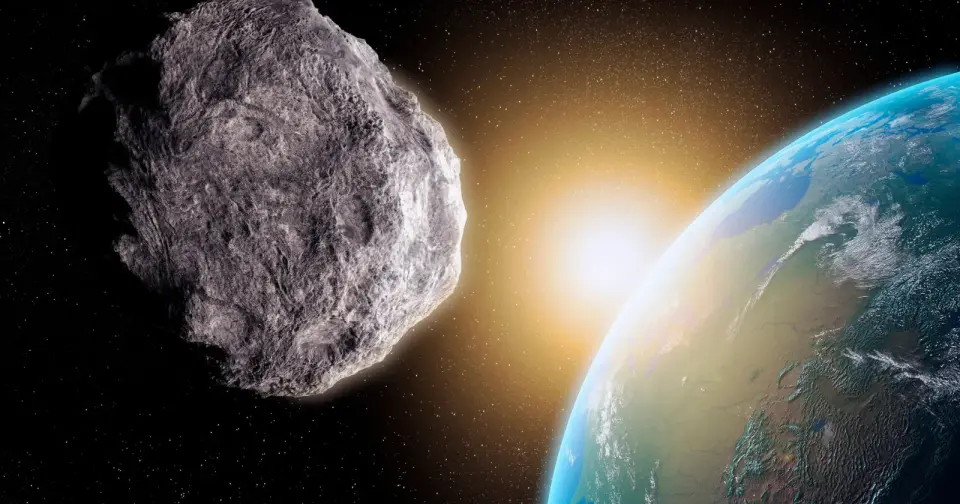
NASA’s DART mission successfully altered the orbit of asteroid Dimorphos in 2022, proving kinetic impactors can deflect space rocks. However, precise calculations of the momentum transfer remain pending until ESA’s Hera mission arrives later in 2026 to measure the asteroid's mass and inspect the impact crater.
Key points
- On September 26, 2022, NASA’s DART spacecraft, weighing 580 kilograms, collided with the 150-metre asteroid Dimorphos at six kilometres per second, shortening its orbit by 33 minutes, far exceeding the 73-second success threshold.
- The impact generated a momentum enhancement factor of approximately 3.6, meaning the ejecta plume of dust and rock pushed the asteroid harder than the spacecraft itself, a critical variable for future deflection planning.
- ESA’s Hera spacecraft, launched in October 2024 and passing Mars in March 2025, is scheduled to arrive at the Didymos system in late 2026 to weigh Dimorphos, photograph the new crater, and deploy two CubeSats.
- The 2024 YR4 asteroid scare, which briefly raised impact odds to 3.1%, highlighted the limitations of current detection; it was ultimately ruled out by NASA’s Center for Near-Earth Object Studies in March 2026 using Webb telescope data, confirming no lunar or Earth impact.
- Long-term modeling suggests the 37 boulders ejected by DART may cross Mars’s orbit over 20,000 years, though this remains a theoretical curiosity rather than an immediate threat.
Background
This development follows the broader trend of NASA’s deep-space capabilities, such as the New Horizons probe’s extended mission and the upcoming launch of the Nancy Grace Roman Space Telescope, which will enhance our ability to map dark energy and detect exoplanets. The DART experiment serves as a practical test for planetary defense, complementing the theoretical models of asteroid deflection that have been discussed in recent years.
Why it matters
The DART mission demonstrated that kinetic impactors are a viable method for altering the trajectory of potentially hazardous asteroids. However, the success of such missions depends on early detection and precise mass measurements, which are currently limited. The upcoming Hera mission will provide the necessary data to refine these models, ensuring that future deflection efforts are more accurate and effective. This is crucial for planetary defense, as the ability to detect and deflect asteroids is a key component of protecting Earth from potential impacts.
What to watch
ESA’s Hera spacecraft is expected to arrive at the Didymos system in late 2026, where it will conduct detailed measurements of Dimorphos and deploy two CubeSats to study the impact site. The data collected will help refine models of asteroid deflection and improve our understanding of the momentum transfer involved in such missions. Additionally, ongoing monitoring of near-Earth objects, such as 2024 YR4, will continue to enhance our ability to detect and respond to potential threats.
Want the full story? Read the original reporting
Read on Space Daily