
California scientist uncovers pristine 10,000-year-old mastodon molar in San Mateo creek
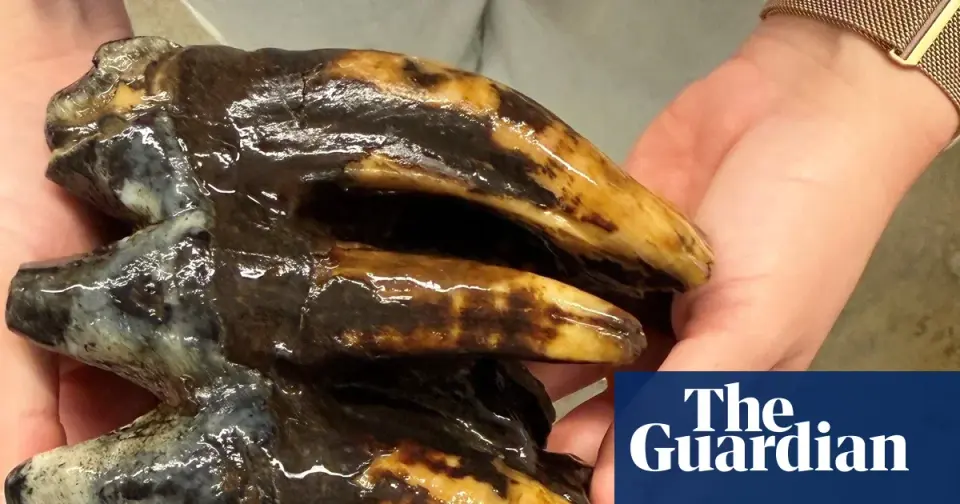
A geomorphologist discovered a remarkably preserved Pacific mastodon molar in a San Mateo County creek during a habitat survey. The 8.5-inch fossil, dating back over 10,000 years, was donated to Stanford University for carbon dating and 3D scanning. Experts describe it as the most complete mastodon molar found in the region, offering insights into Ice Age biodiversity and climate adaptation.
Key points
- Brigid Lynch, a geomorphologist, found the molar in March 2026 while conducting field surveys for a red-legged frog habitat restoration project in a Midpeninsula Regional Open Space District preserve.
- The fossil, measuring approximately 8.5 inches long, 7 inches deep, and 3 inches wide, was initially mistaken for a rock or mollusk before being identified as an adult Pacific mastodon molar.
- The tooth is described by paleontologists as being in 'immaculate condition' and is the most complete mastodon molar found in the local area.
- The specimen has been donated to the Doerr School of Sustainability at Stanford University, where researchers plan to use carbon dating and 3D scanning to determine its exact age and analyze the mastodon's diet.
- Pacific mastodons, large herbivores related to elephants, roamed western North America from 2.5 million years ago until their extinction approximately 11,700 years ago due to climate change and human hunting.
Background
This discovery follows a trend of recent mastodon fossil finds in North America, including a jaw found in New York in 2024 and a tooth found on a California beach in 2023. A 2025 study published in Science Advances revealed that mastodons were more genetically diverse than previously thought and migrated long distances in response to climate shifts. The Bay Area during the Ice Age is often described as a 'Serengeti' with lower sea levels, allowing animals to walk to the Farallon Islands.
How outlets are covering it
The Guardian and ABC News emphasize the exceptional preservation of the fossil and the excitement of the discovery, quoting paleontologist Wayne Thompson. The Mercury News provides additional context on the discovery circumstances, noting that Lynch used Google photo search to identify the object and that the Midpeninsula district is withholding the specific location to prevent fossil hunting. All sources agree on the donation to Stanford and the use of carbon dating, but the Mercury News highlights the broader ecological context of the Ice Age Bay Area, including the presence of saber-tooth tigers and camels.
Why it matters
The discovery provides a rare, well-preserved specimen for studying Ice Age biodiversity, climate adaptation, and human-mastodon interactions in the Bay Area. It underscores the importance of open-space preservation in uncovering historical ecological data and offers a tangible link to the prehistoric landscape of California.
What to watch
Researchers at Stanford University will conduct carbon dating to determine the exact age of the molar and create a 3D scan for analysis. The fossil is currently in a temperature-controlled room at Stanford, undergoing slow drying and monitoring before any preservation treatments are applied.
- Fossilized 10,000-year-old mastodon tooth found by California scientist The Guardian
- A Mastodon Tooth From the Ice Age Is Discovered in a California Creek The New York Times
- 10,000-year-old fossilized mastodon found in creek ABC News - Breaking News, Latest News and Videos
- ‘Immaculate condition’: Rare mastodon fossil found in San Mateo County creek The Mercury News
- California Scientist Looking for Frogs Finds a 10,000-Year-Old Mastodon Tooth Yahoo
Want the full story? Read the original reporting
Read on The Guardian