
NASA's 'Big Bang' Update Extends Voyager 2's Interstellar Mission by a Year
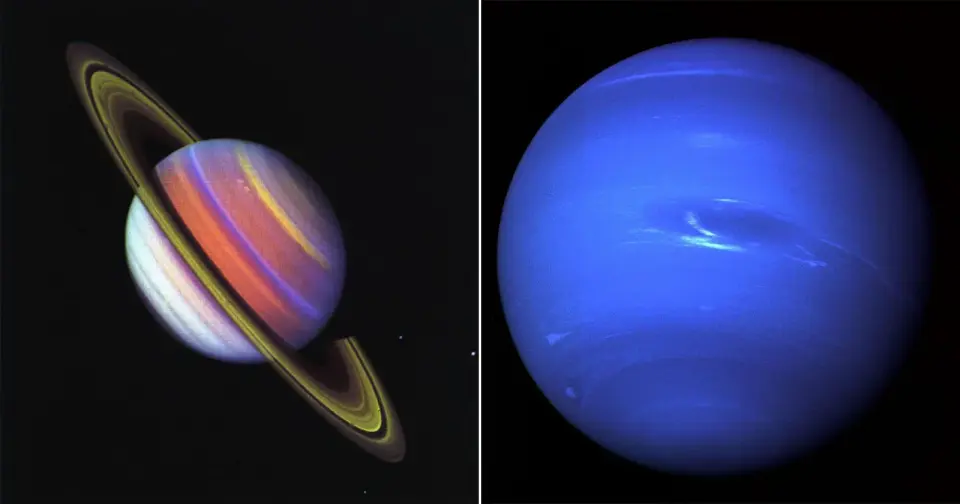
NASA successfully transmitted a software update to Voyager 2, located 13.3 billion miles from Earth, to conserve power and extend its operational life. The 'Big Bang' update swapped high-power devices for lower-power alternatives, saving enough energy to keep three remaining instruments active for at least another year. This move prevents the immediate shutdown of additional scientific tools and sets the stage for a similar update on Voyager 1.
Key points
- The 'Big Bang' update was implemented on July 9, 2026, after months of testing to ensure thermal stability and power efficiency.
- Voyager 2 now retains power for three instruments: the Cosmic Ray Subsystem, Magnetometer, and Plasma Wave Subsystem.
- The update involved turning off two heaters and a digital tape recorder, replacing them with lower-power equivalents that still provide necessary residual heat.
- Without this update, NASA would have been forced to shut down another instrument entirely before the end of 2026.
- The same power-saving strategy is planned for Voyager 1, which is farther away and has fewer remaining instruments.
Background
Voyager 2 launched in 1977 and entered interstellar space in December 2018. It is the only spacecraft to have visited Uranus and Neptune. The probe relies on radioisotope thermoelectric generators that lose approximately 4 watts of power annually due to plutonium decay. Previous archive coverage noted that Voyager 1 underwent a similar software redistribution in 2024 to address memory issues, highlighting the ongoing challenges of maintaining these aging probes.
How outlets are covering it
PetaPixel and NASA Science emphasize the technical success of the update in extending the mission by at least one year. CNN provides detailed insights into the engineering process, noting that the update was a 'team effort' involving off-hours work by JPL staff. Mashable highlights the broader context of the Voyagers' history, noting that Voyager 2 has explored four planets and 48 moons. All sources agree on the critical nature of power conservation, but CNN uniquely details the specific devices swapped, including the digital tape recorder and heaters.
Why it matters
This update demonstrates NASA's ability to extend the life of historic spacecraft through remote engineering, preserving valuable scientific data from interstellar space. It also sets the stage for similar updates on Voyager 1, potentially allowing the restart of the Low-energy Charged Particles instrument. The success of the 'Big Bang' update underscores the importance of careful planning and testing in deep-space missions, where communication delays and environmental challenges are significant.
What to watch
NASA plans to implement the same 'Big Bang' update on Voyager 1 in the coming months. A thermal test for Voyager 1 is scheduled for late August, following a successful power test in late July. If successful, this could extend Voyager 1's mission and potentially re-enable the Low-energy Charged Particles instrument, which was shut down in April 2026.
- NASA’s Voyager 2 Space Probe Just Got New Software From Over 13 Billion Miles Away PetaPixel
- NASA Engineers Help Prolong Voyager 2’s Science Mission NASA Science (.gov)
- How NASA is powering the Voyager 2 probe from a galaxy away Mashable
- ‘Big Bang’ fix boosts Voyager 2’s mission in interstellar space cnn.com
- NASA figured out how to keep its 48-year-old Voyager 2 probe running for yet another year Space
Want the full story? Read the original reporting
Read on PetaPixel