NASA’s Nancy Grace Roman Space Telescope has successfully passed critical stability tests and captured its first cosmic images, while a lighter-than-planned build has extended its operational life to 22 years, double the original estimate.
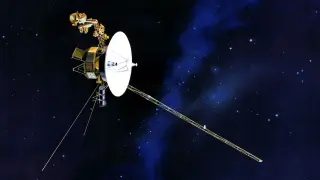
NASA successfully transmitted a software update to Voyager 2, located 13.3 billion miles from Earth, to conserve power and extend its operational life. The 'Big Bang' update swapped high-power devices for lower-power alternatives, saving enough energy to keep three remaining instruments active for at least another year. This move prevents the immediate shutdown of additional scientific tools and sets the stage for a similar update on Voyager 1.
NASA successfully executed a power-saving maneuver called 'Big Bang' on Voyager 2, extending its operational life by at least one year. The update, sent across 13 billion miles, swaps high-power components for lower-power alternatives to preserve energy for its three remaining science instruments. Engineers are now preparing to apply the same fix to Voyager 1, which faces tighter power constraints and is farther from Earth.
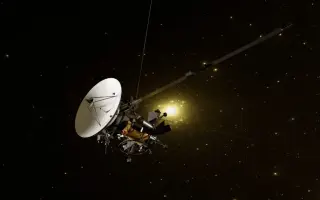
NASA is attempting a complex power-saving maneuver on Voyager 1 to extend its operational life, following a successful similar fix on Voyager 2. While Voyager 2 gained a year of power by swapping high-energy components for lower-power alternatives, Voyager 1 is in a more precarious state with only two working instruments remaining. Engineers are currently testing whether the same strategy will work on the older, more distant probe, which recently suffered an unexpected power dip. If successful, the maneuver could potentially allow the revival of a previously shut-down instrument, though outcomes remain uncertain due to differences in the spacecraft's aging hardware.