
Roman Telescope Extends Mission to 22 Years After Efficient Launch
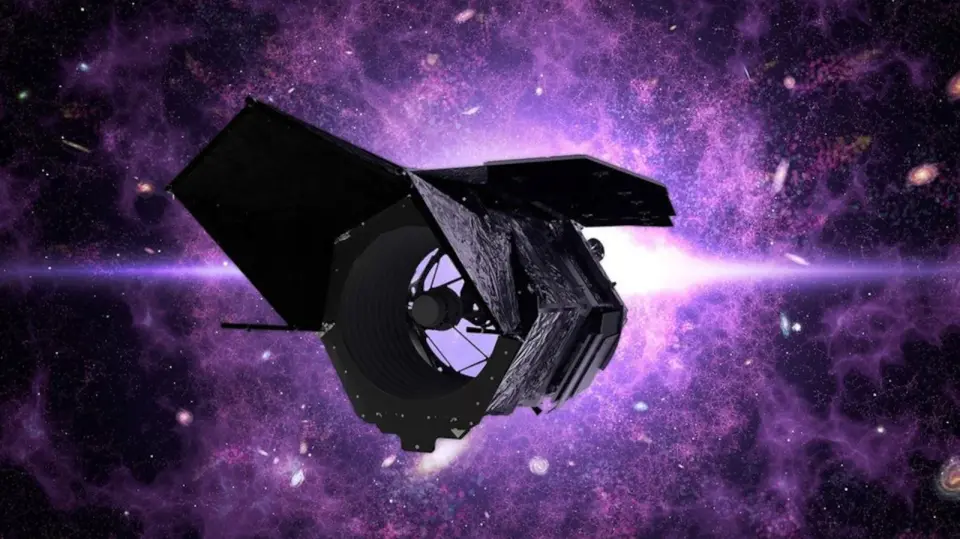
NASA’s Nancy Grace Roman Space Telescope has extended its expected operational lifespan from 10 to 22 years due to exceptional fuel efficiency during its journey to the L2 point. The spacecraft, launched on August 30, 2026, used only 40 pounds of its 441-pound fuel budget for initial trajectory adjustments. This efficiency, combined with a lighter-than-planned weight and a fully filled fuel tank, added 12 years to its mission. The telescope’s Wide Field Instrument (WFI) and Coronagraph have successfully passed initial tests, with first science images expected in early 2027.
Key points
- The Nancy Grace Roman Space Telescope’s mission duration has been doubled from 10 to 22 years due to significant fuel savings during its transit to the L2 point.
- NASA reported that the initial trajectory burn used less than 10% of the allocated fuel, consuming only 40 pounds of the 441-pound budget.
- The spacecraft arrived at its destination underweight by approximately 4,000 pounds, allowing the fuel tank to be filled to capacity rather than partially.
- The Wide Field Instrument (WFI), a 300-megapixel infrared camera, was activated on September 11, 2026, after a 10-day decontamination period.
- The Coronagraph Instrument, designed to image exoplanets, has also passed initial tests and is undergoing a 30-day decontamination process.
- First science images are expected to be released by early 2027, with full science operations beginning in January 2027.
Background
The Nancy Grace Roman Space Telescope was launched on August 30, 2026, aboard a SpaceX Falcon Heavy rocket. It is designed to survey wide swaths of the sky in near-infrared, aiming to discover billions of new galaxies and study dark energy and dark matter. The telescope is positioned at the second Lagrange point (L2), approximately 1.5 million miles from Earth. Previous coverage highlighted its 300-megapixel camera and its role in complementing the James Webb Space Telescope and Hubble Space Telescope. The recent extension of its lifespan is a significant development following its successful launch and initial commissioning.
How outlets are covering it
Jalopnik emphasizes the dramatic extension of the telescope’s lifespan, attributing it to the ground team’s precision in fuel usage and the spacecraft’s lighter weight. NASA Science provides detailed technical information on the activation of the Wide Field Instrument and Coronagraph, highlighting the successful calibration and testing processes. Scientific American focuses on the first light captured by the WFI and the telescope’s role in studying dark matter and exoplanets. PetaPixel highlights the $4.3 billion cost of the telescope and the successful initial tests, noting the 300-megapixel camera’s capabilities. All sources agree on the successful activation of the instruments and the extended mission duration, but Jalopnik places greater emphasis on the fuel efficiency and weight savings, while NASA Science and PetaPixel focus more on the technical details of the instrument activation and testing.
Why it matters
The extension of the Nancy Grace Roman Space Telescope’s mission to 22 years significantly enhances its ability to survey the cosmos, potentially leading to the discovery of billions of new galaxies and a deeper understanding of dark energy and dark matter. The successful activation of the Wide Field Instrument and Coronagraph marks a major milestone in the telescope’s commissioning process, ensuring that it will deliver high-resolution images and data for over two decades. This extended lifespan also allows for more comprehensive studies of exoplanets and the structure of the universe, contributing to future space exploration and scientific discoveries.
What to watch
The Nancy Grace Roman Space Telescope will continue its commissioning process, including further calibration and testing of its instruments. First science images are expected to be released by early 2027, with full science operations beginning in January 2027. The telescope will survey wide swaths of the sky, aiming to discover new galaxies, study dark energy and dark matter, and image exoplanets. The extended mission duration will allow for more comprehensive data collection and analysis, potentially leading to significant scientific breakthroughs.
- Nancy Grace Roman Space Telescope Isn't Even At Its Destination Yet And It's Already Doubled Its Lifespan jalopnik.com
- NASA Activates Roman’s Primary Instrument, Checks Out Coronagraph NASA Science (.gov)
- NASA’s Nancy Grace Roman Telescope glimpses its first cosmic light Scientific American
- NASA's New $4.3 Billion, 300MP Space Telescope Passed its First Tests One Million Miles Away PetaPixel
- NASA’s New $4 Billion Space Telescope Just Saw Starlight for the First Time. Here’s What It Saw Gizmodo
Want the full story? Read the original reporting
Read on jalopnik.com