
Roman Telescope Fuel Efficiency Doubles Mission Lifespan to 22 Years
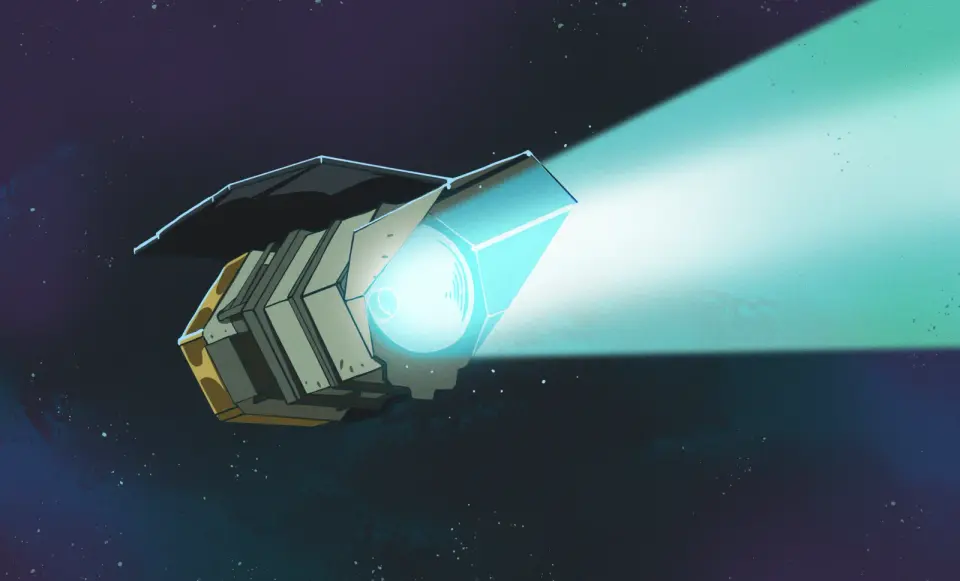
NASA’s Nancy Grace Roman Space Telescope now has enough fuel for at least 22 years of operations, double its original 10-year plan. This extension results from a lighter-than-planned spacecraft mass, a precise launch, and highly efficient initial trajectory corrections.
Key points
- The telescope launched on August 30, 2026, on a SpaceX Falcon Heavy rocket.
- The spacecraft weighed 8,056 kg, approximately 18% under the 9,800 kg budget, allowing for maximum propellant loading.
- The first mid-course correction on August 31 used only 18 kg of fuel against a 200 kg allocation.
- NASA announced in mid-September that the fuel margin supports at least 22 years of science operations.
- The telescope is en route to the Sun-Earth L2 point, approximately 1.5 million km from Earth.
Background
The Nancy Grace Roman Space Telescope is named after NASA’s first chief of astronomy. It carries two cameras for visible and near-infrared wavelengths to aid in exoplanet searches and cosmic structure studies. Previous coverage noted that the mission’s name survived funding cuts and that the telescope has a field of view 100 times larger than Hubble's. Earlier reports in September 2026 already highlighted the fuel efficiency gains, but this briefing synthesizes the specific engineering factors behind the extension.
How outlets are covering it
Hackaday details the three specific factors contributing to the fuel savings: the 18% lighter mass, the efficient first burn, and the expected efficiency of the second burn. NASA JPL focuses on the instrument’s operational status, noting that the Coronagraph Instrument took its first test image on September 22, confirming the fine-guidance system is stable. Live Science highlights public reaction to the mission’s success, framing it as a significant achievement for deep-space exploration. While Hackaday emphasizes the engineering margins, JPL confirms the scientific readiness of the instruments, and Live Science focuses on the broader impact, all sources agree on the positive outcome of the mission’s early performance.
Why it matters
The extended lifespan allows for a longer period of wide-field sky mapping and exoplanet detection, potentially reaching into the 2040s. The fuel savings reduce the risk of mission failure due to propellant depletion, a common cause of spacecraft retirement. This success demonstrates the value of conservative engineering budgets in spaceflight, where initial margins can translate into extended operational capabilities without additional hardware or software modifications.
What to watch
The telescope is expected to arrive at the L2 point roughly 100 days after launch. A second mid-course correction is scheduled for late September 2026, followed by orbit insertion. Once on station, the telescope will require station-keeping burns approximately every 28 days. NASA will continue to monitor the fuel usage and instrument performance as the telescope begins its science operations.
- Roman Telescope Saves Fuel, Doubles Mission Hackaday
- How NASA's Nancy Grace Roman Space Telescope will open a window into the Milky Way Phys.org
- NASA’s Roman Team Snaps Test Coronagraph Image NASA Jet Propulsion Laboratory (JPL) (.gov)
- 'It is something we must know before we go where no man has gone before': Readers react to NASA's Roman telescope mission Live Science
- New Roman Telescope’s Lifespan Could More Than Double, NASA Says japannews.yomiuri.co.jp
Want the full story? Read the original reporting
Read on Hackaday