
Swift Observatory to Burn Up as Failed Rescue Mission Ends in Atmospheric Reentry
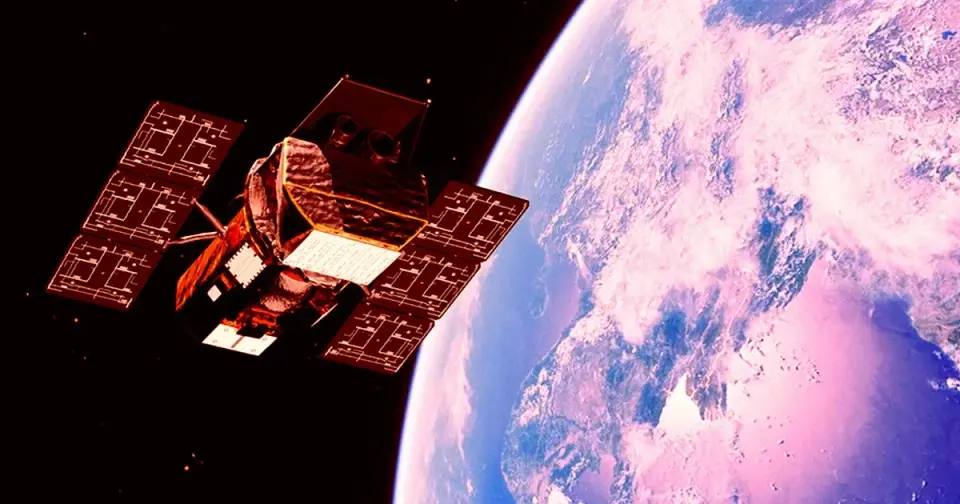
NASA’s Neil Gehrels Swift Observatory is rapidly decaying toward Earth after a failed commercial rescue mission. The telescope, which has operated for over two decades, is expected to reenter the atmosphere and burn up in early to mid-October. Although the $30 million effort by Katalyst Space Technologies failed to boost Swift’s orbit, it provided critical data for future satellite servicing technologies. Scientists have resumed observations to maximize data collection before the inevitable end, accepting that this activity accelerates the telescope's descent.
Key points
- Swift is currently orbiting at approximately 200 miles (325 km) and is expected to drop below 185 miles (300 km) by early to mid-October, a threshold where operations become difficult and science observations will likely cease.
- The rescue mission, conducted by Katalyst Space Technologies under a $30 million contract, failed when its LINK spacecraft experienced a reaction wheel switch failure and subsequent spin-out in late July 2026.
- LINK successfully approached Swift within 7.5 to 9 miles (12-15 km) in early September to test navigation and robotic arms but lacked the fuel to perform the orbital boost after mitigating the spin issue.
- NASA resumed Swift’s Burst Alert Telescope and automated slewing capabilities in September to collect final data, a decision that increased atmospheric drag and accelerated the telescope's decay.
- LeoLabs assesses the risk of debris causing harm on Earth as very small, predicting most surviving hardware will fall into the ocean or uninhabited land.
Background
Swift, launched in 2004, has long outlived its design life and lacks propulsion to counter atmospheric drag. Increased solar activity in 2024 expanded Earth's atmosphere, intensifying drag and hastening the need for a rescue. Previous archive coverage noted that NASA had already suspended scientific operations in April to reduce drag and extend the telescope's life, but the failed rescue forced a return to full operations to extract maximum value before reentry.
How outlets are covering it
Futurism and CNN emphasize the imminent end of the mission and the slim risk to Earth, while Ars Technica highlights the engineering lessons learned, noting that the $30 million cost was within 5% of the target and far less than previous government-led servicing attempts. Katalyst CEO Ghonhee Lee views the failure as a foundation for future commercial space robots, whereas NASA officials acknowledge the mission was a 'high-risk, high-reward' effort that proved the viability of rapid satellite development. Ars Technica also notes that NASA is now looking for other ways to replace Swift's capabilities, as no direct replacement is currently in development.
Why it matters
The loss of Swift creates a significant gap in NASA's ability to detect gamma-ray bursts and other high-energy cosmic events. The failed rescue mission, however, demonstrates that commercial entities can develop and launch complex servicing satellites in under a year, challenging traditional government procurement timelines and costs. This data is crucial for future missions to service other aging assets like the Hubble Space Telescope.
What to watch
Swift is expected to reenter the atmosphere and burn up in early to mid-October 2026. NASA and Katalyst are analyzing the LINK mission data to improve future satellite servicing capabilities. NASA is also evaluating other options to replace Swift's scientific capabilities, though no immediate replacement has been announced.
- NASA Telescope Careening Down to Earth After Failed Rescue Mission Futurism
- NASA space telescope to burn up in Earth’s atmosphere after failed rescue attempt CNN
- NASA squeezed Treasury, vibe coded, and broke the mold in bid to save Swift arstechnica.com
- NASA’s Swift Powers On Third Instrument, Restarts Automated Slewing NASA Science (.gov)
- Private spacecraft falls back to Earth after failing to rescue aging NASA telescope AP News
Want the full story? Read the original reporting
Read on Futurism