Tag

Aducanumab

All articles tagged with #aducanumab

Reproducible 3D human brain tissue model reveals mature microglia and Alzheimer's disease hallmarks
science21 days ago

Reproducible 3D human brain tissue model reveals mature microglia and Alzheimer's disease hallmarks

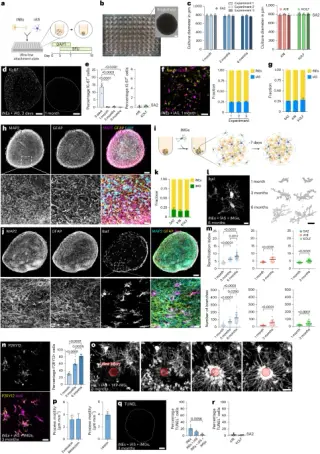
Researchers developed a reproducible iPSC-derived 3D cortical brain tissue model (3BTM) containing neurons, astrocytes and microglia that remains postmitotic and viable for months, forms brain-like ECM, and shows mature cell phenotypes. Microglia in 3BTMs display homeostatic features and in vitro–like in vivo responses. When engineered with APP mutations, 3BTMs recapitulate AD hallmarks—amyloid deposition, increased phospho-tau, and neuroinflammation—and exhibit disease-associated microglial signatures. Adding exogenous Aβ42 forms plaque-like structures, while treatment with aducanumab reduces Aβ load and enhances microglial activity, validating a translational drug-testing platform. Compared with 2D cultures, 3BTMs show greater maturation and network functionality across multiple iPSC lines, enabling scalable studies of brain physiology, disease mechanisms, and therapeutic responses.

Autopsy reveals uneven brain clearance by Alzheimer's drug
health1 month ago

Autopsy reveals uneven brain clearance by Alzheimer's drug

A JAMA postmortem case study of a patient treated with aducanumab shows amyloid-beta plaques were cleared in some brain regions but persisted in others, suggesting uneven drug penetration and challenging the idea that removing amyloid always yields cognitive benefits. Some regions with reduced amyloid also had fewer tau tangles and slower atrophy, hinting at possible regional effects, but overall evidence for clinical improvement remains uncertain and ongoing trials are investigating whether earlier treatment could help.

"Seven Years on Now-Defunct Alzheimer's Medication 'Paused' My Disease: Without It, No Hope"
health2 years ago

"Seven Years on Now-Defunct Alzheimer's Medication 'Paused' My Disease: Without It, No Hope"

Geri Taylor, a former executive, experienced cognitive decline and was diagnosed with early-stage Alzheimer's. She participated in a trial for the now-discontinued drug aducanumab, which seemed to pause her cognitive decline for seven years. However, the trial was abruptly halted, and when it resumed, her disease had progressed too far for the drug to be effective. Despite this setback, Geri and her husband continue to advocate for Alzheimer's patients and their caregivers, emphasizing the need for ethical treatment and increased research funding for the disease.

"Targeting Immune Cell Exhaustion to Combat Alzheimer's Neurodegeneration"
health2 years ago

"Targeting Immune Cell Exhaustion to Combat Alzheimer's Neurodegeneration"

New research suggests that exhausted immune cells in the brain, known as TIM, may play a key role in driving Alzheimer's disease, particularly in individuals with the APOE4 gene variant. The study found that these immune cells lose their ability to efficiently remove plaque from the brain, contributing to Alzheimer's. Additionally, the Alzheimer's drug aducanumab was found to improve the condition of these exhausted cells, particularly in mice with the APOE4 variant. The findings may lead to the development of novel Alzheimer's therapies targeting these exhausted immune cells.

"Alzheimer's Drug Successfully Penetrates Brain Barrier Using Sound Waves: Study"
healthscience2 years ago

"Alzheimer's Drug Successfully Penetrates Brain Barrier Using Sound Waves: Study"

A small study has shown that using focused ultrasound to open the blood-brain barrier is safe and may help Alzheimer's medications reach the brain more effectively. The study involved three patients who received monthly doses of the Alzheimer's drug aducanumab, with one hemisphere of their brains receiving the medication along with focused ultrasound. The treated hemisphere showed a 32% reduction in harmful amyloid beta plaques compared to the untreated hemisphere. While the technique shows promise, further research is needed to understand its long-term effects and potential side effects.

Limited Eligibility for Lecanemab in Early Alzheimer's Patients
neurology3 years ago

Limited Eligibility for Lecanemab in Early Alzheimer's Patients

Only a small percentage of individuals with early Alzheimer's disease meet the eligibility criteria for the anti-amyloid monoclonal antibody treatments lecanemab and aducanumab, according to data from the Mayo Clinic Study of Aging. The study found that out of 237 participants with mild cognitive impairment or mild dementia and increased brain amyloid, only 8% qualified for a lecanemab trial and 5.1% qualified for an aducanumab trial. The researchers noted that the strict criteria, which include chronic health conditions and brain scan abnormalities, limit the number of eligible candidates. Further research is needed to assess the safety and efficacy of these treatments in larger and more diverse populations before they can be widely available to Alzheimer's patients.