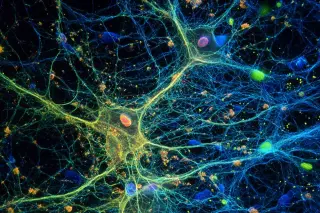
A new study suggests Alzheimer's may start when amyloid beta competes with tau for binding to microtubules in neurons, displacing tau and destabilizing the cell’s transport system. This microtubule nexus could unify amyloid- and tau-centered theories and open pathways for therapies that target tau displacement from microtubules.
UC Santa Cruz researchers show the overlooked P3 peptide (also called Amyloid α), produced from the same amyloid precursor protein as amyloid beta, can form amyloid deposits and may contribute to neuron damage, challenging the Aβ-centric view of Alzheimer’s and suggesting new therapeutic avenues.
Washington University researchers used CAR-T cell therapy to reprogram brain immune cells to recognize and clear amyloid beta plaques in mice, reducing plaques and dampening neuroinflammation. This is the first application of CAR-T to a neurodegenerative disease, but it is early-stage and not yet ready for humans; scientists plan safety and dosing studies and will explore translation to other disorders, with potential relevance for veterans at risk of dementia.
OSU researchers captured real-time, second-by-second interactions that drive copper-associated amyloid-beta protein clumping in Alzheimer’s, showing that carefully targeted chelators can interrupt or reverse aggregation and providing a roadmap for more precise therapies, with future tests in cellular and preclinical models.
Researchers engineered astrocytes to express a CAR targeting amyloid beta, turning them into brain “super cleaners.” In mice, a single gene-therapy injection either prevented plaque formation when given early or reduced existing amyloid plaques by ~50%, signaling a potential new immunotherapy approach for Alzheimer's—though safety and human trials remain to be established.
Northwestern University researchers report that levetiracetam, a long-used anti-seizure drug, may prevent Alzheimer’s by blocking the production of amyloid-beta 42, the protein linked to plaques, with results seen in animal models and cultured human neurons (and post-mortem Down syndrome brain tissue). If taken decades before symptoms, it could theoretically slow or prevent disease, though there are no human trials yet and the evidence is observational; researchers caution that the drug would need to start very early and are pursuing longer-lasting formulations and trials, including in genetic forms of Alzheimer’s.
Northwestern researchers identify that the Alzheimer’s-related amyloid-beta 42 peptide accumulates inside presynaptic vesicles, and that the FDA-approved anti-seizure drug levetiracetam blocks its production by binding SV2A and slowing vesicle recycling, shifting APP away from the Aβ42-producing pathway. The findings in animal models, cultured human neurons, and Down syndrome brain tissue suggest a very early preventive approach—levetiracetam would need to be taken long before symptoms for a potential reduction in risk. A review of clinical records hints a modest delay in cognitive decline-to-death for patients on levetiracetam, supporting a possible benefit, while researchers urge developing longer-acting versions and testing in inherited Alzheimer’s forms. Importantly, this would not treat established dementia.
Australian researchers in Griffith University show, in mice, that Chlamydia pneumoniae can travel from the nasal cavity to the brain via the olfactory and trigeminal nerves, with amyloid-beta deposits forming within days. Nasal epithelial injury increased bacterial load and brain involvement, but there are no human data yet and the causal role for Alzheimer's remains unproven; a human study is planned.
A Cedars-Sinai study shows Chlamydia pneumoniae can invade the retina and brain, triggering inflammation, nerve cell loss, and amyloid-beta buildup linked to Alzheimer's; higher bacterial levels correlate with worse cognition, especially in APOE4 carriers. The research suggests chronic infection and inflammation could drive Alzheimer's, and the retina might serve as a noninvasive window for early detection and new treatments targeting infection and inflammation.
In a study of 62 older adults, more non-REM deep sleep was linked to better memory performance even in people with Alzheimer’s-like brain changes, suggesting deep sleep may buffer against cognitive decline independent of education or activity. The findings highlight sleep quality as a potentially modifiable risk factor, though long-term studies are needed and sleeping pills may not offer the same benefit. Lifestyle tweaks to improve sleep—like avoiding late caffeine, exercising, limiting screens, and a warm pre-bed routine—could help preserve memory as we age.
Researchers identified two brain receptors (SST1 and SST4) that regulate neprilysin, the enzyme that degrades amyloid beta. Activating both receptors in mice raised neprilysin levels, reduced amyloid buildup, and improved memory-related behavior, suggesting a potential for safe, affordable oral Alzheimer’s treatments that enhance the brain’s own plaque-cleaning system; however, findings are preclinical and require human studies.
Researchers find that brief, rhythmic increases in CO2 (intermittent hypercapnia) can enhance glymphatic clearance and cerebrospinal fluid flow in both healthy individuals and people with Parkinson's, potentially aiding removal of brain toxins such as amyloid-beta; however, the durability of the effect and its impact on disease progression remain unclear.
A mouse study shows tumors releasing cystatin-C into the bloodstream can cross the blood-brain barrier, bind amyloid-beta, and activate microglia via Trem2 to clear plaques, sometimes improving memory in Alzheimer’s-like mice. While intriguing, these results are in animals and it's unknown whether humans would experience a similar protective effect; researchers are exploring therapies that mimic this mechanism without cancer.
A mouse study found that human tumors implanted in Alzheimer’s-model mice released cystatin-C into the bloodstream, which crossed the blood–brain barrier and bound to amyloid-beta plaques. This activated brain microglia via Trem2, boosting plaque clearance and sometimes improving memory. While intriguing as a potential pathway to treat or prevent Alzheimer’s, the findings are in mice and may not translate to humans, where cancer and Alzheimer's have a complex, inverse epidemiological relationship. Future work may explore therapies that mimic cystatin-C’s beneficial effects without cancer.
Researchers identify LilrB2 as a shared receptor that Reacts to amyloid beta and the inflammatory fragment C4d to trigger neurons to prune their own synapses, linking two major Alzheimer's theories. This neuron-autonomous mechanism suggests therapies should aim to protect synapses rather than solely dismantle plaques to preserve memory.