Tag

Antidepressants

All articles tagged with #antidepressants

Pregnancy antidepressants not tied to autism or ADHD risk, meta-analysis suggests
health12 days ago

Pregnancy antidepressants not tied to autism or ADHD risk, meta-analysis suggests

A large meta-analysis of over half a million pregnancies found no significant link between maternal antidepressant use during pregnancy and autism or ADHD in children after adjusting for maternal mental health and other factors; any initial signals disappeared when confounders were controlled. The findings support continuing antidepressant treatment for moderate-to-severe depression during pregnancy, though decisions should be individualized with a clinician and study limitations include missing socioeconomic and lifestyle data.

Pregnant antidepressant use largely not linked to ADHD or autism after accounting for confounders
health12 days ago

Pregnant antidepressant use largely not linked to ADHD or autism after accounting for confounders

A Lancet Psychiatry meta-analysis of 37 studies with over 600,000 pregnancies found that prenatal antidepressant exposure has little to no association with ADHD or autism after adjusting for genetics and family factors; older antidepressants may show small links, but overall the findings reassure the safety of contemporary antidepressants during pregnancy, while highlighting the risks of untreated maternal depression.

Gottlieb: hantavirus risk low, FDA turmoil looms, antidepressant debate
health15 days ago

Gottlieb: hantavirus risk low, FDA turmoil looms, antidepressant debate

In a May 10 interview on Face the Nation, former FDA commissioner Scott Gottlieb says the hantavirus outbreak linked to a cruise ship presents low transmission risk but could yield additional cases as repatriations continue and the incubation window plays out; he criticizes ongoing leadership turnover and staff losses at the FDA, defends the continued use of antidepressants when properly prescribed and warns against abrupt stopping, and rejects ivermectin as an effective treatment while urging reliance on medical guidance.

RFK Jr. targets antidepressants with debunked heroin comparison, prompting deprescribing push
health20 days ago

RFK Jr. targets antidepressants with debunked heroin comparison, prompting deprescribing push

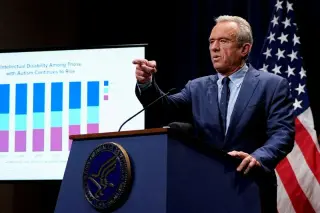
At a MAHA event, RFK Jr. announced steps to curb SSRI prescribing, repeating debunked claims that antidepressants are as addictive as heroin. Experts say the comparison is unfounded and emphasize careful, evidence-based deprescribing. The plan includes clinician training, a Dear Colleague letter, and CMS guidance with a new billing code to help taper patients off meds, but medical groups warn against framing mental-health care as overmedicalization and cite access issues.

RFK Jr backs plan to curb antidepressants and expand nondrug care
health21 days ago

RFK Jr backs plan to curb antidepressants and expand nondrug care

Robert F. Kennedy Jr. unveiled a federal plan to curb antidepressant prescribing, with the Department of Health and Human Services promoting deprescribing and the use of nonpharmacological treatments (psychotherapy, diet, exercise, social connection) when appropriate. The plan includes provider guidance and reimbursements for deprescribing, while the APA welcomed the focus but warned that deprescribing alone won't fix access and workforce gaps in mental health care. A 2025 survey found ~17% of Americans use antidepressants, and Kennedy has claimed—without evidence—that SSRIs contribute to school shootings.

Massive IBS Drug Study Finds Small Mortality Rise With Some Treatments
health1 month ago

Massive IBS Drug Study Finds Small Mortality Rise With Some Treatments

A large, nearly 20-year study of 650,000+ US adults with IBS linked long-term antidepressant use to about a 35% higher risk of death and showed the anti-diarrheal drugs loperamide and diphenoxylate associated with roughly double the risk, though the study notes it shows association, not causation, and the overall individual risk remains low; findings prompt personalized treatment and more long-term safety research.

Long-Term Antidepressant Use Linked to Elevated Risk of Sudden Cardiac Death, Danish Study Finds
health1 month ago

Long-Term Antidepressant Use Linked to Elevated Risk of Sudden Cardiac Death, Danish Study Finds

A Danish nationwide cohort study of more than 4 million adults found that longer antidepressant use is associated with an increased risk of sudden cardiac death, with adjusted hazards of 1.41 for 1–5 years and 1.74 for six or more years; current users face the highest risk, though the study cannot prove causality due to its observational design and potential residual confounding. The findings suggest a time-dependent risk across antidepressant subclasses, and further research is needed to clarify causality and mechanisms.

UK teens increasingly prescribed antidepressants as specialist access lags
health2 months ago

UK teens increasingly prescribed antidepressants as specialist access lags

BBC analysis shows about 70,000 under-18s in England are prescribed antidepressants each year, with guidelines urging psychiatrist assessment first. But long waits for specialist help have some GPs prescribing or starting treatment outside guidelines to avoid leaving patients untreated, while others refuse. Antidepressants are used for depression, anxiety, bedwetting and pain and can have side effects; the NHS notes workforce growth but record demand remains, prompting calls for more accompanying mental health support and timely CAMHS access.

Long-term antidepressants: how to decide if you should stay, taper, or stop
health2 months ago

Long-term antidepressants: how to decide if you should stay, taper, or stop

Vox’s Future Perfect explainer argues that long-term SSRI use raises questions about ongoing need, with withdrawal and dependence being real but distinct from addiction. It emphasizes careful, individualized tapering when stopping, notes that best tapering protocols are not yet established, and urges empathetic clinician guidance and more deprescribing research to help people decide whether to stay on meds or discontinue.

Do antidepressants define your true self? A measured look at staying on or stopping
mental-health2 months ago

Do antidepressants define your true self? A measured look at staying on or stopping

A Vox Future Perfect column explores whether long‑term antidepressants change who we are, noting that the science shows antidepressants help some people more than placebo but the exact mechanisms remain unclear. It introduces a framework of ‘medication career’ and ‘moral career’ to frame decisions alongside a clinician, argues there isn’t a single fixed ‘true self,’ and emphasizes weighing benefits against costs. If stopping is pursued, the piece urges gradual tapering with professional guidance and awareness of withdrawal and dependence versus addiction.

War's hidden toll: antidepressants surge in Russia as conflict drags on
world3 months ago

War's hidden toll: antidepressants surge in Russia as conflict drags on

Russia is experiencing a sharp rise in antidepressant use amid the ongoing war with Ukraine and economic strain, with 2025 sales totaling about 22.3–23.5 million packages—roughly a 36% rise from 2024 and well above pre-pandemic levels—as the pharmaceutical market grows to around $273 million; experts warn antidepressants are sometimes overused and advocate psychotherapy as a first line of treatment, highlighting the war’s broad emotional toll on daily life.

The Elusive Fit: Why Antidepressants Don’t Work for Everyone
health3 months ago

The Elusive Fit: Why Antidepressants Don’t Work for Everyone

Antidepressants have helped some people for decades, but research shows they often provide only modest relief overall, with no reliable way to predict who will benefit. The history traces from iproniazid and imipramine to SSRIs and beyond, while meta-analyses indicate small improvements over placebo and low remission rates for many drugs. Ketamine offers rapid relief for some with treatment-resistant depression, challenging the idea that depression is a simple chemical imbalance. Precision psychiatry aims to tailor treatments via blood tests and genetic or neural markers, but this approach is still years away from routine practice. The field continues to wrestle with what depression actually is and how to best help the millions affected.