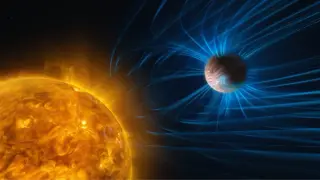
Astronomers report that some hot Jupiter exoplanets exhibit atmospheric winds surpassing 15,000 mph, offering the first observational evidence that these distant gas giants host magnetic fields influencing their atmospheric dynamics.
Using JWST, researchers mapped Saturn’s aurora-driven upper-atmosphere heating and found that winds generate electrical currents which power the aurora, creating a self-sustaining cycle that makes Saturn’s rotation appear to vary when measured by auroral signals rather than by actual spin; the results solve decades of confusion about a possible spin change and reveal a planetary heat-pump like link between Saturn’s atmosphere and magnetosphere, with implications for other worlds.
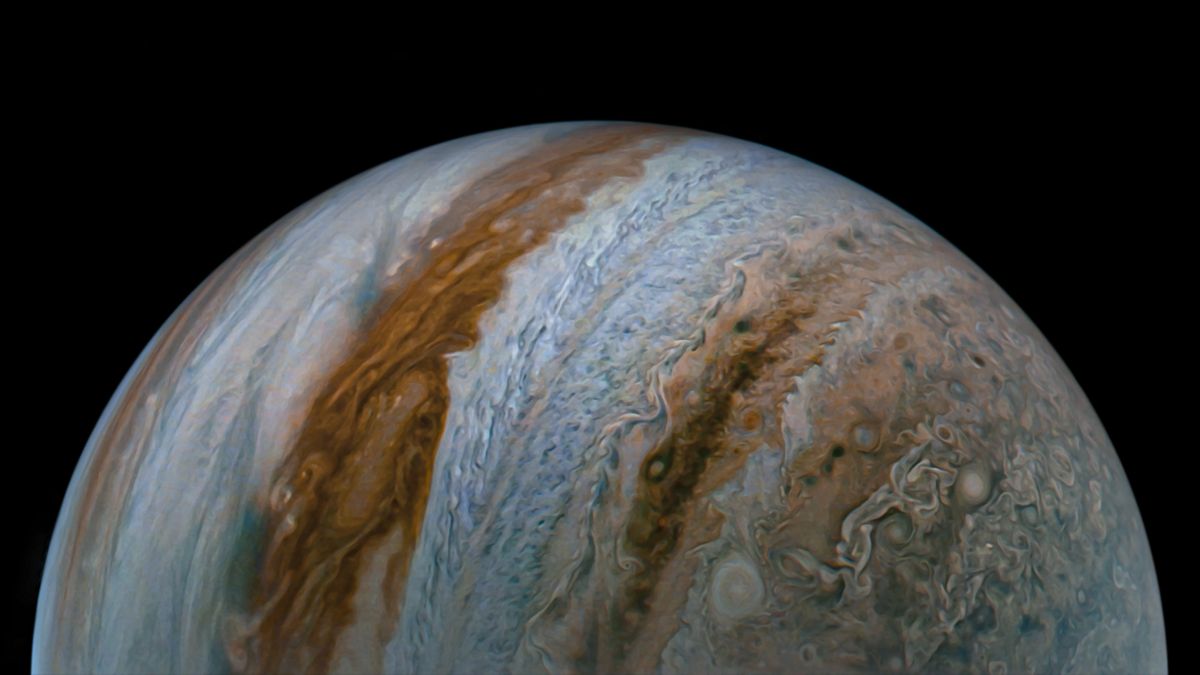
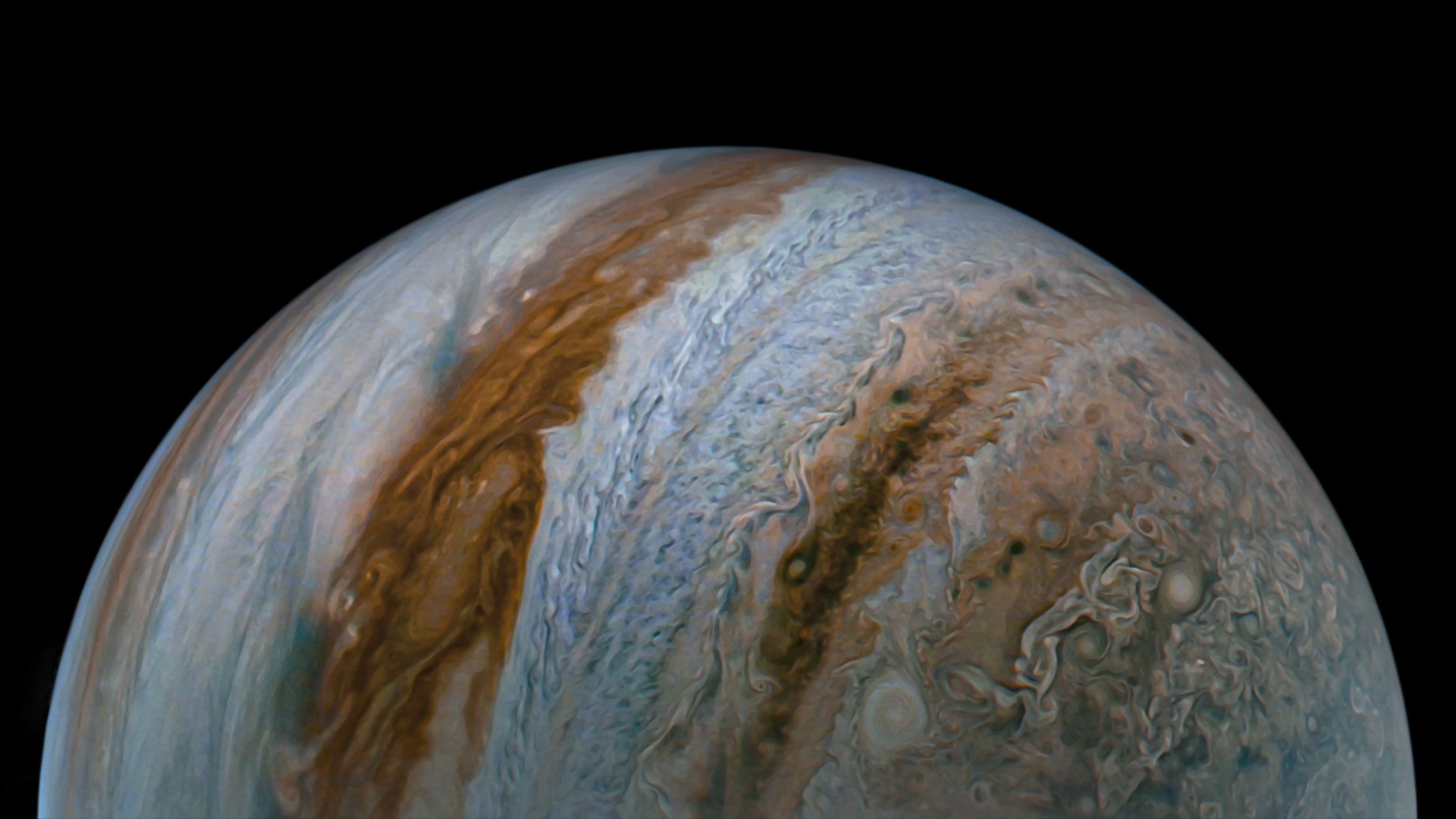
NASA's Juno spacecraft has discovered that the winds on Jupiter penetrate the gas giant's atmosphere in a "cylindrical" manner, moving parallel to the planet's spin axis. The Jovian gravity data collected by Juno supports the idea that these winds move inward cylindrically, settling a debate that has been ongoing since the 1970s. The technique used to analyze Juno's data can now be applied to planets outside the solar system to study their atmospheres.
NASA's Juno mission has provided new insights into the internal structure of Jupiter by revealing that the planet's atmospheric winds penetrate in cylindrical layers parallel to its spin axis. Gravity data collected by Juno indicates that the planet's powerful east-west zonal flows extend inward in a cylindrical manner, settling a long-standing debate about the structure of Jupiter's deep atmospheric winds. The findings, published in the journal Nature Astronomy, enhance our understanding of Jupiter's internal dynamics and could also provide valuable insights into the atmospheres of other giant planets.